Latin: musculus trapezius
Overview
- A large, flat superficial muscle of the back.
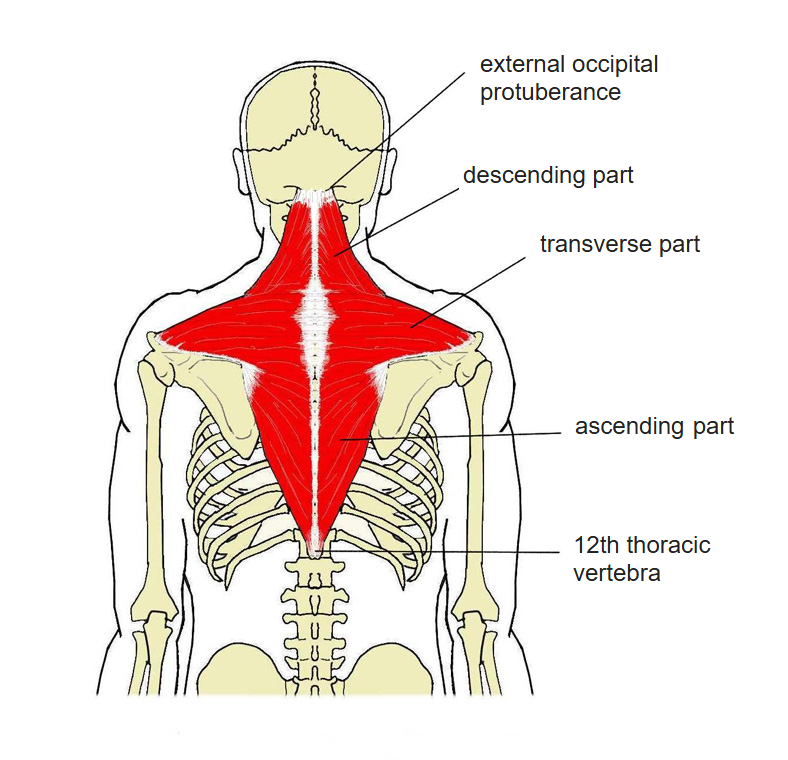
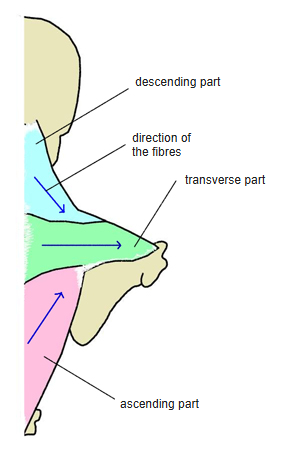
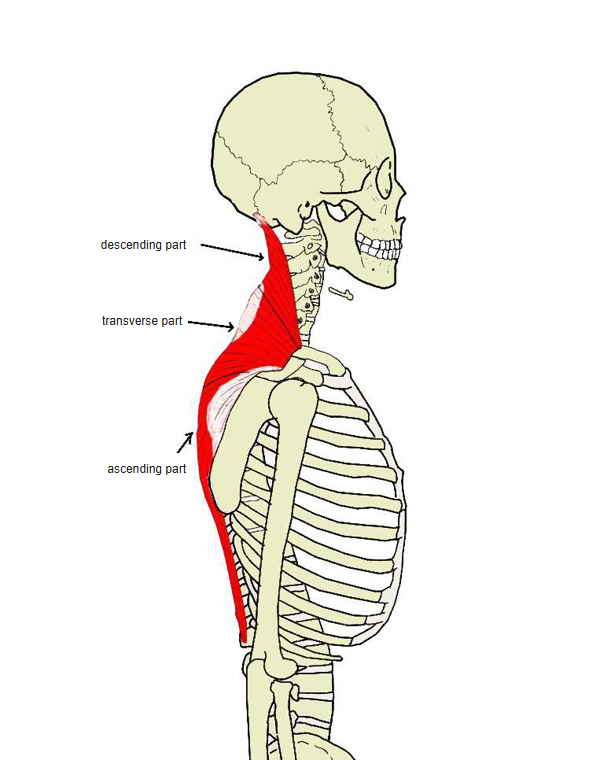
- Three parts by fibre direction:
- Parts
- Descending (upper) part: fibres run down and laterally; partly visible from the front
- Transverse (middle) part: fibres run almost horizontally
- Ascending (lower) part: fibres run up and laterally
- The muscle is thin near the occipital bone and upper cervical spines.
- The tendons of origin of both sides form a shiny diamond-shaped area, widest at about C7.
- Continuous in places with the deltoid, rhomboids and serratus posterior superior.
Position in the classification
Trunk › Back › Superficial back muscles › First layer
- Trapezius
- Latissimus dorsi
Illustrations
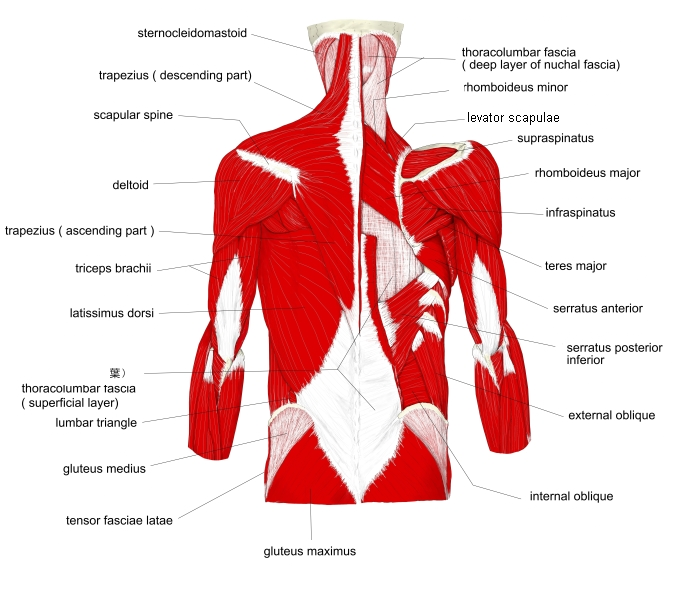
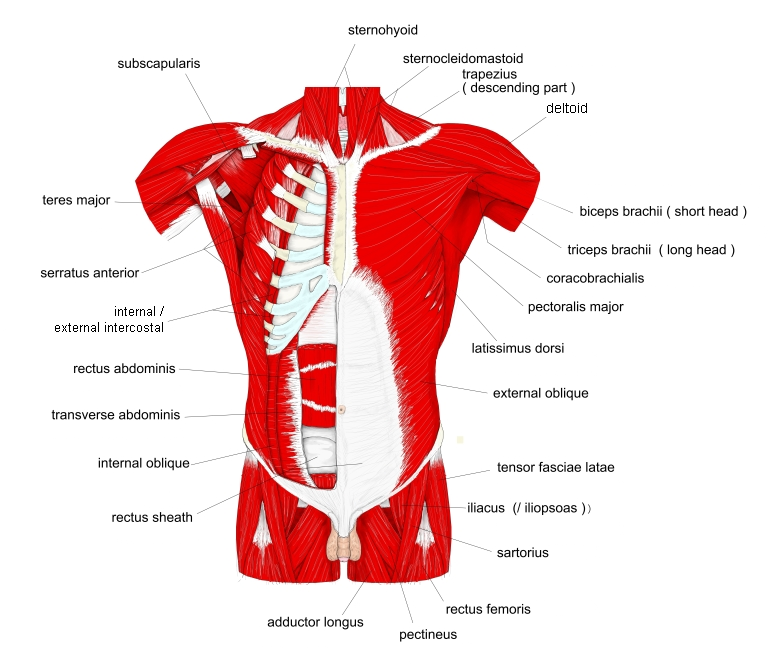
Origin / insertion
- Origin: superior nuchal line (or highest nuchal line) and external occipital protuberance, nuchal ligament, spinous processes of C7 and all thoracic vertebrae, and the supraspinous ligaments
- Insertion:
- Lateral third of the clavicle
- Acromion
- Spine of the scapula
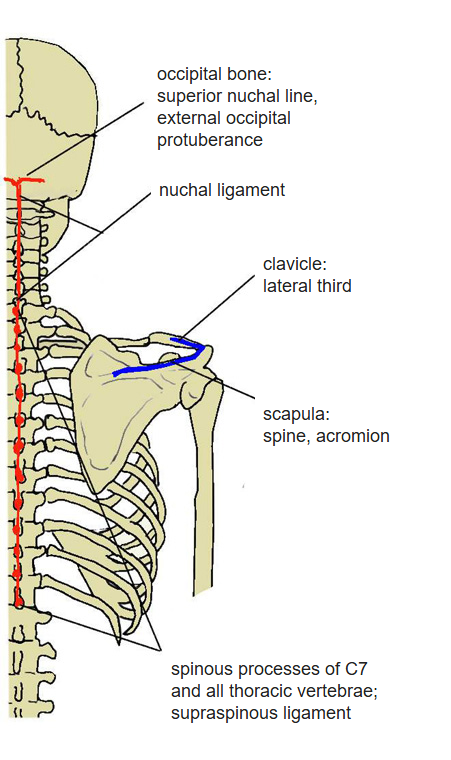
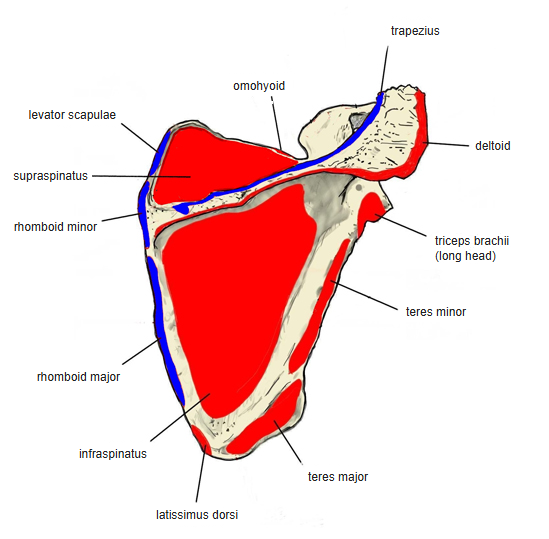
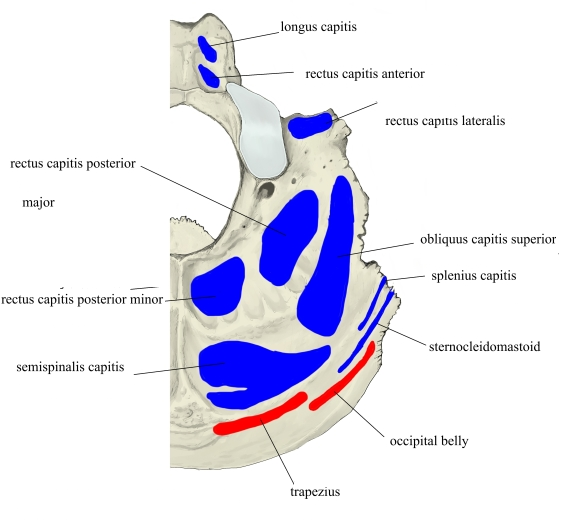
Action
- Whole muscle: pulls the shoulder back and steadies the scapula on the thorax
- Upper part: raises the scapula (with the serratus anterior, rotates it so the glenoid faces up); with the shoulder fixed, tilts the head to the same side and turns it to the other
- Lower part: lowers the scapula
- Middle part: draws the scapula medially
- Both sides, shoulder fixed: pull the head back
Innervation
- External branch of the accessory nerve and muscular branches of the cervical plexus (C2–C4)
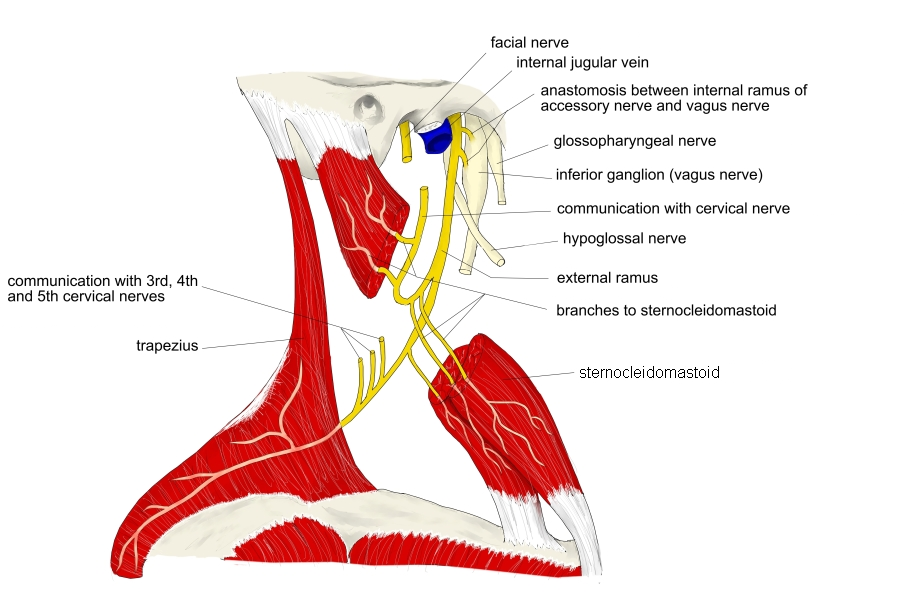
Blood supply
- Transverse cervical artery, suprascapular artery, dorsal branches of the posterior intercostal arteries, deep cervical artery, occipital artery
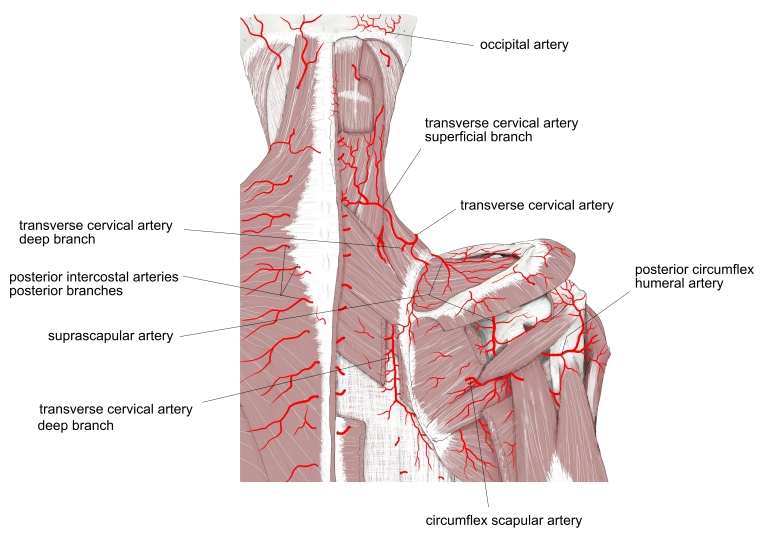
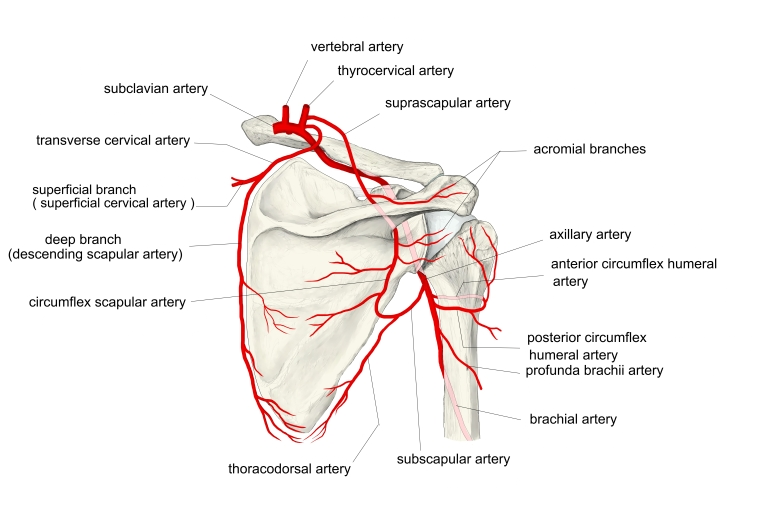
Anatomical variations
- Almost complete absence has been reported; the clavicular part may be missing
- Often slightly asymmetric; may be divided at the level of the central aponeurosis
- Reduced origin (sometimes only C4 to T8–T10), more often in women
- Extra bundles (cleido-occipital, cleido-atlantic) may occur
Related terms
- Latissimus dorsi
- Rhomboid major
- Rhomboid minor
- Levator scapulae
- Deltoid
- Nuchal ligament
- Clavicle
- Acromion
- Spine of scapula
- Accessory nerve
- Transverse cervical artery
References and sources
- Further reading: Trapezius, Wikipedia.