Introduction
Contents
- Branches of anatomy (systematic and regional anatomy, gross and microscopic anatomy, types of dissection)
- Divisions of the human body
- Regions of the human body (list of regions by part, regions A–Z, illustrations)
- Position, direction, planes and axes (list of directional terms)
- Surface anatomy
- Palpable bony landmarks
- Reference lines and planes (vertical lines on the trunk, horizontal planes through the abdomen, landmarks on the back)
- Cells, tissues, organs and organ systems (cells, tissues, organs, organ systems)
Surface anatomy
Surface anatomy deals with the features that can be seen and felt on the surface of the living body. The bulges of muscles, the grooves between them, skin creases and the outlines of bones show the position of deeper structures. It is the basis of physical examination — inspection, palpation, percussion and auscultation — and is useful when learning these skills.
Illustrations
1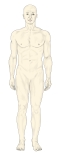 Whole body (anterior) | 2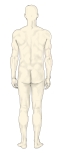 Whole body (posterior) | 3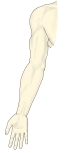 Upper limb (anterior) | 4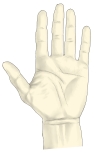 Palm | 5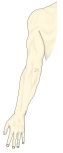 Upper limb (posterior) |
6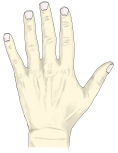 Dorsum of hand | 7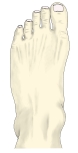 Dorsum of foot | 8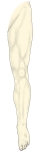 Lower limb (anterior) | 9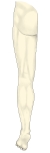 Lower limb (posterior) | 10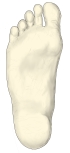 Sole of foot |
Palpable bony landmarks
Many parts of the skeleton lie just under the skin and can be felt with the fingers. These palpable parts are important for identifying the bones in the living body. Some structures, such as the hip joint, lie too deep to be felt directly; their position is found indirectly, using the palpable bony landmarks around them as guides.
Illustrations
1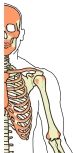 Trunk and arm (anterior) | 2 Below the pelvis (anterior) | 3 Hand (palmar) | 4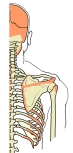 Trunk and arm (posterior) | 5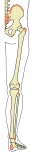 Below the pelvis (posterior) | 6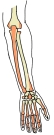 Elbow to hand (posterior) |