Latin: musculus constrictor pharyngis inferior
Overview
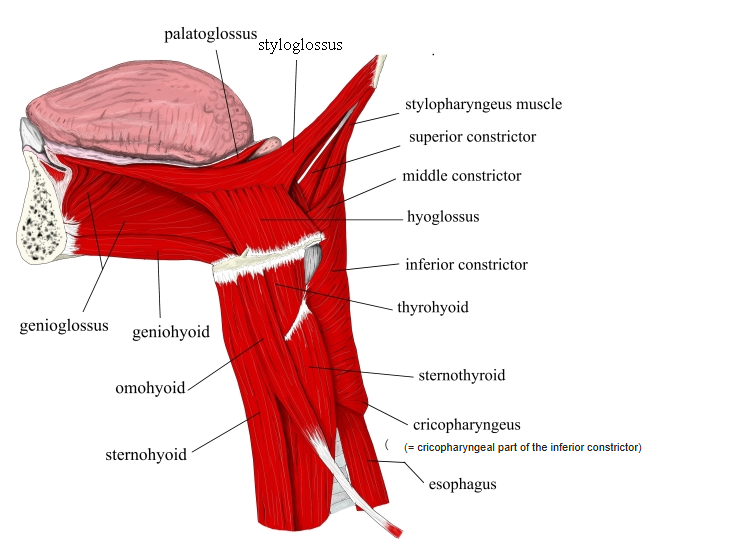
- The lowest and thickest of the three pharyngeal constrictors (the circular layer of the pharyngeal muscles).
- Its fibres ascend obliquely, overlapping the lower part of the middle constrictor, and pass upward and medially to the pharyngeal raphe.
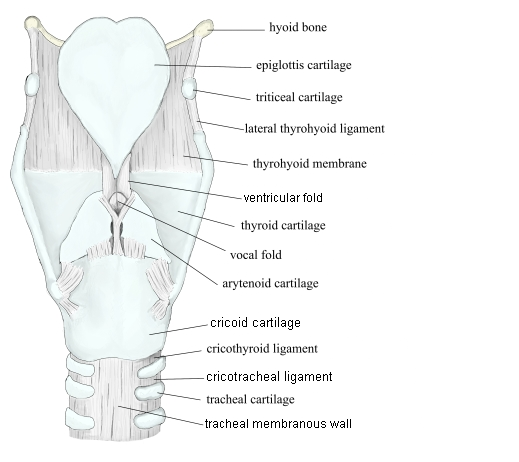
- Two parts: the thyropharyngeal part (from the thyroid cartilage) and the cricopharyngeal part (from the cricoid cartilage).
- The cricopharyngeal part is also called the cricopharyngeus; its lowest fibres are horizontal and continue into the circular muscle of the esophagus.
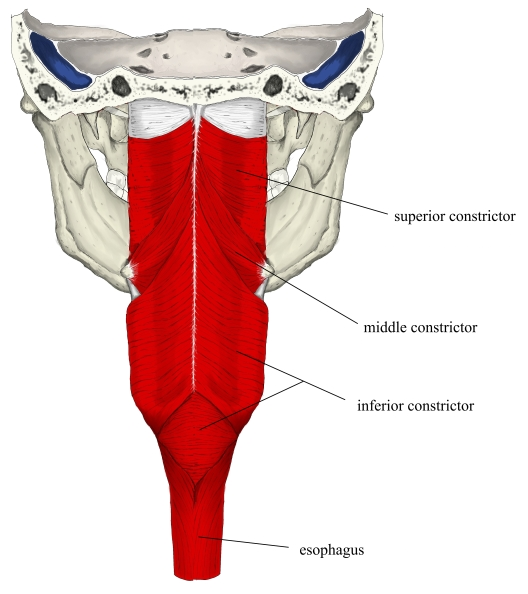
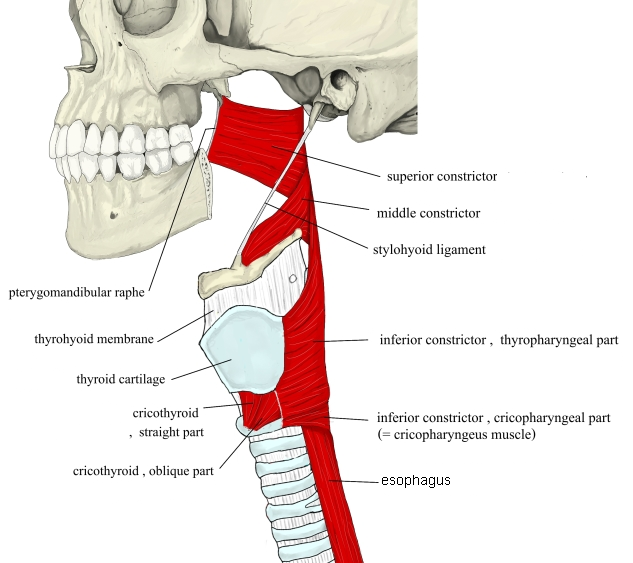
Illustrations
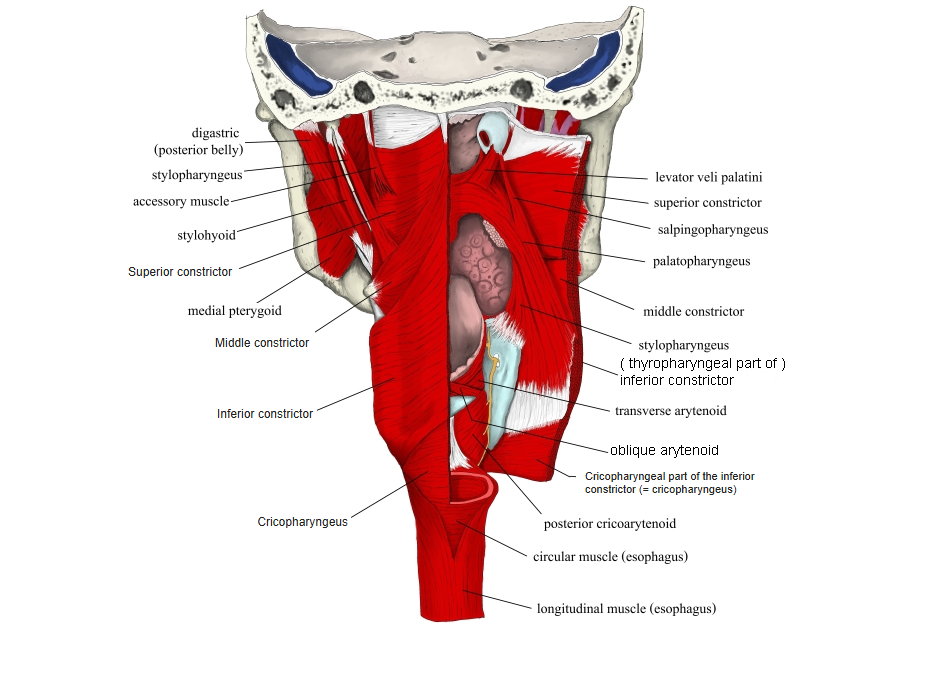
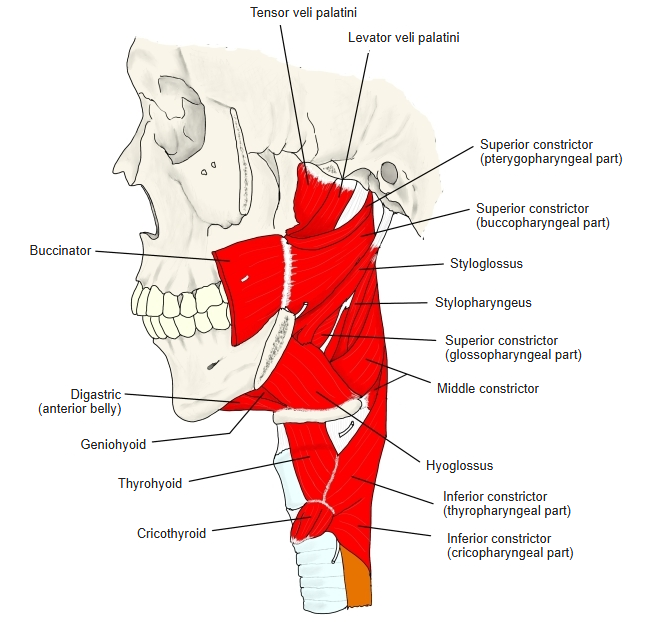
Origin / insertion
- Origin: oblique line and inferior horn of the thyroid cartilage (thyropharyngeal part); side of the cricoid cartilage (cricopharyngeal part)
- Insertion: pharyngeal raphe; the lowest (cricopharyngeal) fibres are horizontal and continue into the circular muscle of the esophagus
The origin is from standard references.
Action
- Narrows the pharynx; the three constrictors contract from above downward during swallowing and push food into the esophagus
Innervation
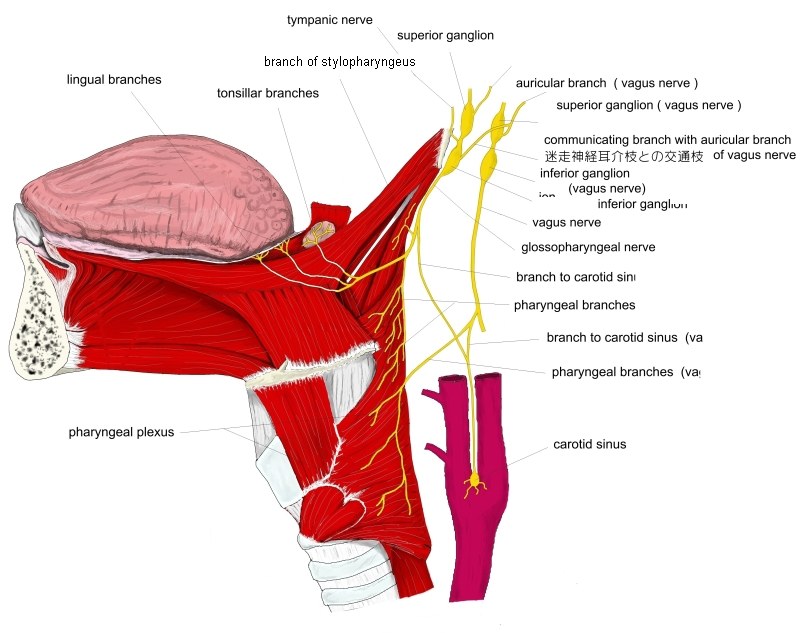
- Pharyngeal plexus (pharyngeal branches of the vagus nerve)
- Also the external branch of the superior laryngeal nerve and the recurrent laryngeal nerve
Blood supply
- Inferior thyroid artery and ascending pharyngeal artery (pharyngeal branches)
Compiled from standard anatomy references.
Related terms
- Middle constrictor
- Superior constrictor
- Cricopharyngeus
- Vagus nerve
- Esophagus
References and sources
- Further reading: Inferior pharyngeal constrictor muscle, Wikipedia.