Genioglossus spine
The genioglossus spine is the upper pair of small projections of the mental spine; it gives origin to the genioglossus (an extrinsic muscle of the tongue).
Mental spine: on the inner surface of the mandible, at the lower end of the midlineGenioglossus: runs from the genioglossus spine to the tongue and the body of the hyoid
- Genioglossus spine : the upper pair of the mental spines; origin of the genioglossus (an extrinsic muscle of the tongue).
- Geniohyoid spine : the lower pair of the mental spines; origin of the geniohyoid (a suprahyoid muscle).
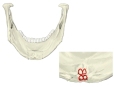 Mental spines (posterior view)
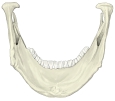 Mandible (posterior view)
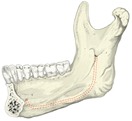 Right half of mandible (medial view)
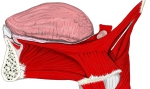 Genioglossus and geniohyoid
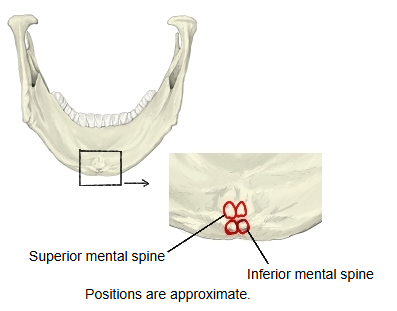
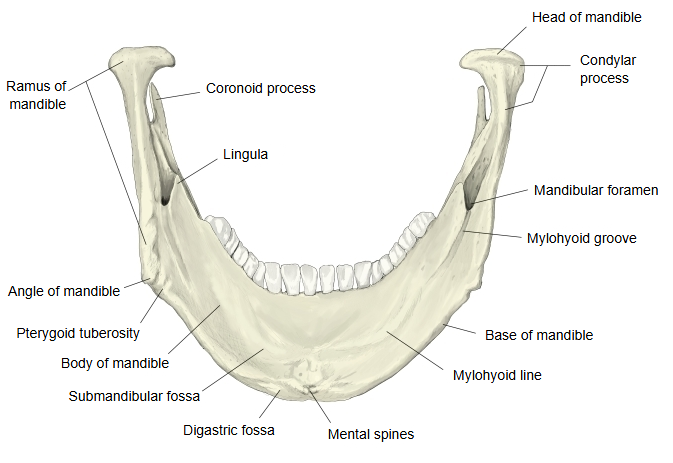
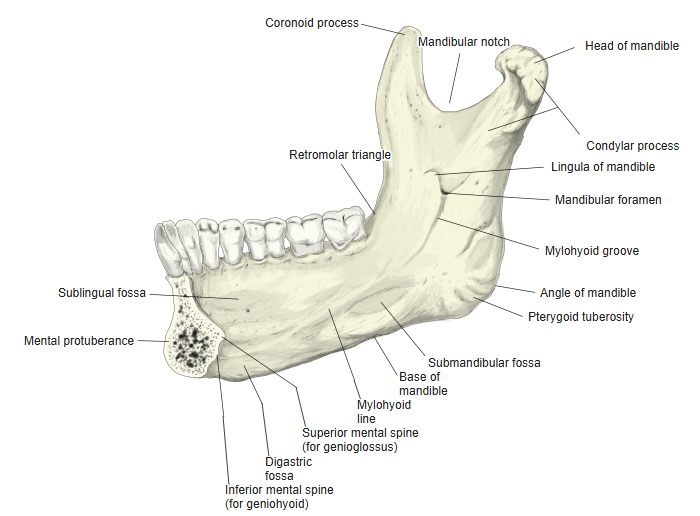
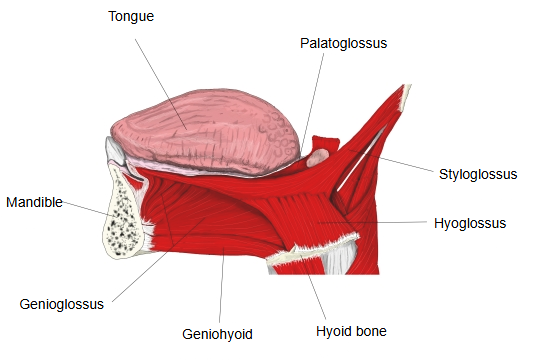
The mental spine is a group of four small, sharp projections in the midline, on the inner surface opposite the mental protuberance. The upper pair is the genioglossus spine and the lower pair the geniohyoid spine; each gives origin to the muscle of the same name.
In older terminology:
On the inner surface of the body of the mandible, close to the lower end of the midline, two pairs of small projections, the mental spines, lie close together one above the other. The upper, slightly larger pair gives origin to the genioglossus; the older Jena nomenclature (JNA) called it the genioglossus spine. Today it is usually called the superior mental spine, and it is described under the mental spine.