Latin: musculus sternocleidomastoideus
Overview
- A large, strong superficial muscle of the neck running obliquely across the side of the neck.
- The name gives its attachments: sterno- (sternum), cleido- (clavicle), mastoid (mastoid process of the temporal bone).
- It has two heads, a sternal head and a clavicular head; the small triangular hollow between them at the origin is the lesser supraclavicular fossa.
- Thick and narrow in the middle, broader and thinner at both ends.
- The greater supraclavicular fossa (omoclavicular triangle) is the large hollow between the clavicular head, the front edge of the trapezius and the clavicle.
- A main landmark of the neck: it divides the neck into the anterior and posterior triangles.
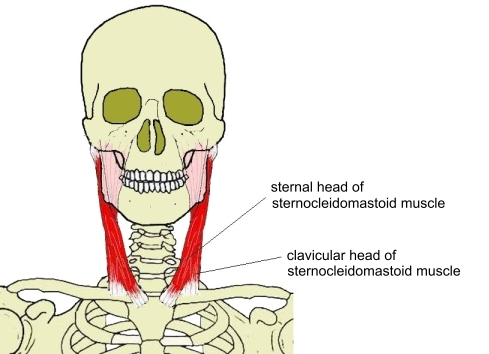
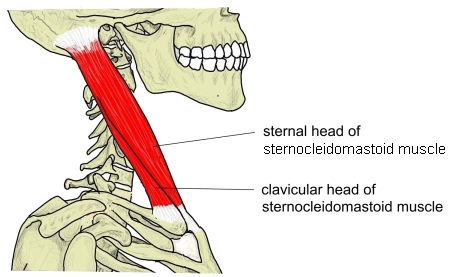
Position in the classification
Illustrations
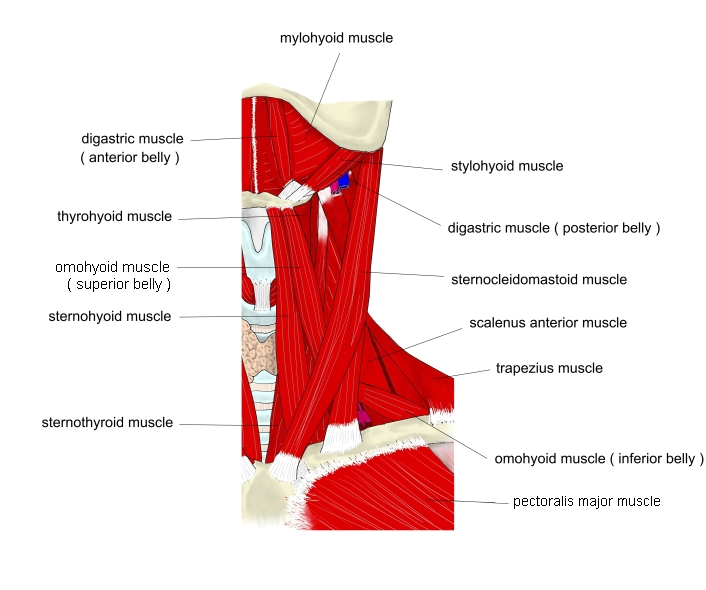
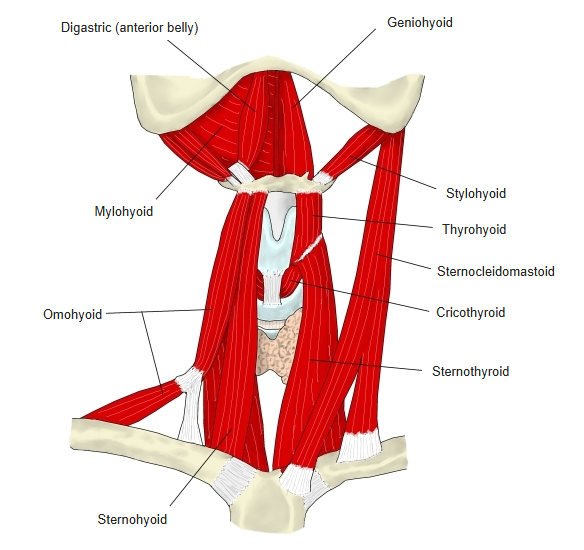
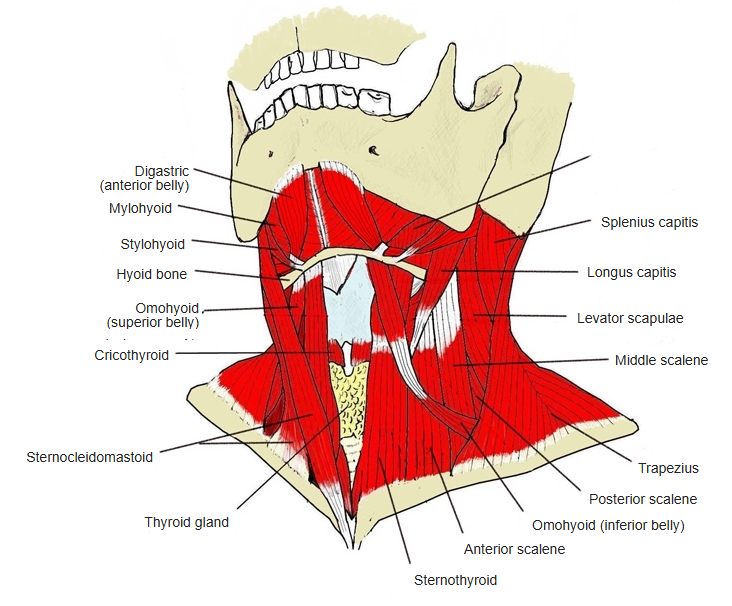
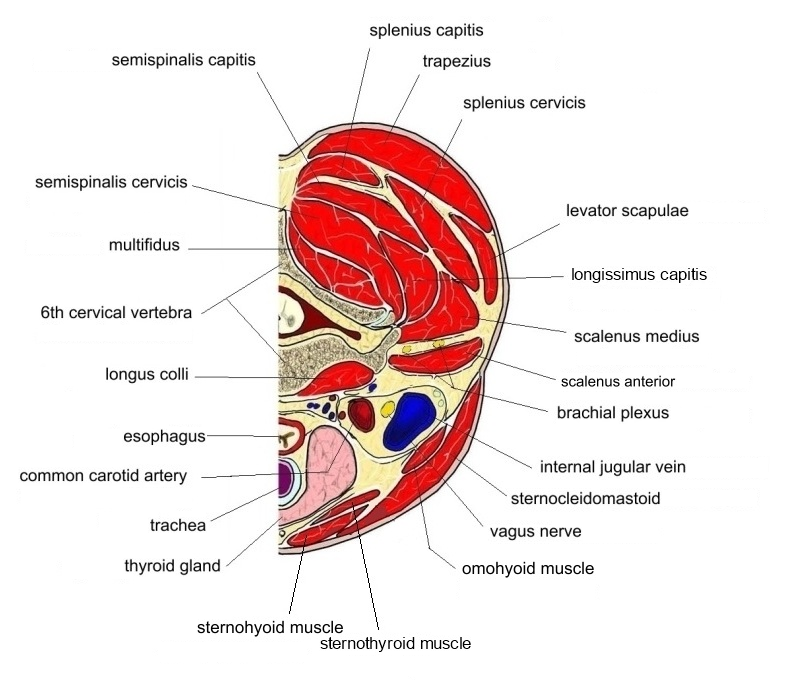
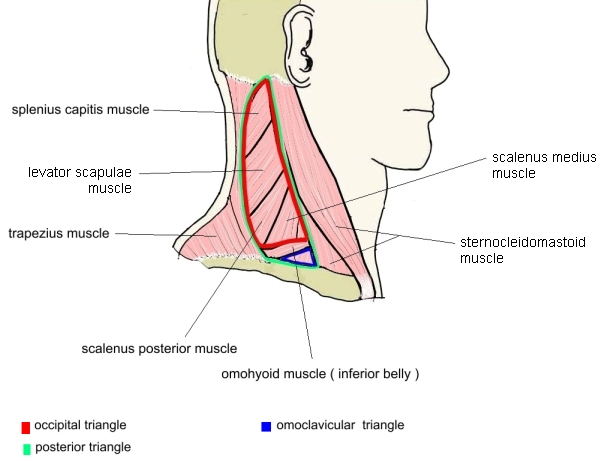
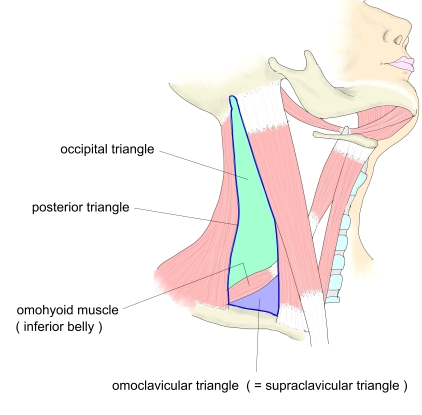
In the anterolateral view, the drawing of the muscles in the carotid triangle may be slightly inaccurate.
Origin / insertion
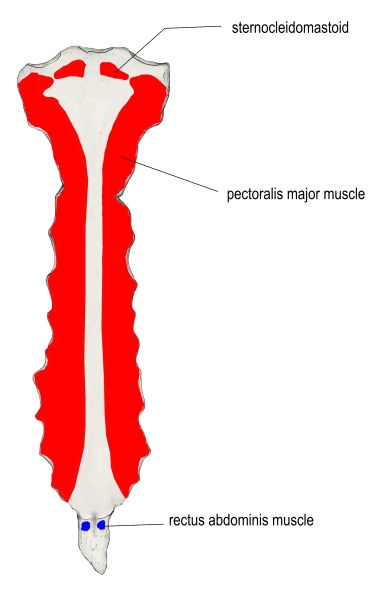
- Origin, sternal head: upper border and front of the manubrium of the sternum
- Origin, clavicular head: medial third of the clavicle
- The two heads join into a strong muscle belly that runs upward and backward.
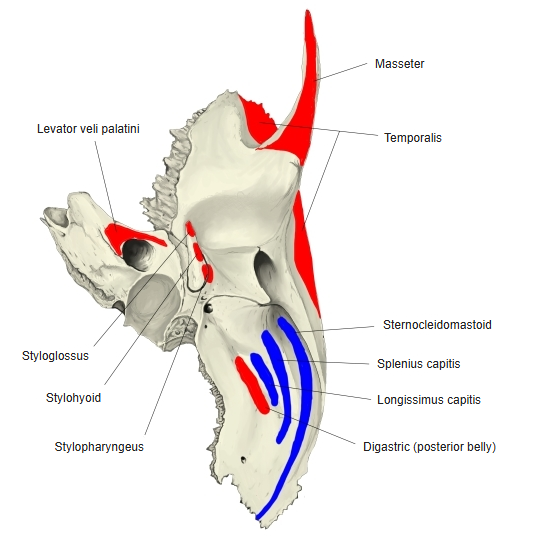
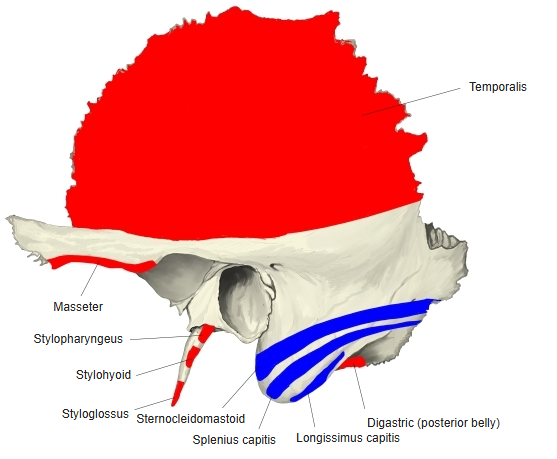
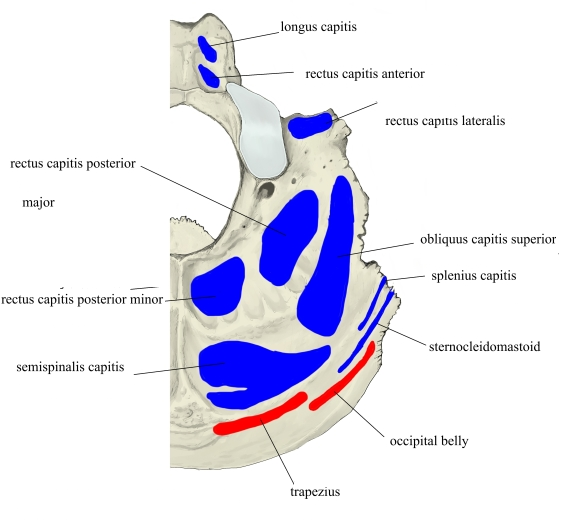
- Insertion: mastoid process of the temporal bone and the lateral part of the superior nuchal line of the occipital bone
Action
- Unilateral: turns the head to the opposite side and turns the face upward; bends the neck to the same side
- Bilateral: pulls the head forward and downward (flexes the neck)
- With the head fixed: raises the sternum and clavicle (accessory muscle of respiration)
Innervation
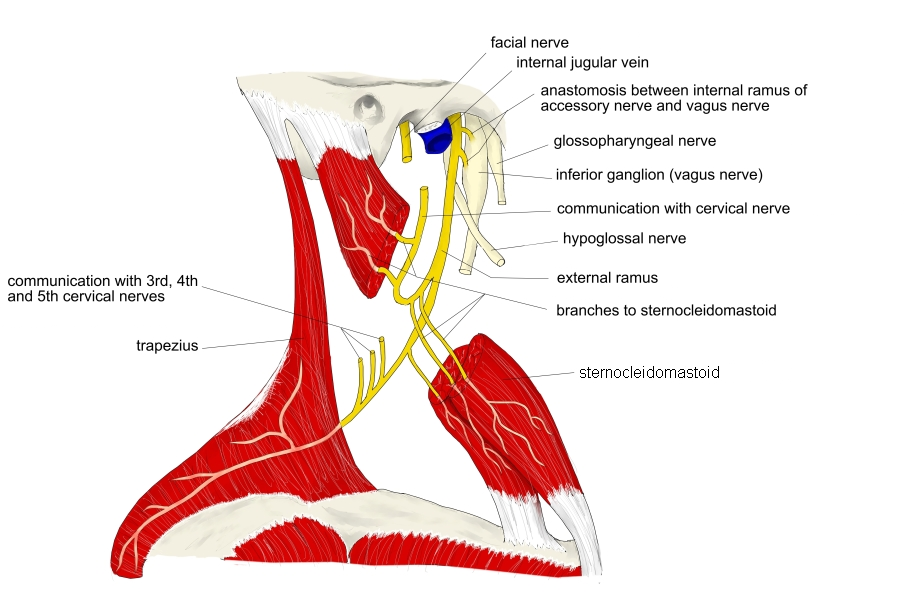
- Accessory nerve (motor)
- Muscular branches of the cervical plexus (C2–C3)
Blood supply
- Branches of the occipital artery and the superior thyroid artery
Compiled from standard anatomy references.
Anatomical variations
- The width of the clavicular head varies greatly; a broad clavicular head may be split into several slips.
- Rarely the sternocleidomastoid and trapezius meet, leaving no posterior triangle.
- A supraclavicularis muscle may run from the manubrium, behind the sternocleidomastoid, to the upper surface of the clavicle.
Related terms
- Platysma
- Trapezius
- Lesser supraclavicular fossa
- Greater supraclavicular fossa
- Posterior triangle
- Mastoid process
- Superior nuchal line
- Accessory nerve
- Cervical plexus
References and sources
- Further reading: Sternocleidomastoid muscle, Wikipedia — also the source for the blood supply and variations.