Latin: musculus rectus abdominis
Overview
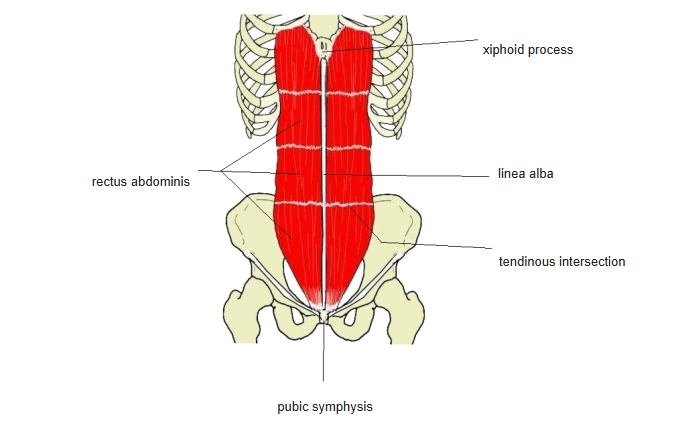
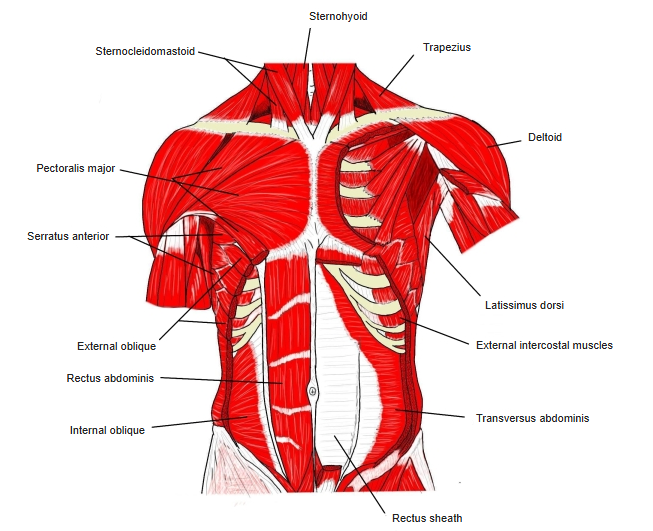
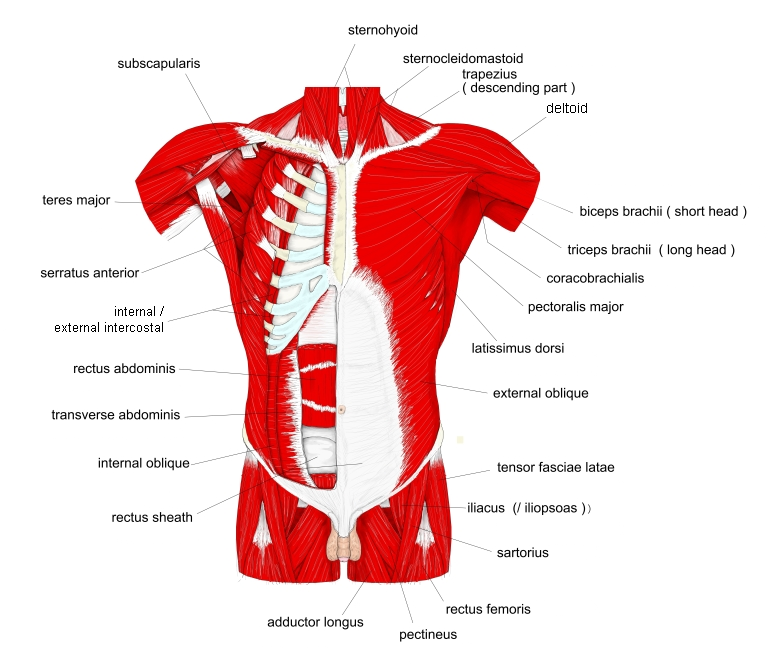
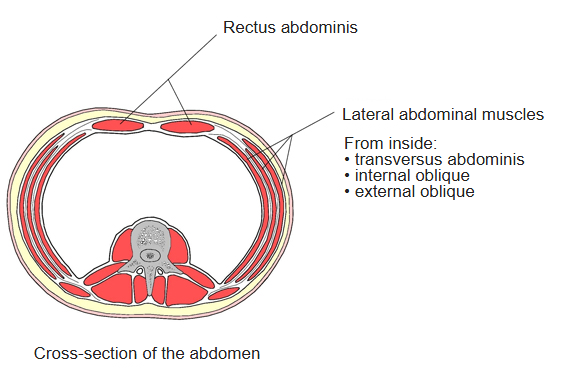
- A paired vertical muscle on each side of the linea alba, enclosed in the rectus sheath.
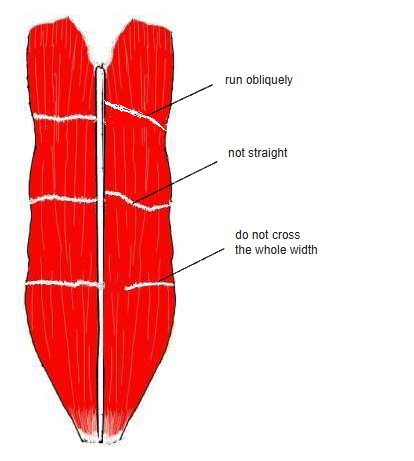
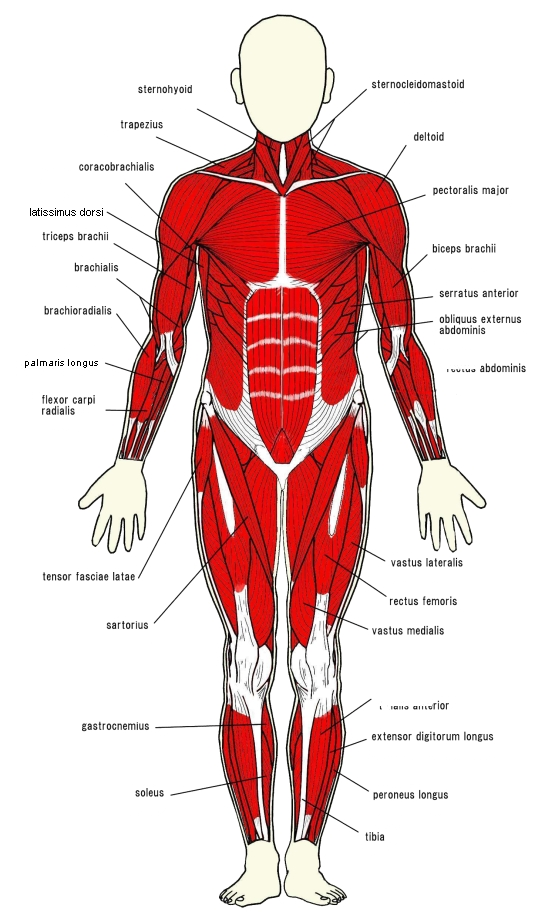
- Its tendinous intersections make the "six-pack"; they often run obliquely, are not straight and may not cross the whole width.
- Usually about 10 mm thick, up to 20 mm in some athletes (Wikipedia).
- Some fibres of its tendon cross the midline and join the suspensory ligament of the penis (clitoris).
- Works strongly when sitting up from lying on the back or rowing.
- Continuous in places with the pectoralis major, the obliques, transversus abdominis and pyramidalis.
Position in the classification
Trunk › Abdomen › Anterior abdominal muscles
- Rectus abdominis
- Pyramidalis
Illustrations
Origin / insertion
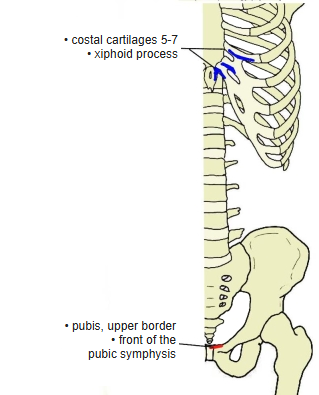
- Origin: front and upper border of the pubic symphysis (pubis)
- Insertion: costal cartilages 5–7, xiphoid process, costoxiphoid ligaments
Action
- Flexes the spine and pelvis
- Compresses the abdomen, protects its organs, active in forced expiration
Innervation
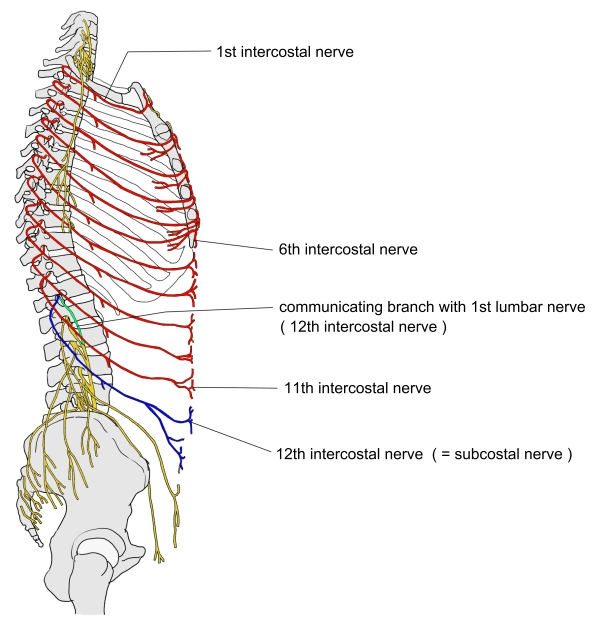
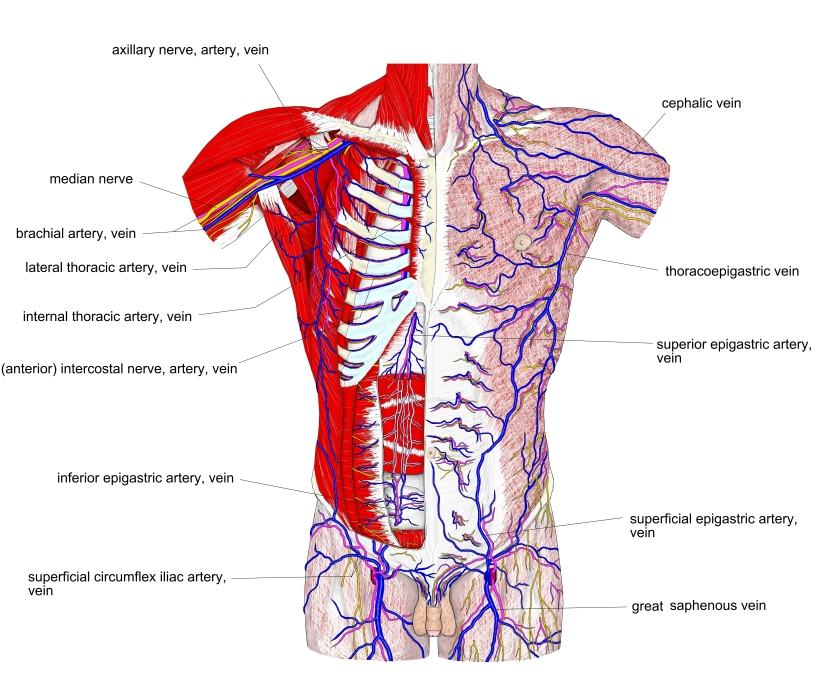
- Muscular branches of the intercostal nerves (T5–T12)
Blood supply
- Muscular branches of the superior and inferior epigastric arteries; Wikipedia adds branches of the lower six intercostal arteries
- Veins: superior and inferior epigastric veins (Wikipedia)
Related terms
- External oblique
- Internal oblique
- Transversus abdominis
- Pyramidalis
- Linea alba
- Xiphoid process
- Intercostal nerves
References and sources
- Further reading: Rectus abdominis muscle, Wikipedia.