Latin: musculus sartorius
Overview
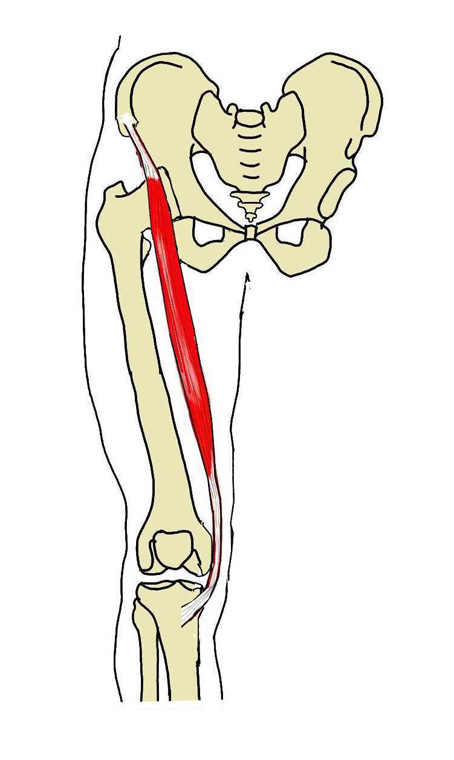
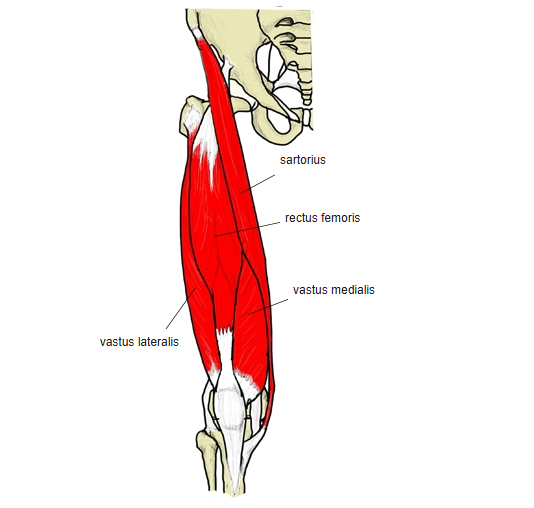
- The longest muscle in the body; runs spirally across the front and medial side of the thigh, in a sheath of fascia lata.
- Its arched course takes it behind the flexion axis of the knee.
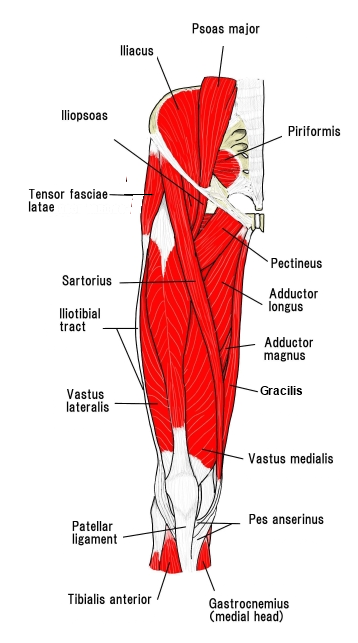
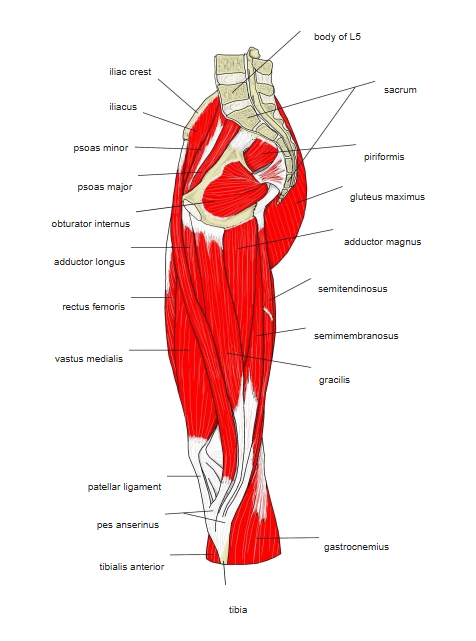
- Its fan-shaped tendon forms the superficial layer of the pes anserinus, with the gracilis and semitendinosus; a bursa separates it from the medial collateral ligament.
- Named after the tailor ("sartor"), who sat cross-legged: flexing, abducting and laterally rotating the thigh and flexing the knee.
- Continuous in places with the tensor fasciae latae, gracilis, rectus femoris and semitendinosus.
Position in the classification
Lower Limb › Thigh › Extensor group › Others
- Sartorius
- Articularis genus
Illustrations
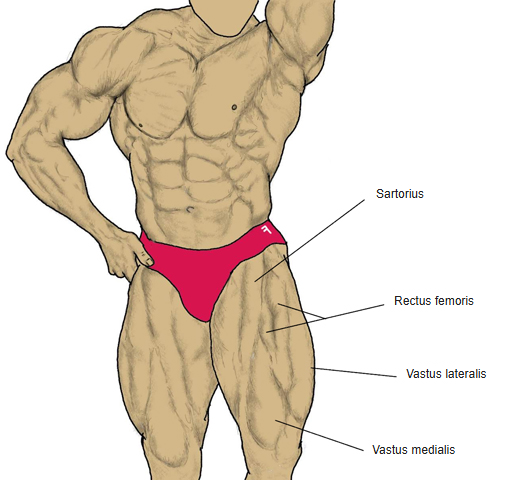
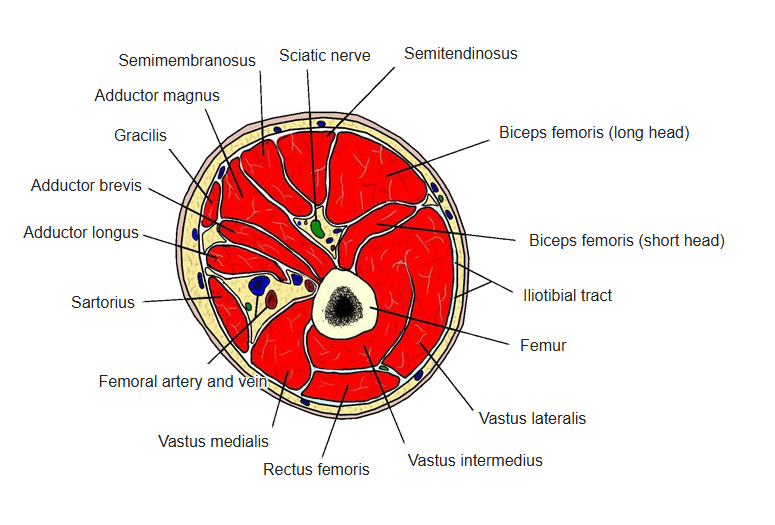
Origin / insertion
- Origin: just below the anterior superior iliac spine
- Insertion: medial side of the tibial tuberosity by a fan-shaped tendon (pes anserinus), and the crural fascia
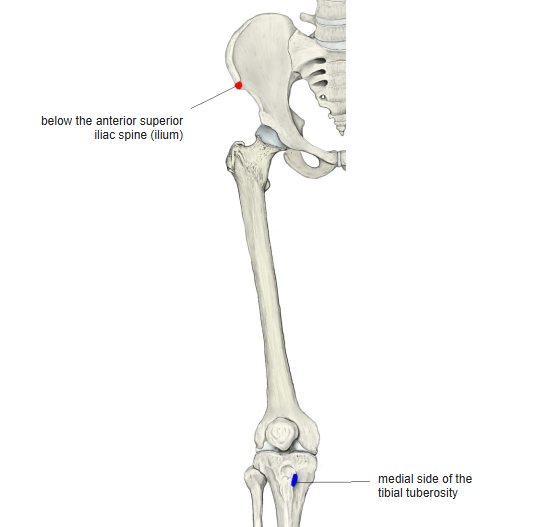
Action
- Hip: flexion, abduction and lateral rotation
- Knee: flexion and medial rotation of the leg
- With the knee extended, steadies the thigh
Innervation
- Femoral nerve (L2, L3)
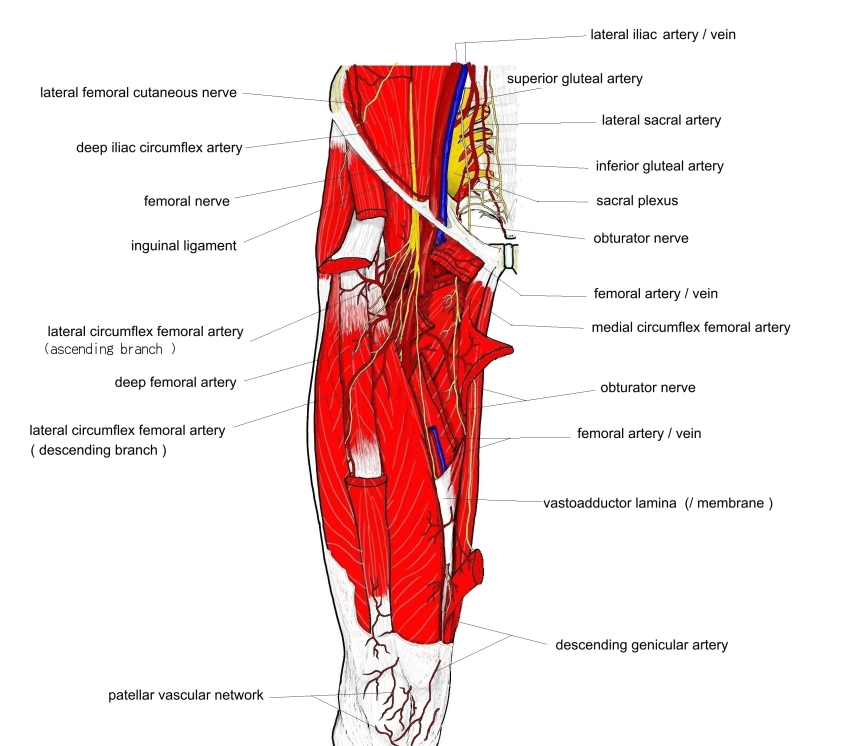
Blood supply
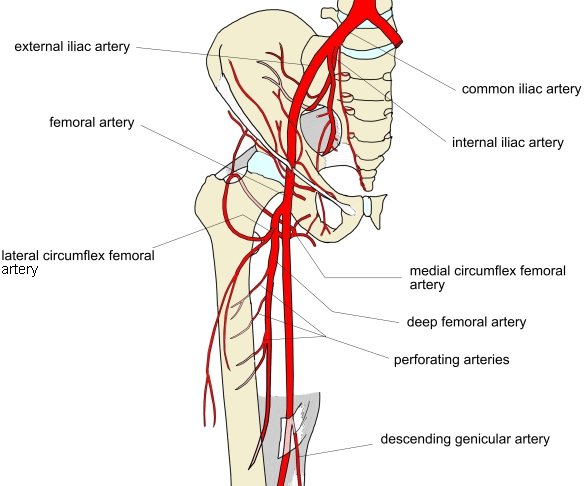
- Lateral circumflex femoral artery
Related terms
- Gracilis
- Semitendinosus
- Tensor fasciae latae
- Rectus femoris
- Pes anserinus
- Anterior superior iliac spine
- Femoral nerve
References and sources
- Further reading: Sartorius muscle, Wikipedia.