Tectorial membrane (Latin: membrana tectoria)
Also called the tectorial membrane of the craniovertebral joints
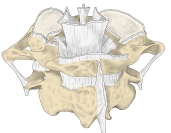 Ligaments of the atlas and axis (posterior view)
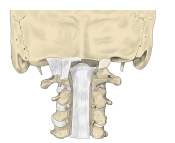 Tectorial membrane and posterior longitudinal ligament (posterior view)
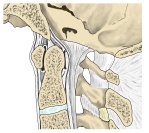 Craniovertebral junction (median section)
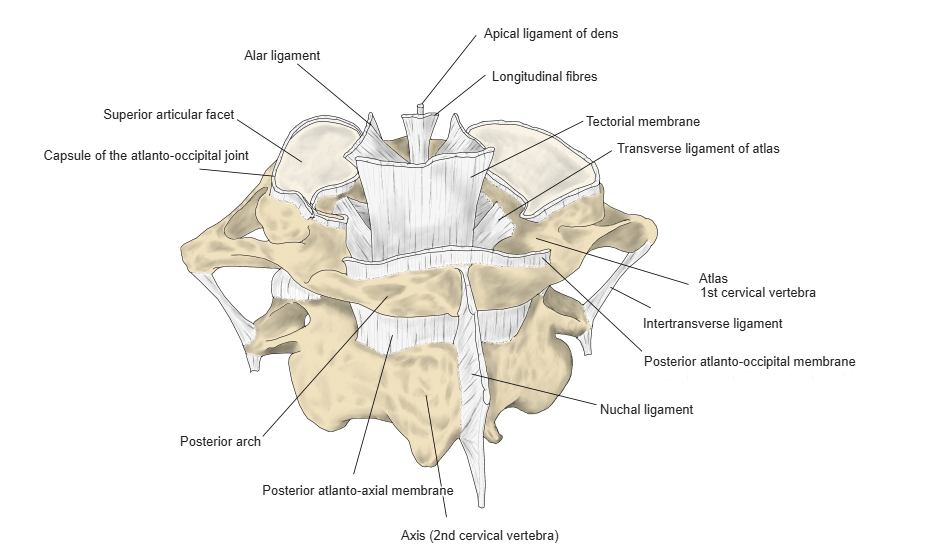
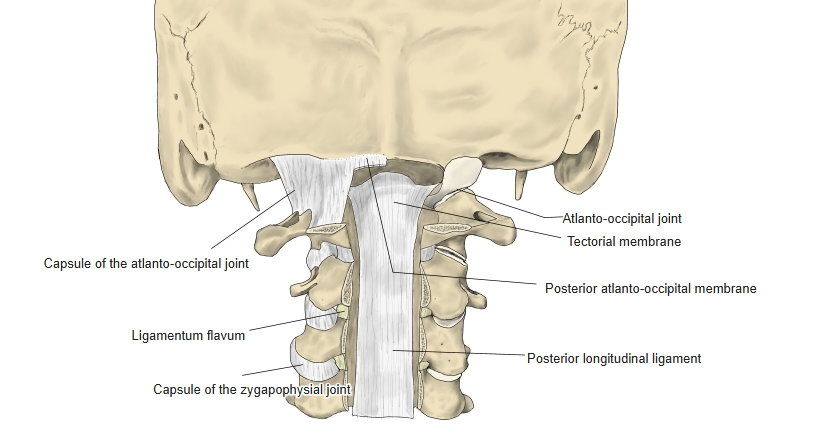
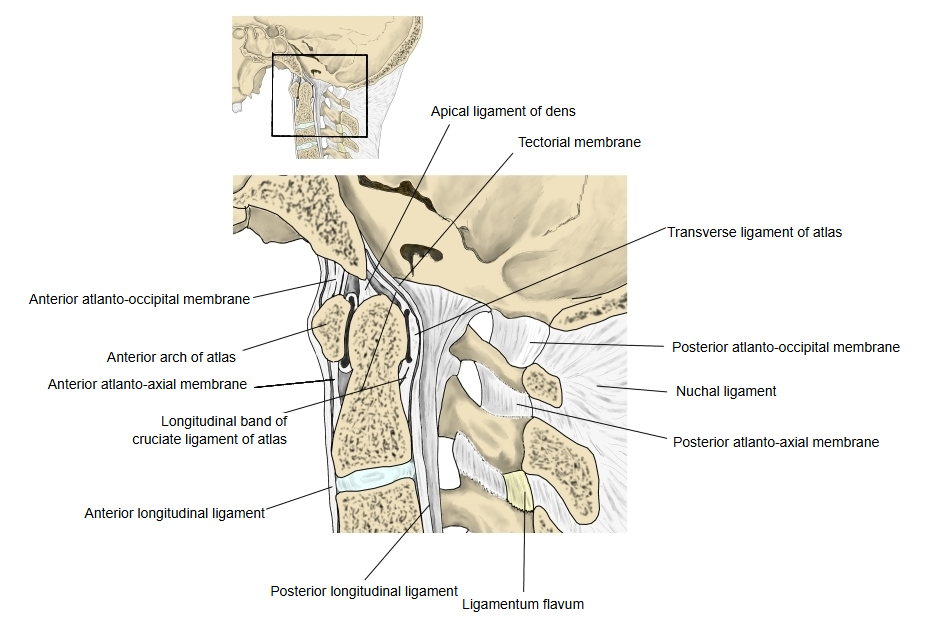
The tectorial membrane is the broad upper part of the posterior longitudinal ligament. It covers the cruciate ligament of the atlas from behind, passes over the front margin of the foramen magnum and attaches to the clivus of the occipital bone together with the cranial dura mater, which covers it from behind. It helps limit flexion and extension of the head and keeps the dens away from the spinal cord. Some authors restrict the name to the deep, short-fibred layer of the upper posterior longitudinal ligament, which ends below at the second or third cervical vertebral body. The name comes from Latin tectum, roof or cover.
Reference websites
[Wikipedia]
· Tectorial membrane of atlanto-axial joint, Wikipedia.
[Websites with illustrations]
· Tectorial membrane, transverse, alar and apical ligaments (Gray's Anatomy, fig. 307) (Wikimedia Commons)

· Median section of the occipital bone and upper cervical vertebrae (Gray's Anatomy, fig. 308) (Wikimedia Commons)

Related terms
- Posterior longitudinal ligament
- Clivus
- Alar ligaments
- Apical ligament of dens
- Transverse ligament of atlas
- Foramen magnum
- Axis
References and sources
- Further reading: Tectorial membrane of atlanto-axial joint, Wikipedia.
- Federative International Programme for Anatomical Terminology (FIPAT). Terminologia Anatomica, 2nd ed. (TA2), 2019.