Latin: Vena jugularis externa
Overview
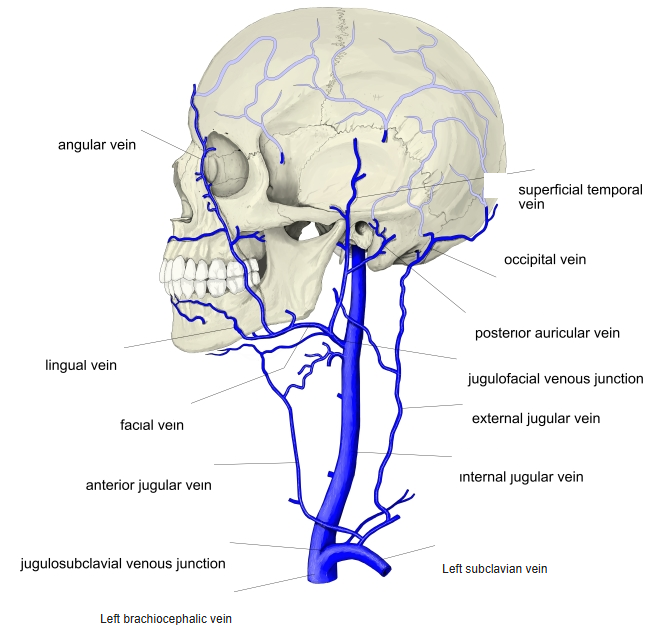
- Drains most of the scalp and the face (the superficial parts) and part of the neck.
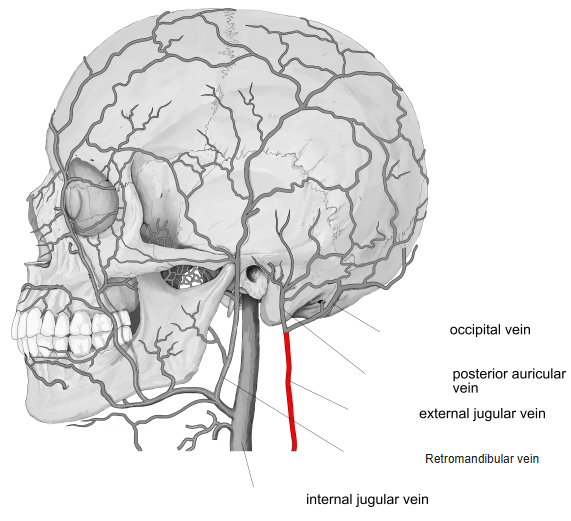
- Formed near the angle of the mandible, usually in or just below the parotid gland, by the union of the posterior division of the retromandibular vein and the posterior auricular vein.
- Runs down obliquely across the sternocleidomastoid, under the platysma.
- Pierces the deep fascia above the clavicle and ends in the subclavian vein.
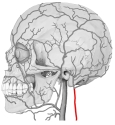
External jugular vein 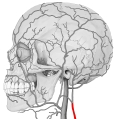
Formation of the external jugular vein
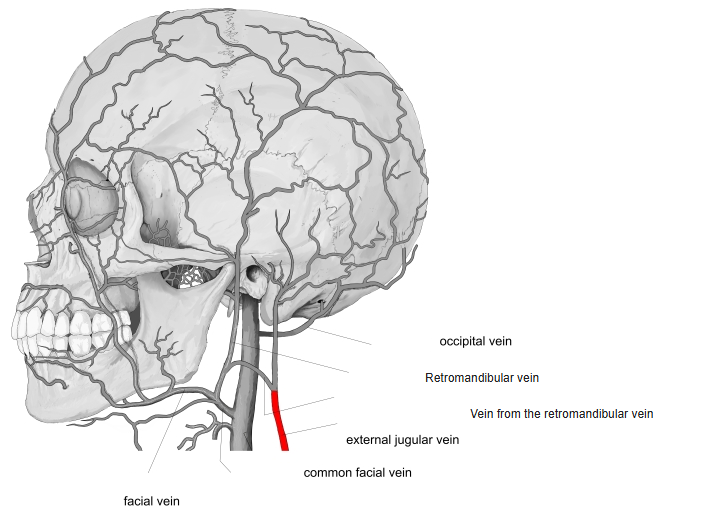
Tributaries and drainage
- Tributaries: posterior external jugular vein, transverse cervical veins, suprascapular vein, anterior jugular vein; sometimes the occipital vein.
- Has two pairs of valves, at its end and about 4 cm above the clavicle.
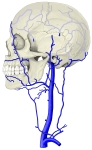
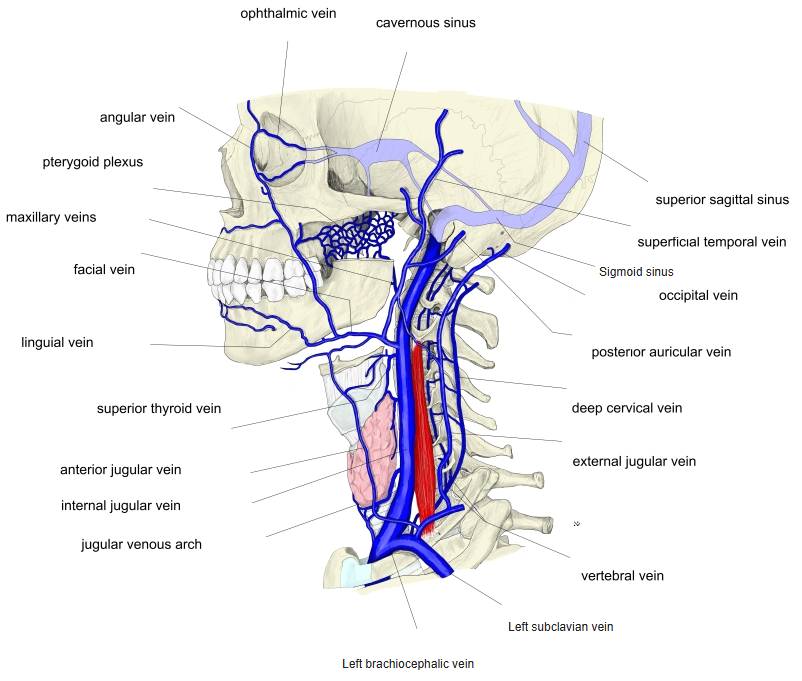
Veins of the head and neck (side view) 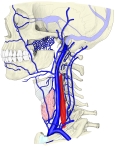
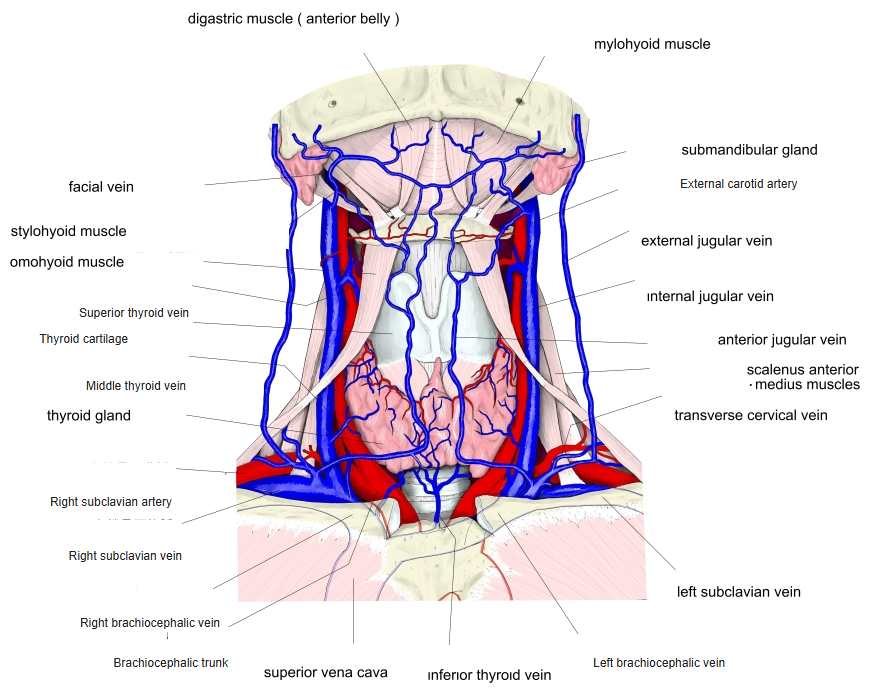
Tributaries of the jugular veins 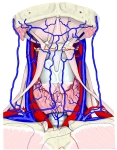
Veins of the front of the neck
Clinical notes
- Easily seen in the neck when venous pressure is raised (for example in heart failure) or when straining.
- Can be used for venous access.
References and sources
- Further reading: External jugular vein, Wikipedia.