Latin: ligamenta tarsi
Overview
- The collective name for the ligaments that bind the tarsal bones to one another.
- They are grouped by position into the dorsal tarsal ligaments, the plantar tarsal ligaments and the interosseous tarsal ligaments.
- The plantar ligaments are much stronger than the dorsal ones and, with the muscles and the plantar aponeurosis, maintain the arches of the foot.
Ligaments in this group
Attachments
| Bone | Site | |
|---|---|---|
| Between | Talus, calcaneus, navicular, cuboid and the three cuneiforms |
Joint
- Intertarsal joints (subtalar, talocalcaneonavicular, calcaneocuboid, cuneonavicular, cuboideonavicular, intercuneiform and cuneocuboid joints).
Function and clinical notes
- Bind the tarsus into a firm but slightly mobile unit that transmits body weight and forms the arches.
Illustrations
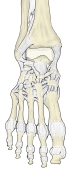
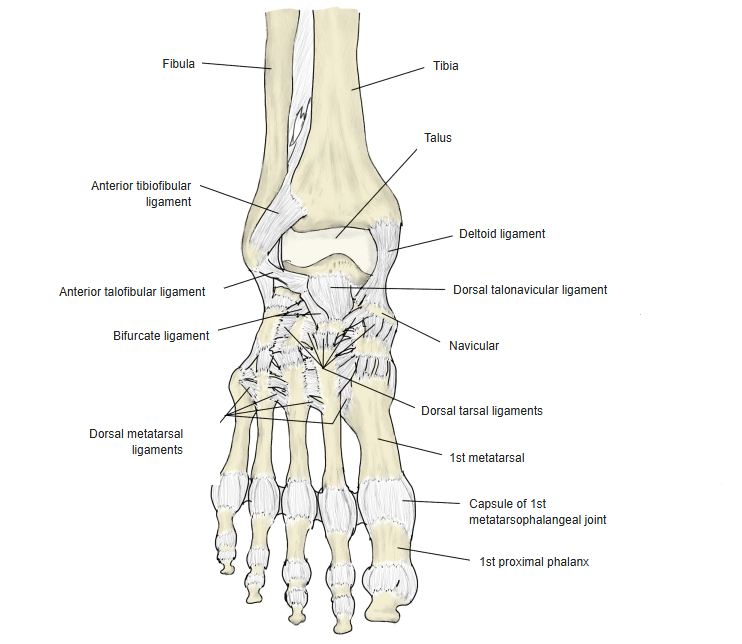
Ligaments of the ankle and foot (anterior) 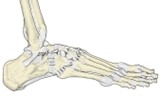
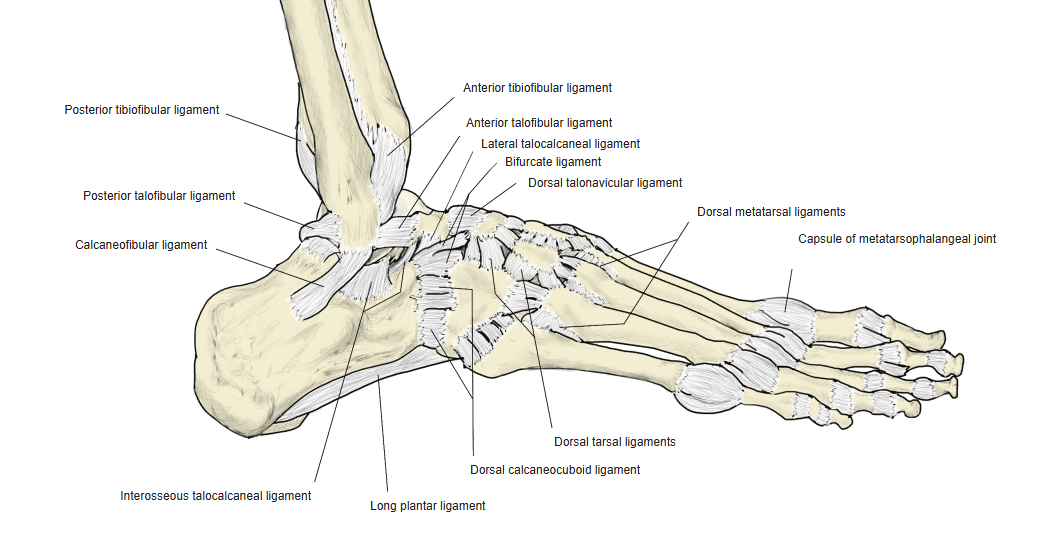
Ligaments of the ankle and foot (lateral) 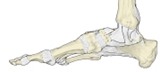
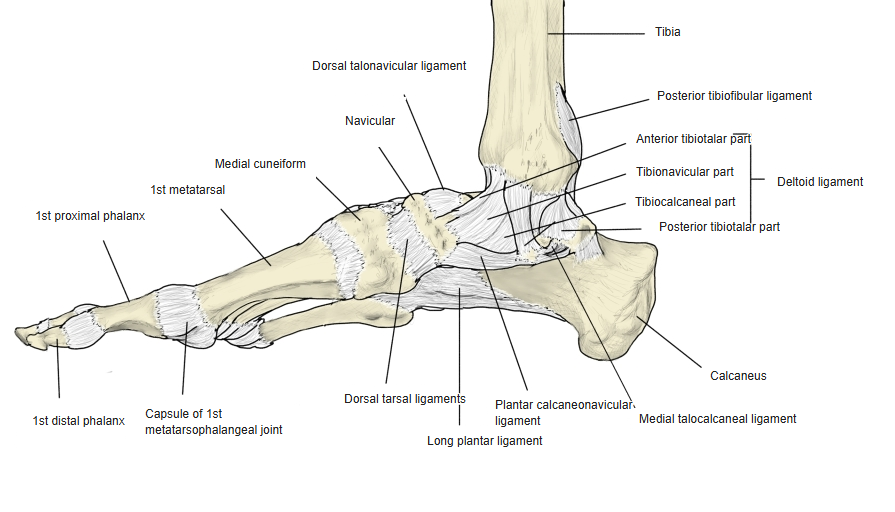
Ligaments of the ankle and foot (medial) 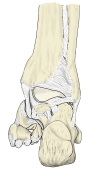
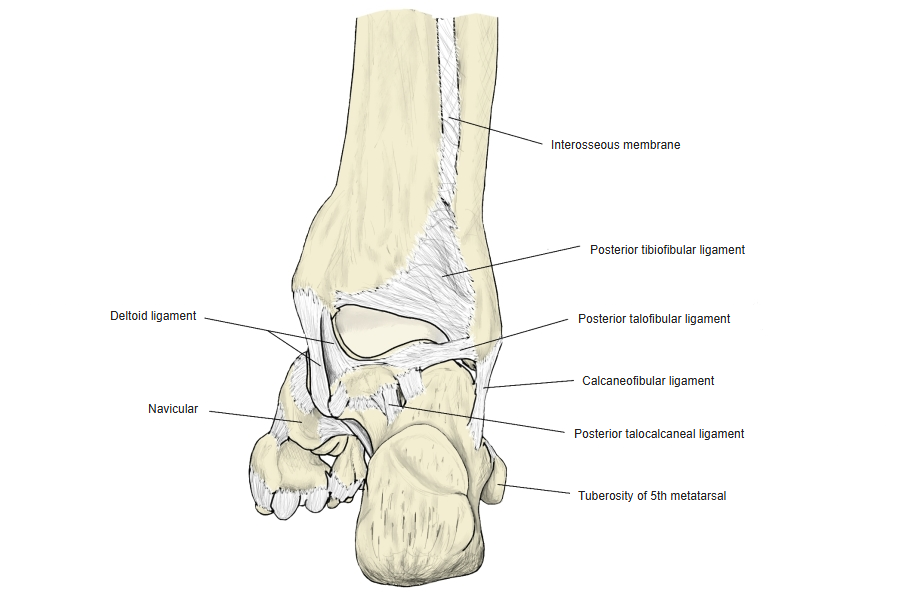
Ligaments of the ankle (posterior)
References and sources
- Further reading: Tarsal ligaments, Wikipedia.