Latin: musculus cricothyroideus
Overview
- It lies on the external surface of the larynx, on each side of the median cricothyroid ligament.
- It is divided by the direction of its fibres into a medial straight part (pars recta) and a lateral oblique part (pars obliqua).
- The only tensor muscle of the larynx, and the only laryngeal muscle supplied by the external branch of the superior laryngeal nerve.
- In clinical use it is also called the "anticus".
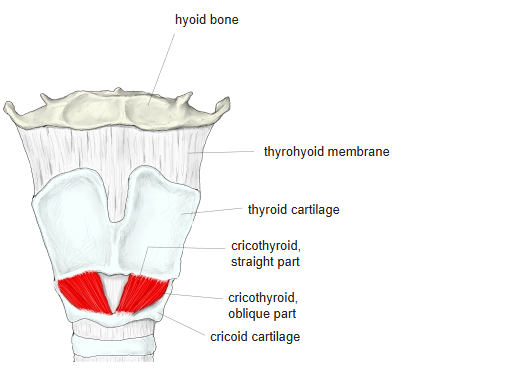
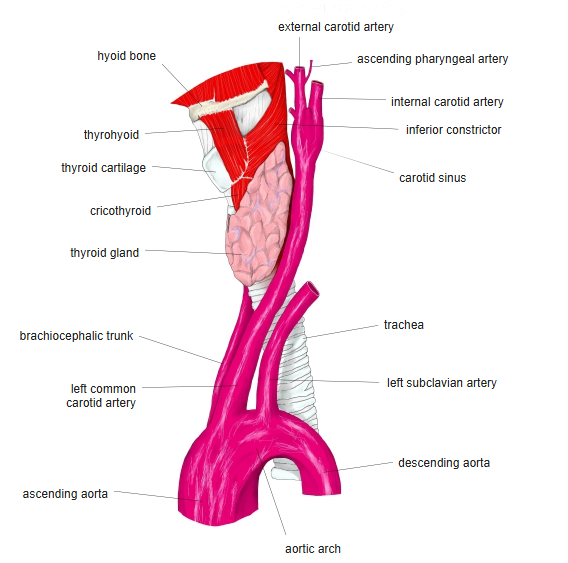
Illustrations
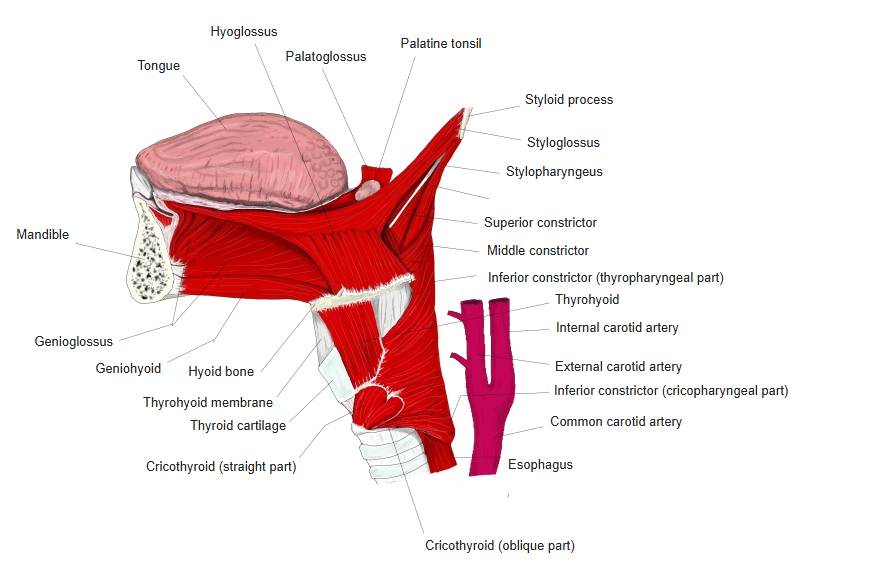
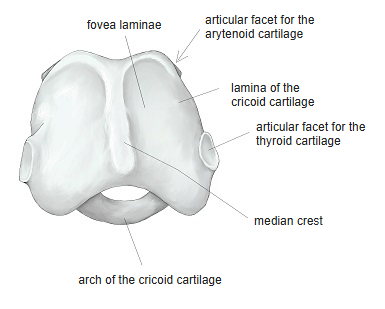
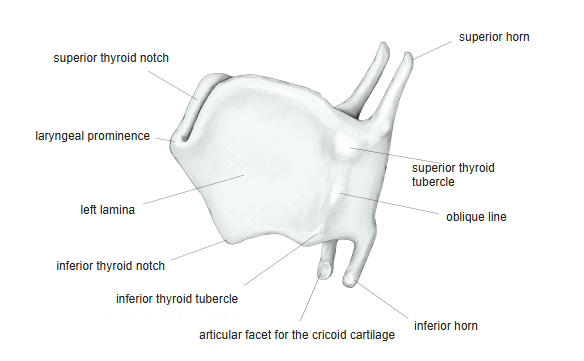
Origin / insertion
- Origin: lateral lower margin of the arch of the cricoid cartilage
- Insertion: lower border and inferior horn of the thyroid cartilage
Action
- Pulls the thyroid cartilage forward and downward, which tenses the vocal folds
- By lengthening the vocal folds, it raises the pitch of the voice
Innervation
- External branch of the superior laryngeal nerve (branch of the vagus nerve)
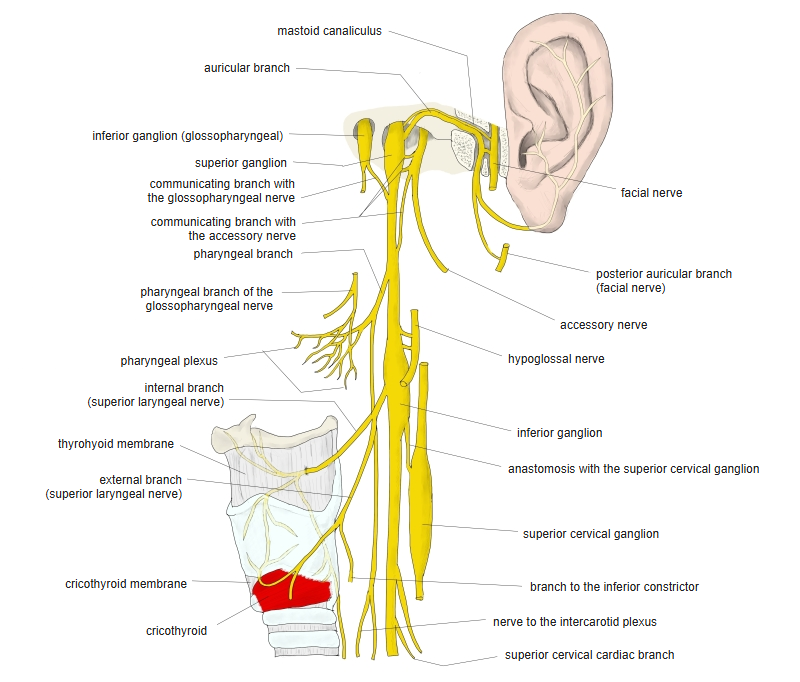
Blood supply
- Not given in the sources used here
Related terms
- Cricoid cartilage
- Thyroid cartilage
- Posterior cricoarytenoid
- Lateral cricoarytenoid
- Vocalis
- Vagus nerve
References and sources
- Further reading: Cricothyroid muscle, Wikipedia.