Latin: musculus extensor digiti minimi
Overview
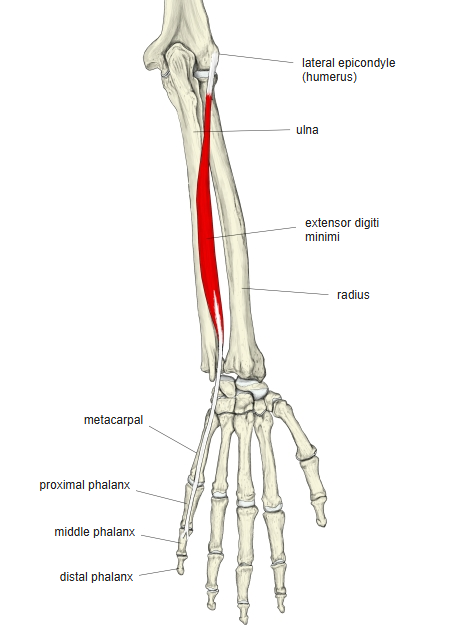
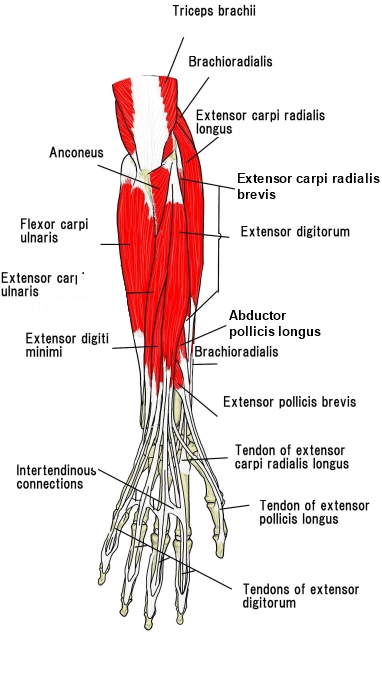
- One of the 11 muscles of the extensor group of the forearm, in the superficial layer.
- A slender, weak muscle that separates from the extensor digitorum and lies on its ulnar side; the two are joined by an intermuscular tendinous sheet.
- Because it is weak, it mainly assists the extensor digitorum in extending the little finger.
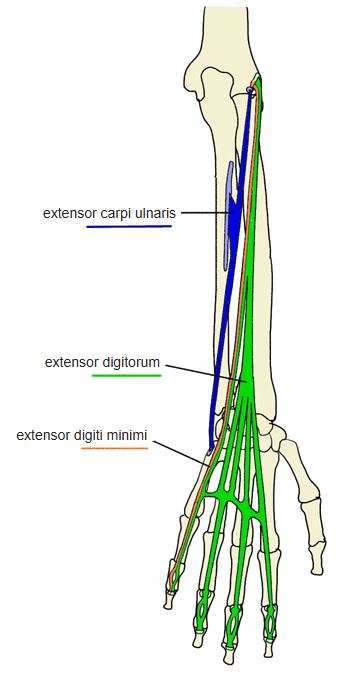
- Its tendon passes under the extensor retinaculum through the 5th compartment, posterior to the distal radioulnar joint, then usually divides into two on the back of the hand.
- Its belly is often fused with that of the extensor digitorum.
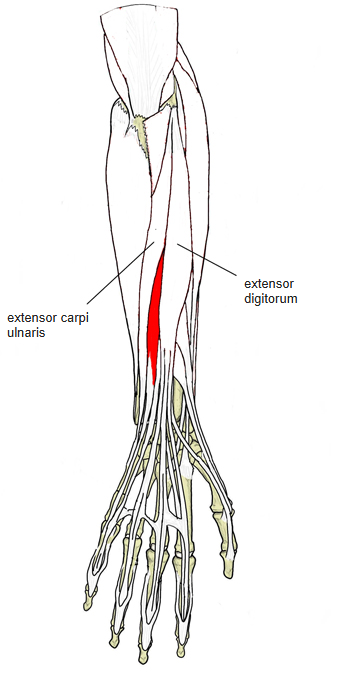
Position in the classification
Upper Limb › Forearm › Extensor group › Superficial posterior group
- Extensor digitorum
- Extensor digiti minimi
- Extensor carpi ulnaris
Illustrations
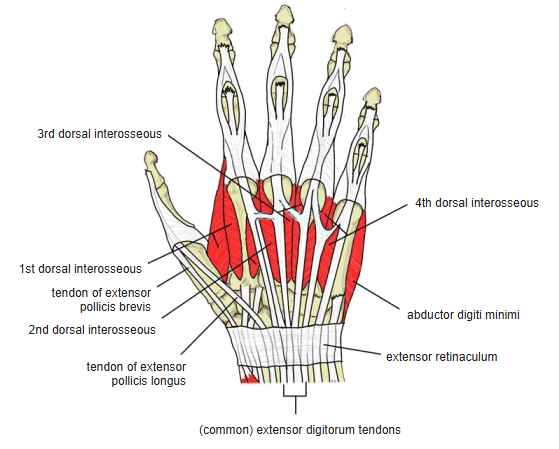
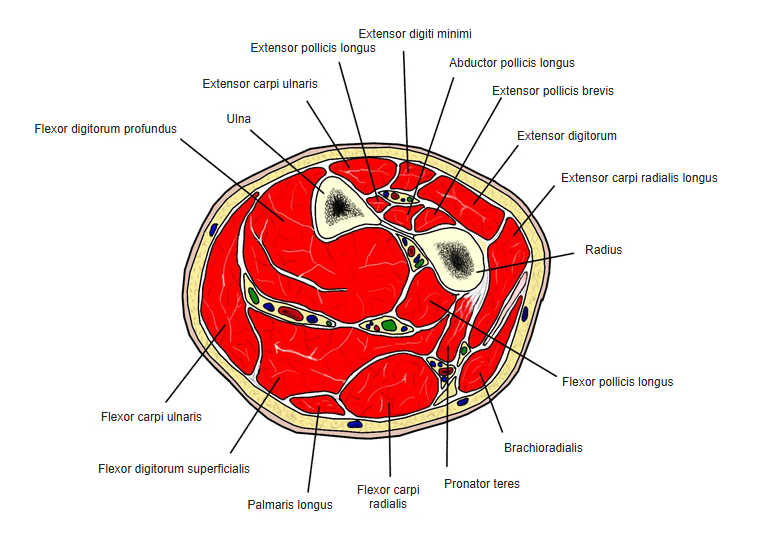
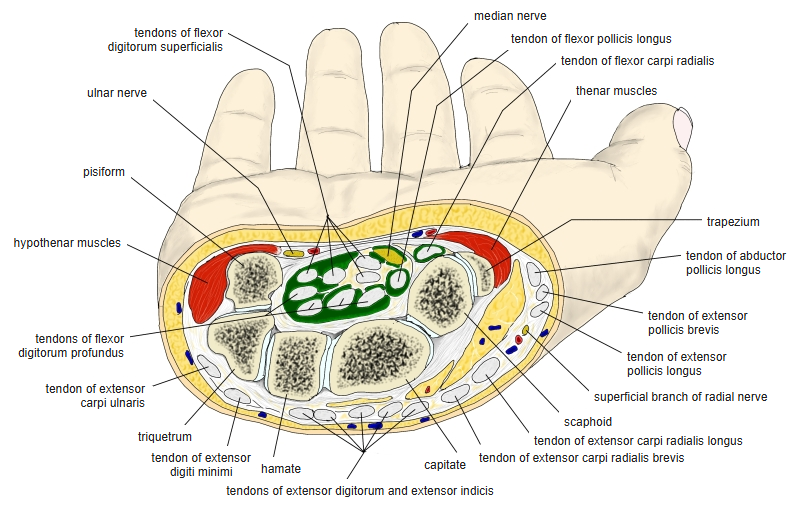
Origin / insertion
- Origin:
- Lateral epicondyle of the humerus (common extensor tendon) and the neighbouring intermuscular septa
- Some sources give only its own fascia
- Insertion: dorsal digital expansion of the little finger, together with the extensor digitorum tendon
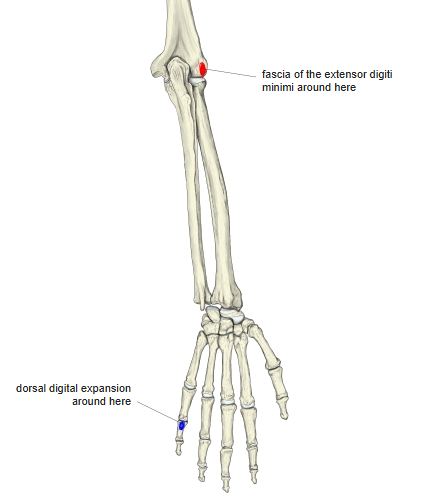
Action
- Extends the little finger
- Also helps to extend the wrist, which it crosses
Innervation
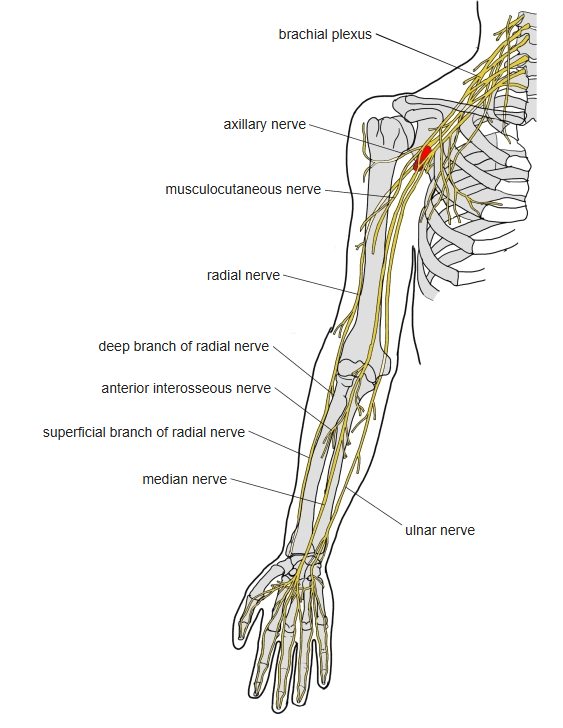
- Deep branch of the radial nerve (posterior interosseous nerve), C7–C8; some sources C6–C8
Blood supply
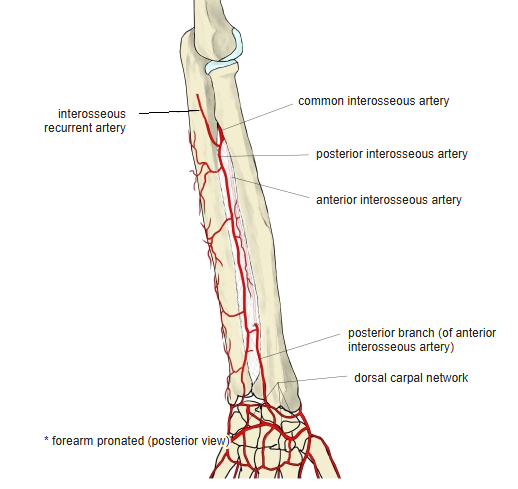
- Posterior interosseous artery
Anatomical variations
- Rarely absent, or replaced by a slip of the extensor digitorum or extensor carpi ulnaris; its belly is often fused with the extensor digitorum
- The tendon may not divide, or may send one slip to the ring finger
- Division of the tendon was found in about 25–31% of limbs in one study
- An accessory extensor digiti minimi occurs in about 5%
- An extra fibrous slip may come from the lateral epicondyle
Related terms
- Extensor digitorum
- Extensor carpi ulnaris
- Lateral epicondyle
- Dorsal digital expansion
- Extensor retinaculum
- Radial nerve
- Posterior interosseous nerve
- Posterior interosseous artery
References and sources
- Further reading: Extensor digiti minimi muscle, Wikipedia.