Latin: musculus mylohyoideus
Overview
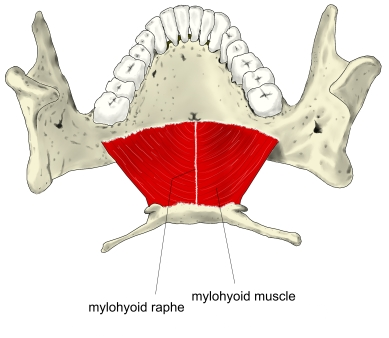
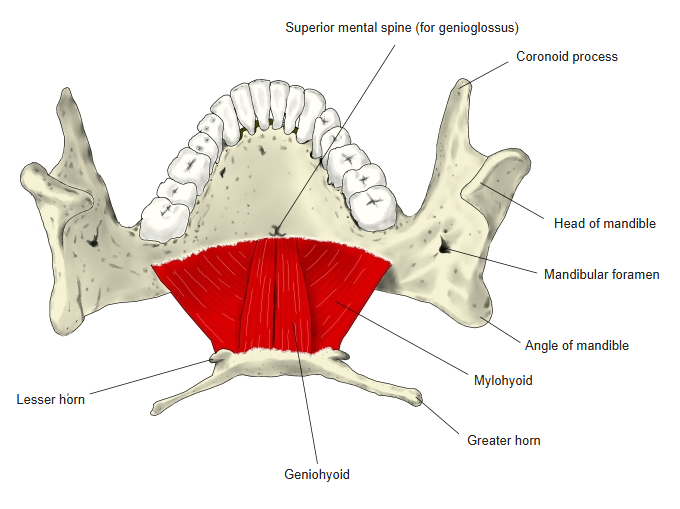
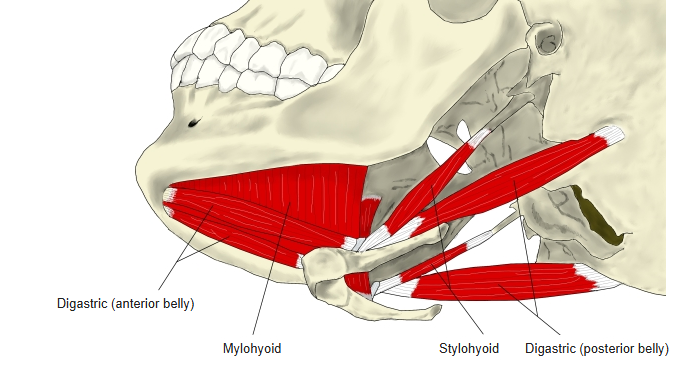
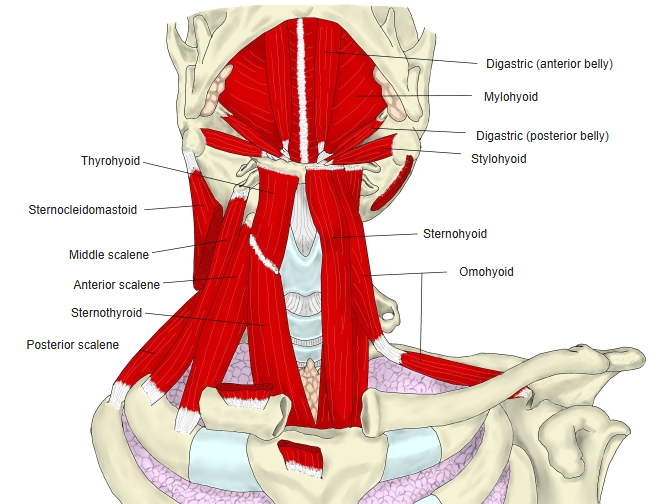
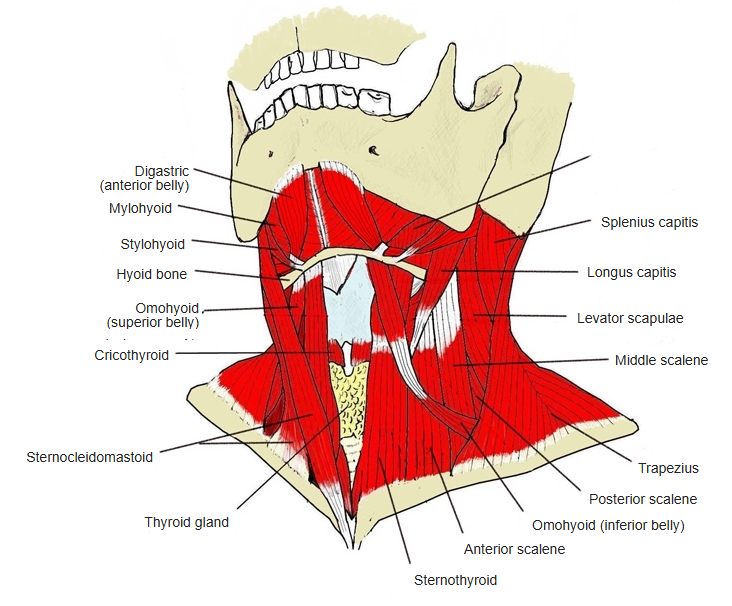
- A paired, flat, triangular suprahyoid muscle just above the anterior belly of the digastric.
- The two muscles together form the floor of the mouth (oral diaphragm) on which the tongue rests.
- Their middle and anterior fibres meet in a median raphe running from the symphysis of the mandible to the hyoid bone; the posterior fibres insert into the body of the hyoid.
- It separates the sublingual space from the submandibular space.
Position in the classification
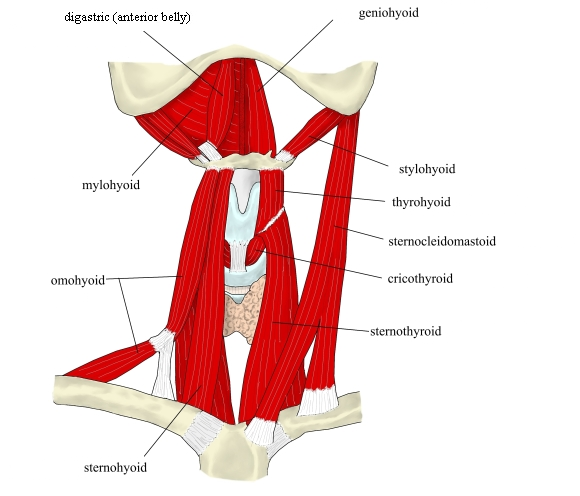
Neck › Superficial muscles of the neck › Suprahyoid muscles
- Digastric
- Stylohyoid
- Mylohyoid
- Geniohyoid
Illustrations
Origin / insertion
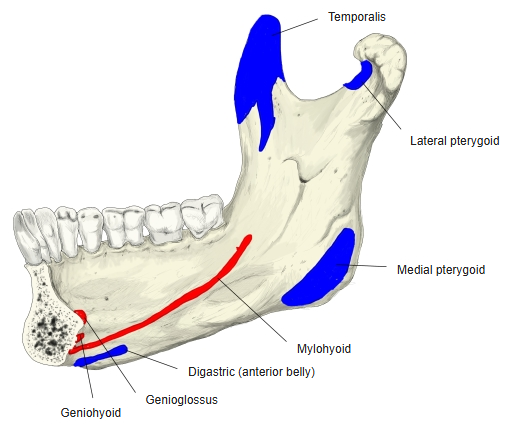
- Origin: mylohyoid line of the mandible
- Insertion: body of the hyoid and the mylohyoid raphe
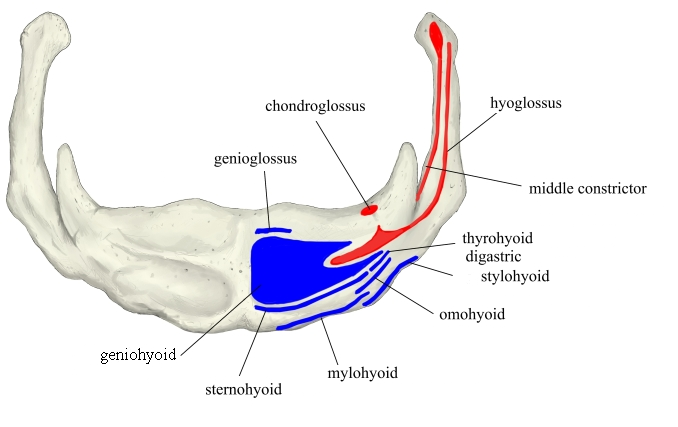
Action
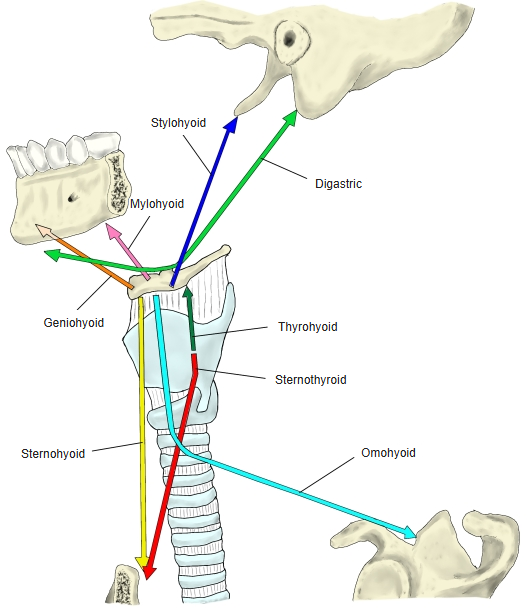
- With the mandible fixed, raises the hyoid and the tongue (swallowing, speaking)
- With the hyoid fixed, depresses the mandible
- Supports the floor of the mouth
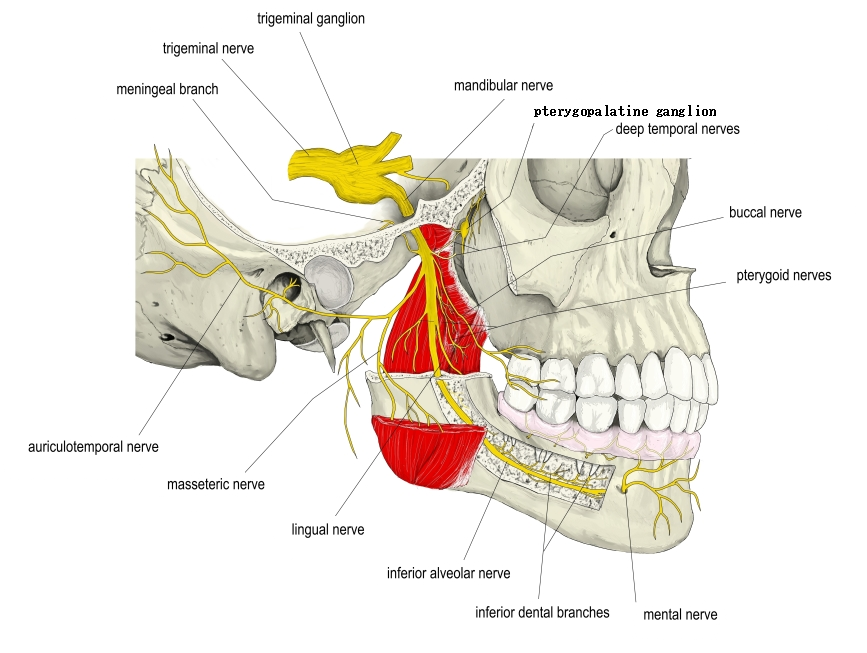
Innervation
- Nerve to mylohyoid, a branch of the inferior alveolar nerve (mandibular nerve, V3)
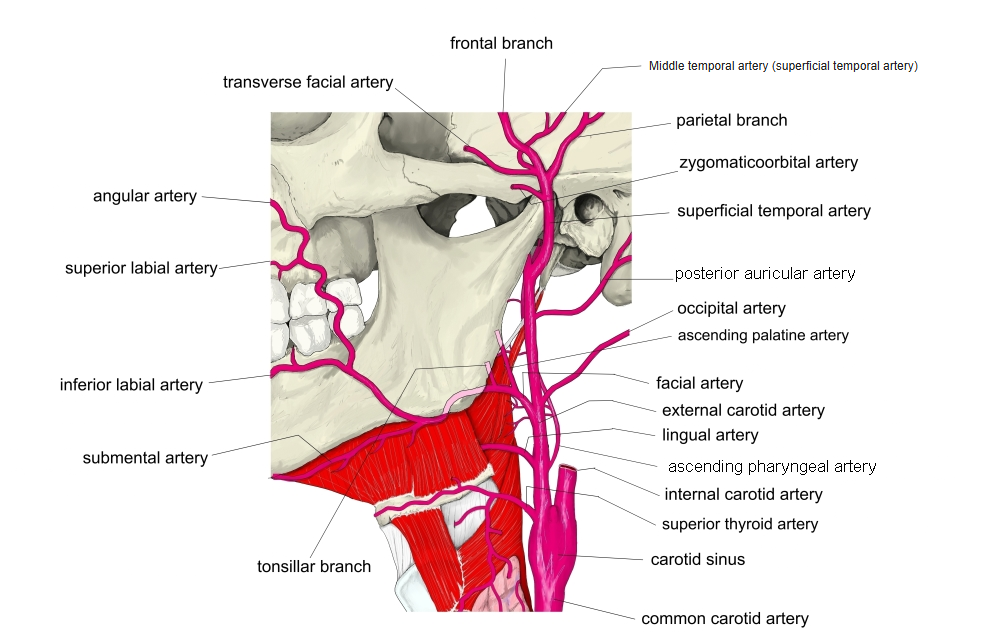
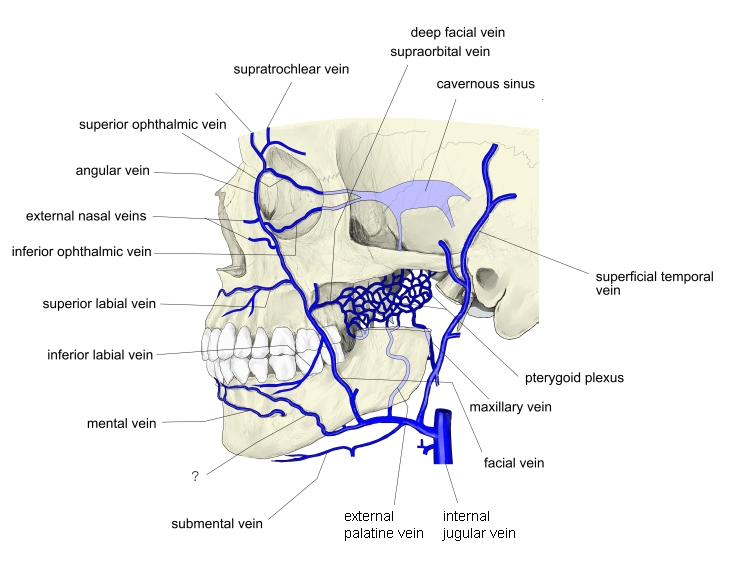
Blood supply
- Submental artery (from the facial artery)
- Mylohyoid branch of the inferior alveolar artery
Related terms
- Geniohyoid
- Digastric
- Stylohyoid
- Suprahyoid muscles
- Hyoid bone
References and sources
- Further reading: Mylohyoid muscle, Wikipedia.
- Gray H. Anatomy of the Human Body, 20th ed. (1918), “5c. The Supra- and Infrahyoid Muscles”, Bartleby.com.