Latin: musculus piriformis
Overview
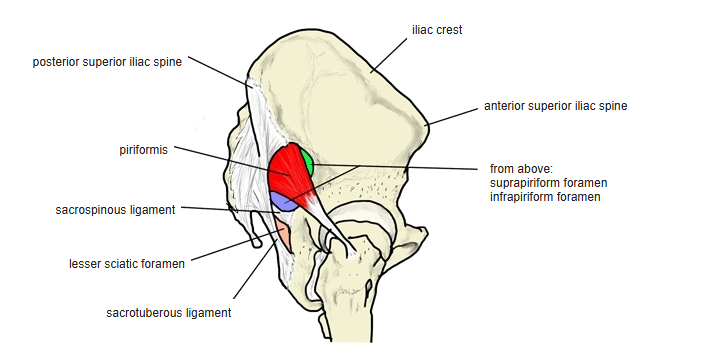
- Leaves the pelvis through the greater sciatic foramen and divides it into the suprapiriform and infrapiriform foramina.
- Wide at its origin, it narrows to a slender tendon; a bursa separates the tendon from the hip joint.
- The sciatic nerve can be compressed by the muscle: piriformis syndrome.
- Joined by connecting fibres to the gluteus maximus, medius and minimus and the superior gemellus.
Position in the classification
Lower Limb › Hip › Outer hip muscles › Deep lateral rotators
Illustrations
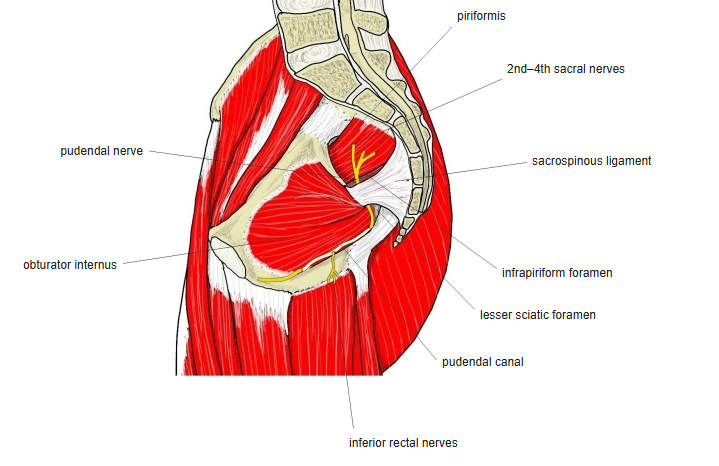
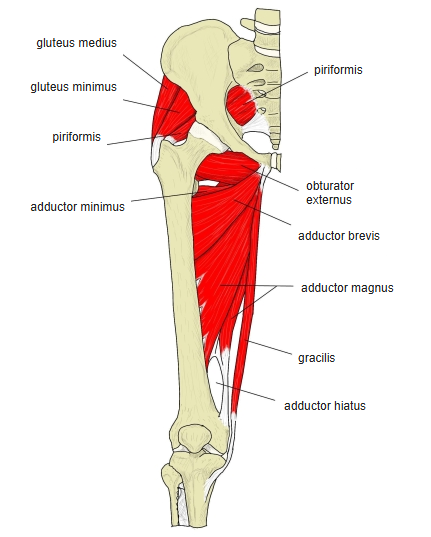
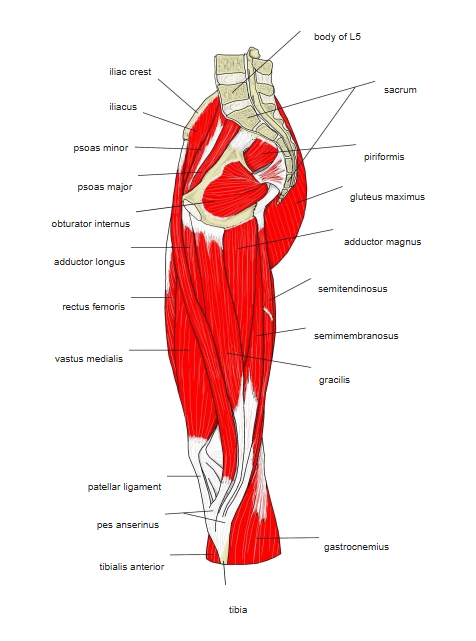
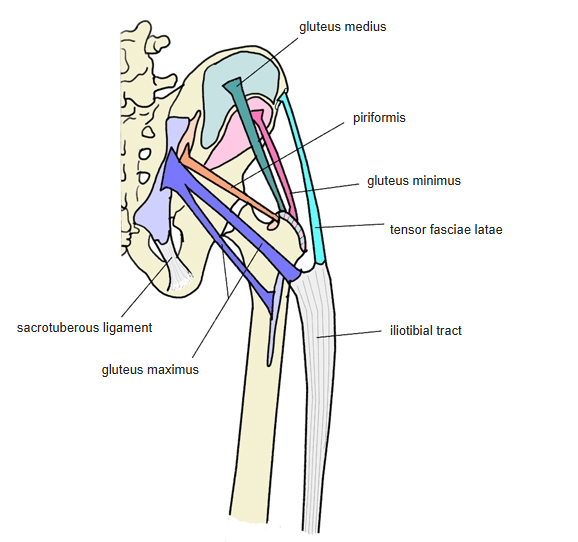
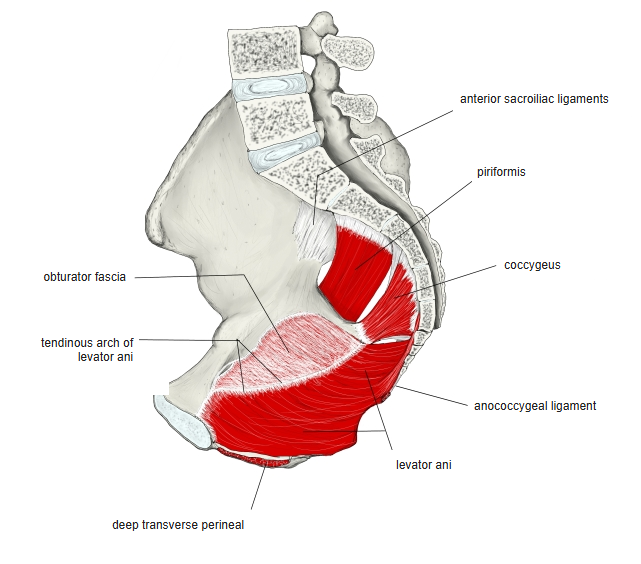
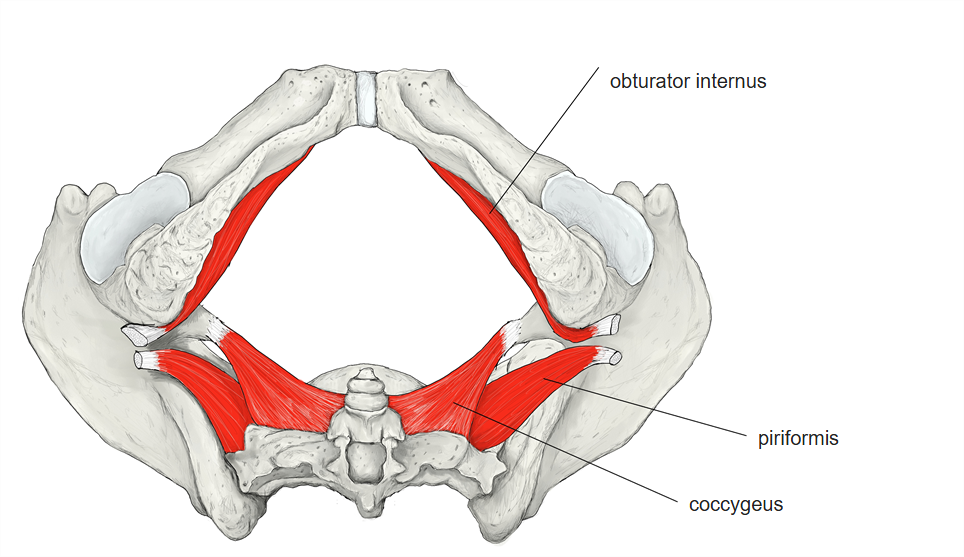
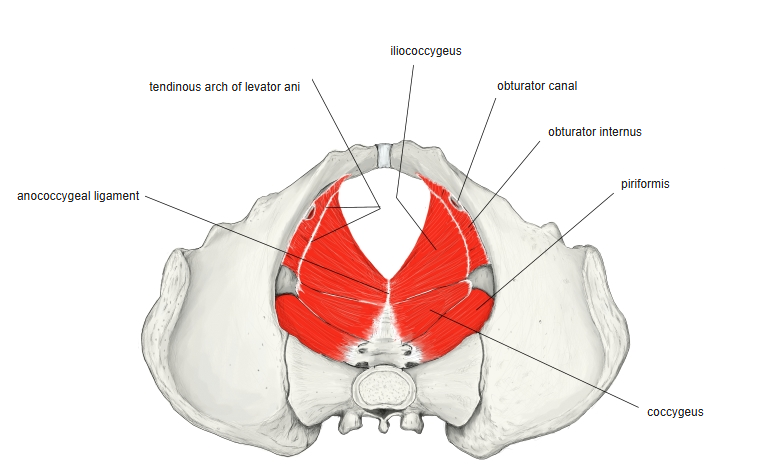
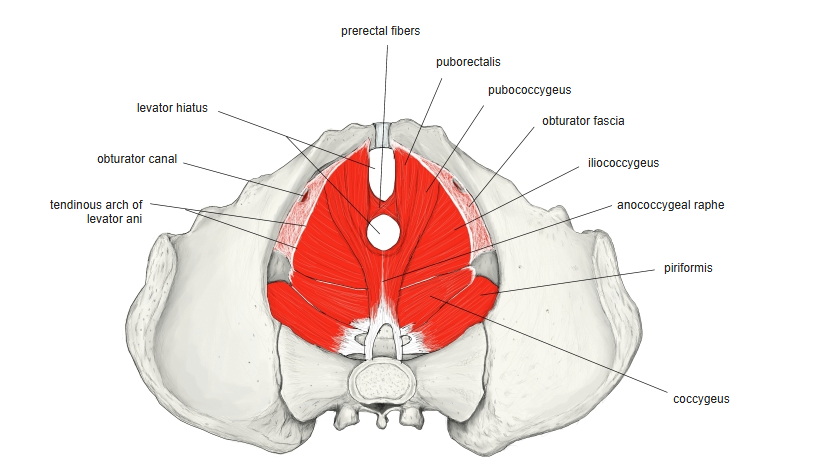
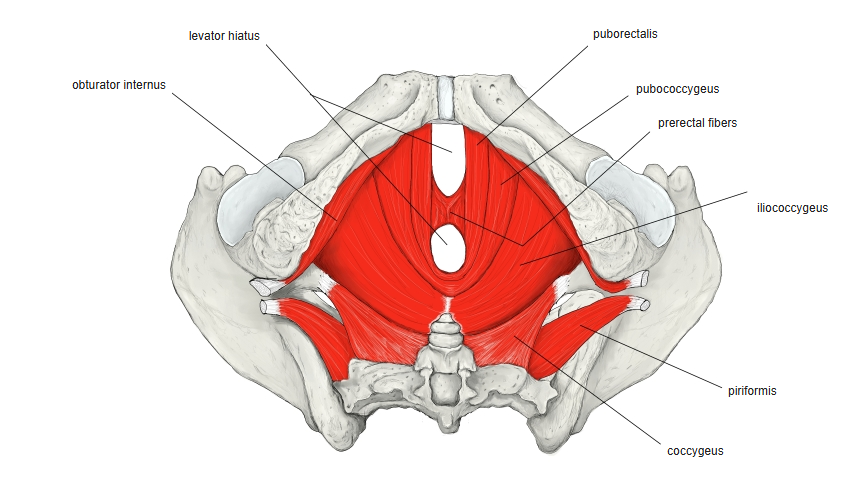
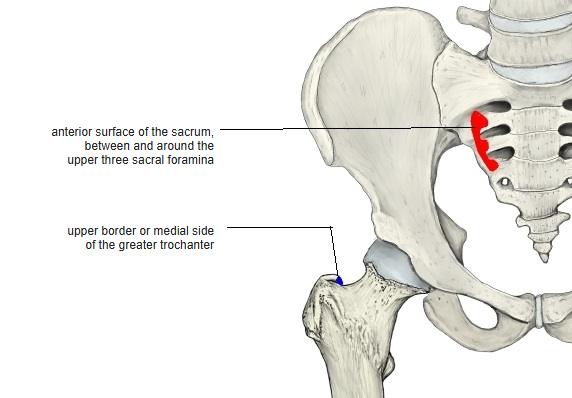
Origin / insertion
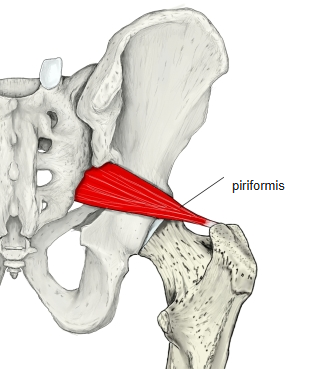
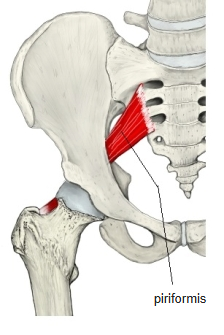
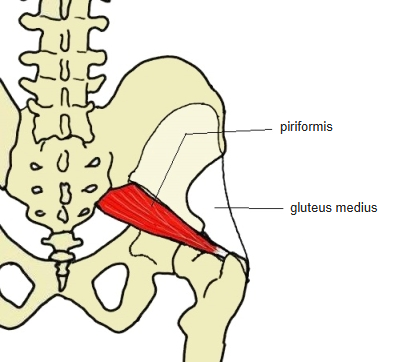
- Origin: anterior (pelvic) surface of the sacrum, between and around the upper three anterior sacral foramina
- Some sources add fibres from the capsule of the sacroiliac joint and the upper margin of the greater sciatic notch
- Insertion: upper part of the medial surface of the greater trochanter
Action
- Lateral rotation of the thigh
- Some sources: abduction, extension and lateral rotation of the hip
Innervation
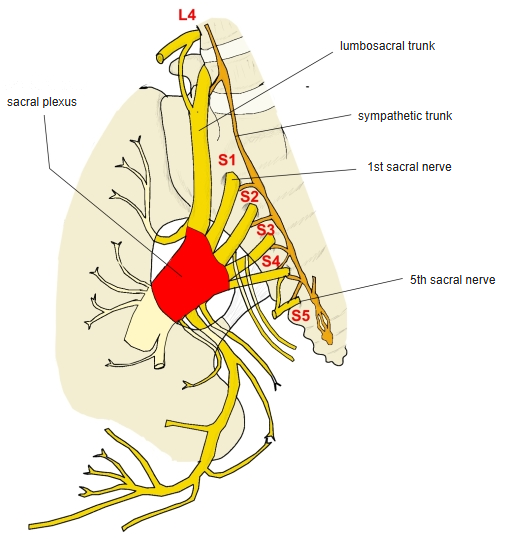
- Sacral plexus (S1, S2; some sources include L5)
Blood supply
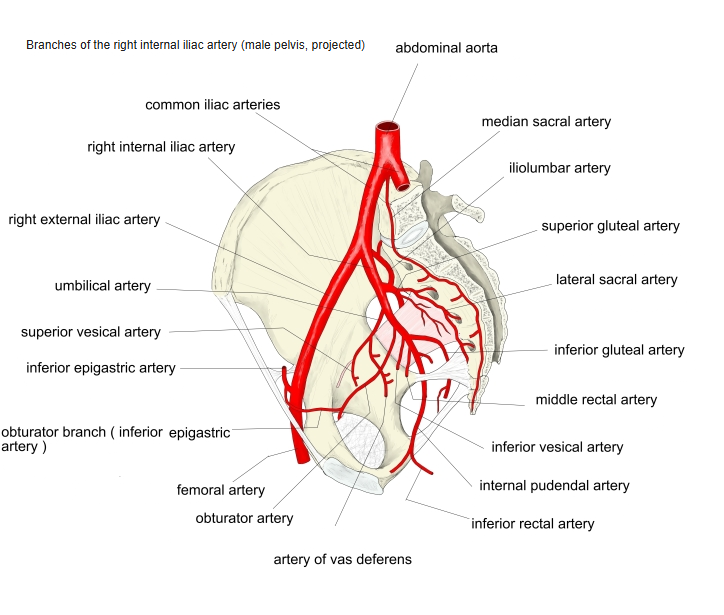
- Superior gluteal artery, inferior gluteal artery
Related terms
- Gluteus maximus
- Gluteus medius
- Gluteus minimus
- Superior gemellus
- Greater trochanter
- Sacrum
- Sciatic nerve
References and sources
- Further reading: Piriformis muscle, Wikipedia.