Latin: musculus serratus posterior superior
Overview
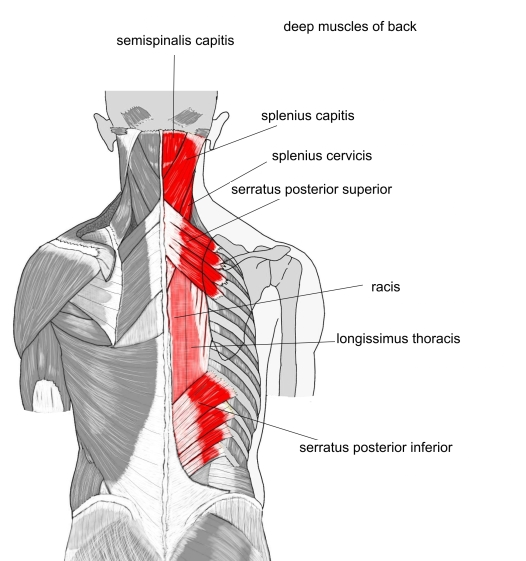
- One of the two serratus posterior muscles, in the first layer of the deep muscles of the back (spinocostal muscles).
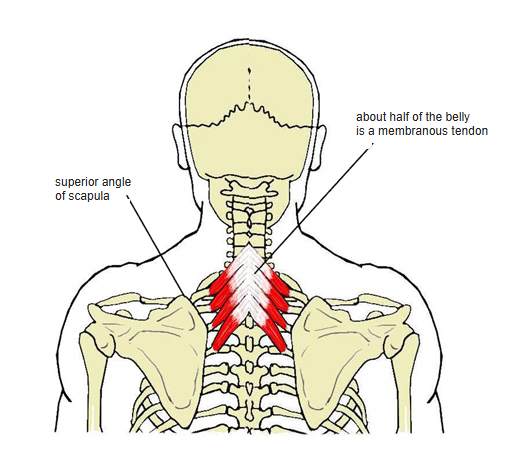
- A thin, quadrilateral muscle at the level of the scapula, running obliquely from upper medial to lower lateral.
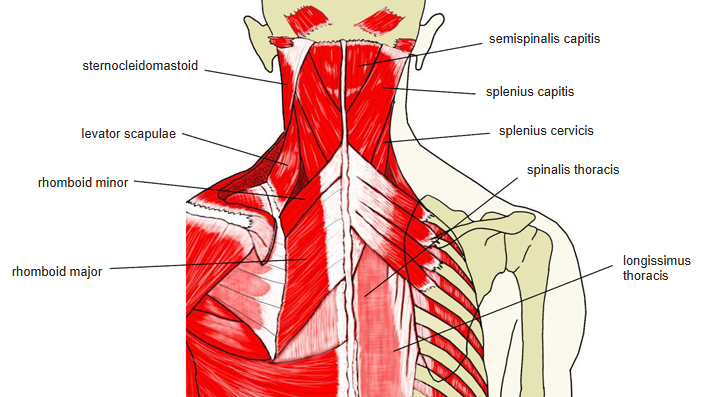
- Lies deep to the rhomboid muscles, which cover it almost completely.
- About half of its belly (the medial half) is a thin but strong membranous tendon.
- A muscle of respiration.
- Continuous in places with the trapezius and the rhomboid minor.
Position in the classification
Trunk › Back › Deep back muscles › First layer
- Serratus posterior superior
- Serratus posterior inferior
Illustrations
Origin / insertion
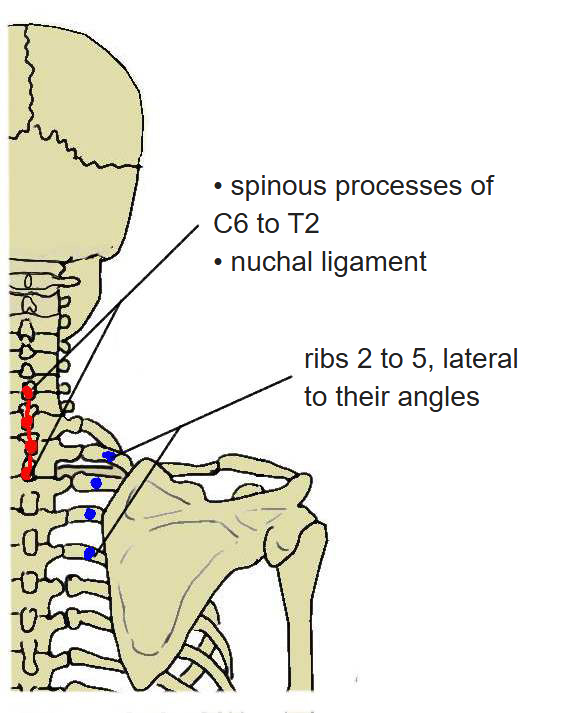
- Origin: spinous processes of C6–T2 (English sources: C7–T2, sometimes T3), the lower part of the nuchal ligament and the supraspinous ligament, by an aponeurosis
- Insertion: ribs 2 to 5, lateral to their angles, by four fleshy slips
Action
- Raises ribs 2 to 5, aiding deep inspiration
Innervation
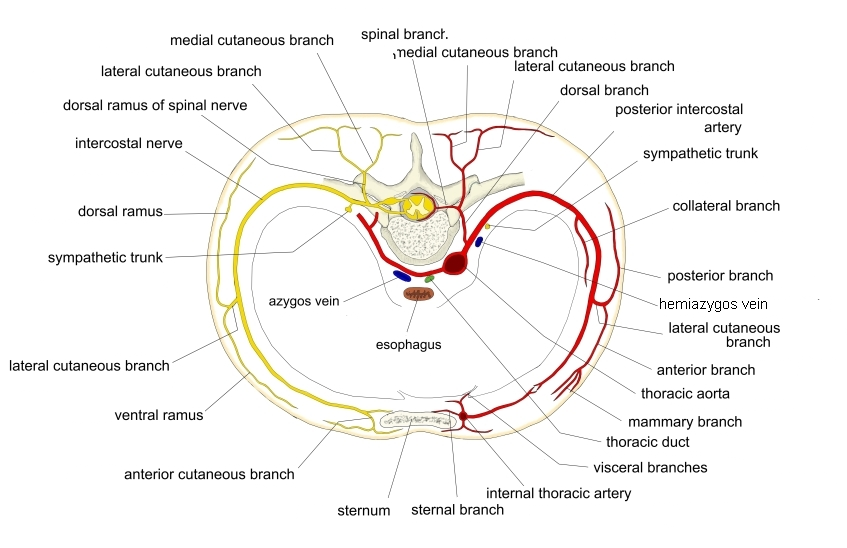
- Intercostal nerves 2 to 4 (T2–T4)
Blood supply
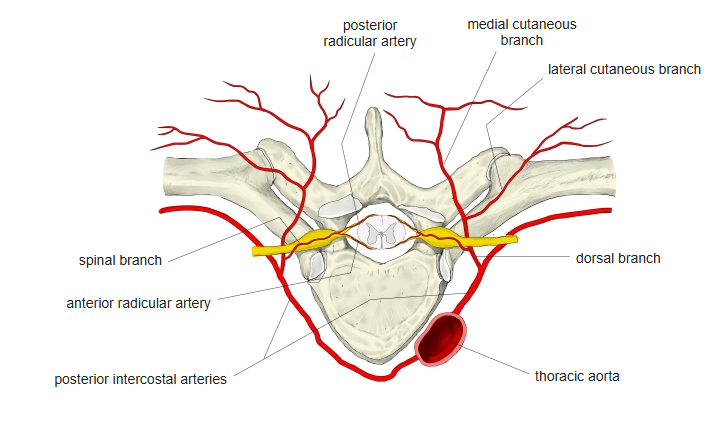
- Dorsal branches of the posterior intercostal arteries
Related terms
- Serratus posterior inferior
- Rhomboid minor
- Rhomboid major
- Trapezius
- Nuchal ligament
- Intercostal nerves
- Posterior intercostal arteries
References and sources
- Further reading: Serratus posterior superior muscle, Wikipedia.