Latin: musculus splenius capitis
Overview
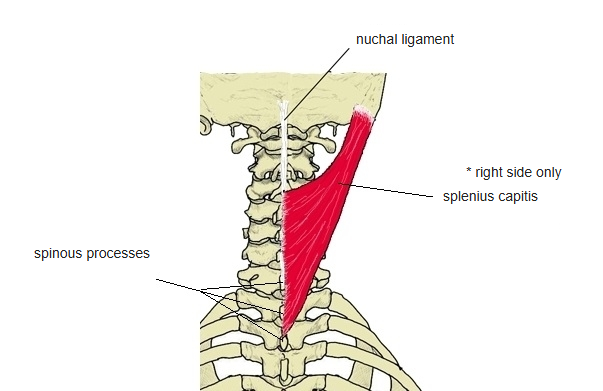
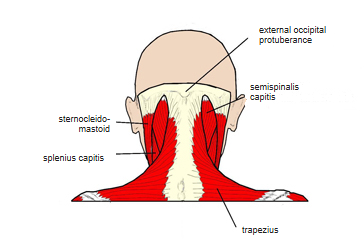
- A broad, strap-like muscle at the back of the neck; mostly covered by the trapezius and sternocleidomastoid, but near its insertion it appears between them.
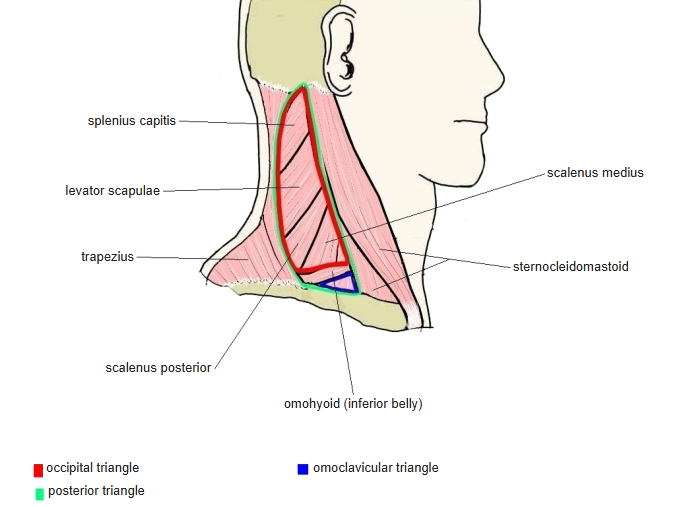
- One of the muscles in the floor of the posterior triangle of the neck.
- Continuous in places with the splenius cervicis and sternocleidomastoid.
Position in the classification
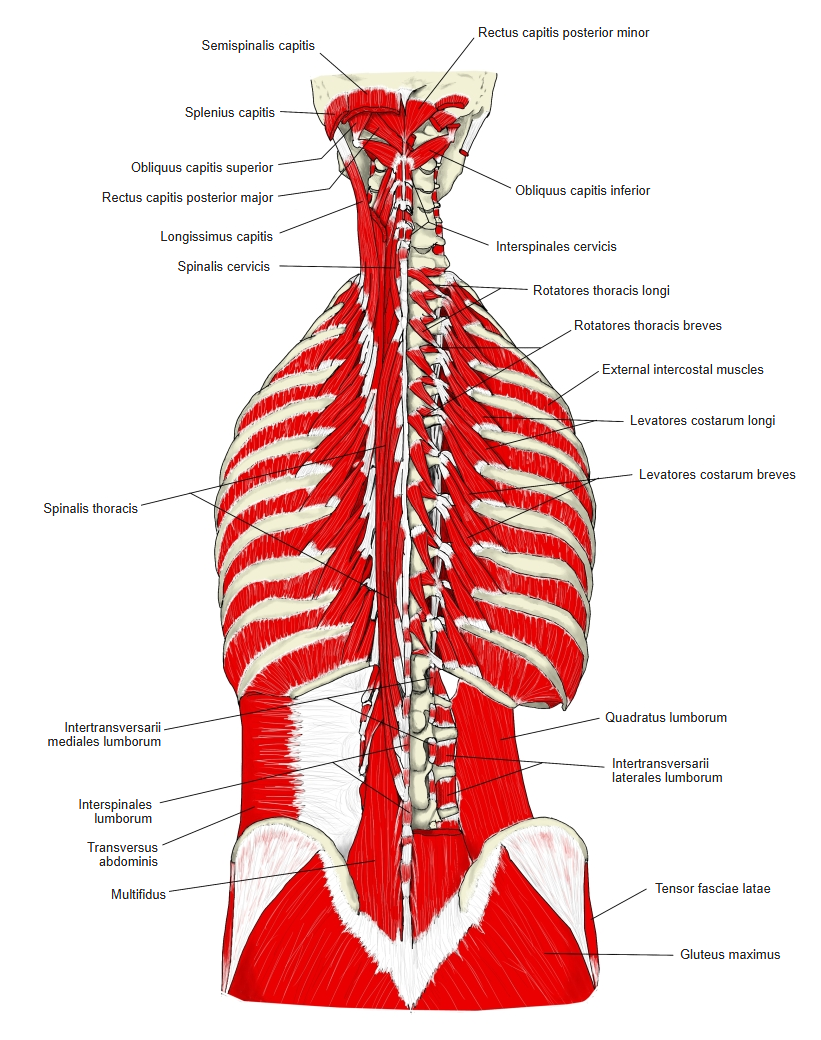
Trunk › Back › Deep back muscles › Second layer › Intrinsic back muscles › Splenius muscles
- Splenius capitis
- Splenius cervicis
Illustrations
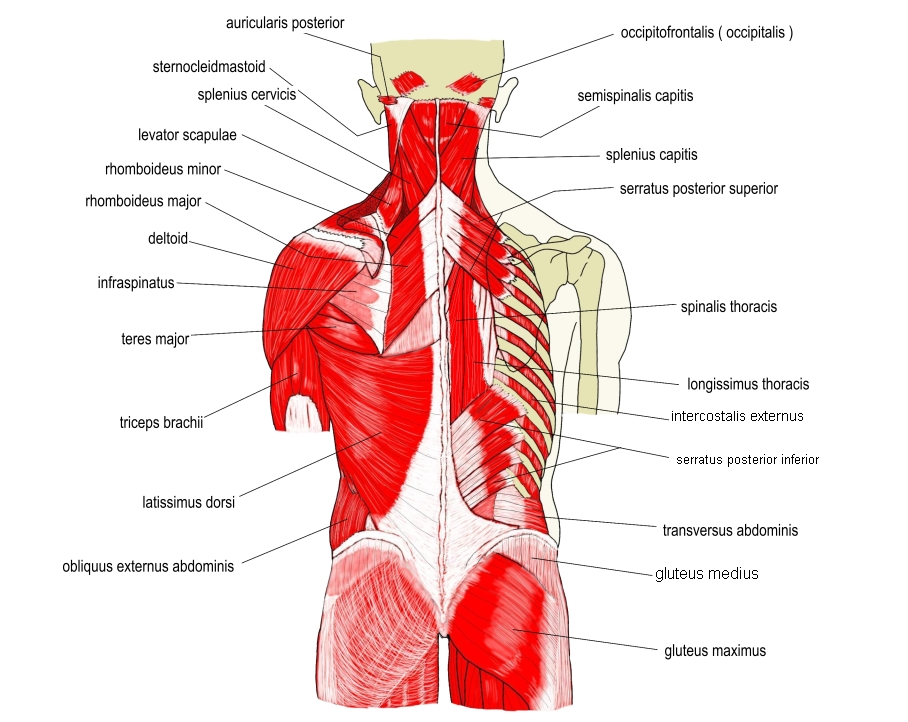
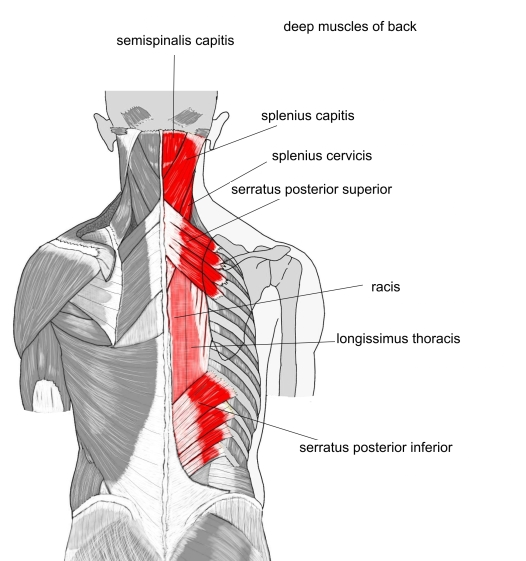
Origin / insertion
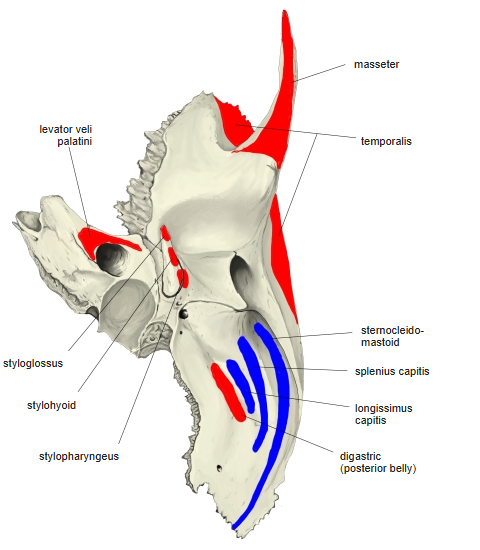
- Origin: nuchal ligament at the level of C3–C7 and the spinous processes of T1–T2 (or T3)
- Insertion: mastoid process and lateral part of the superior nuchal line
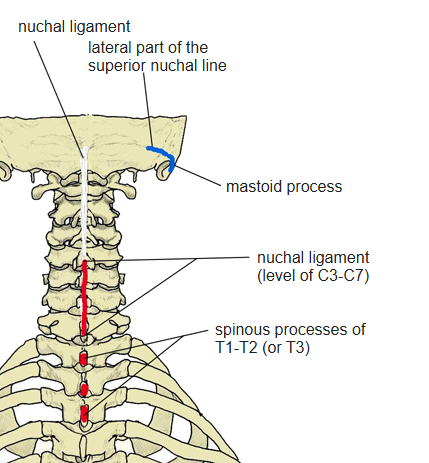
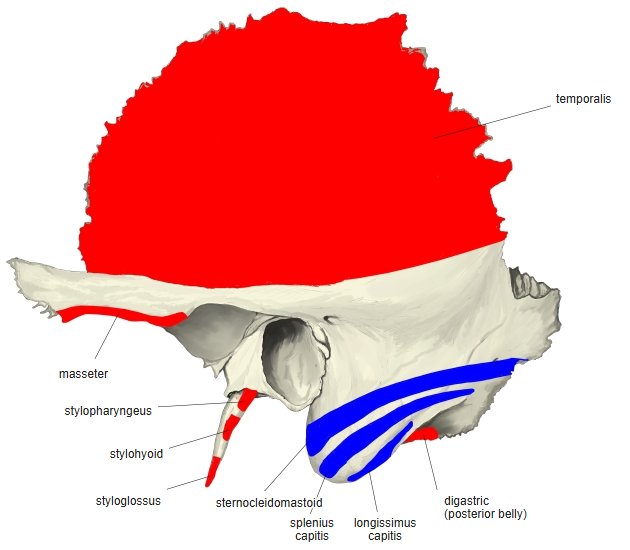
Action
- Both sides: tilt the head back
- One side: turns the head to the same side
Innervation
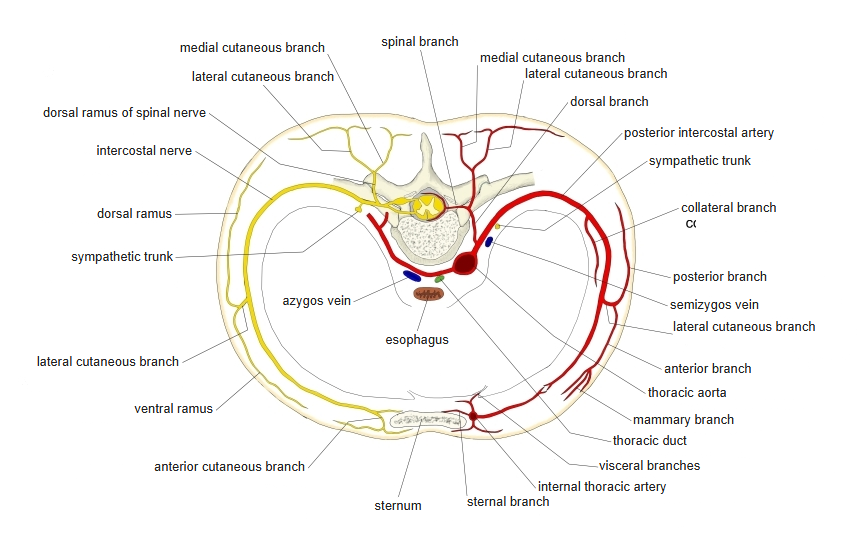
- Lateral branches of the dorsal rami of the cervical nerves (C2–C5)
Blood supply
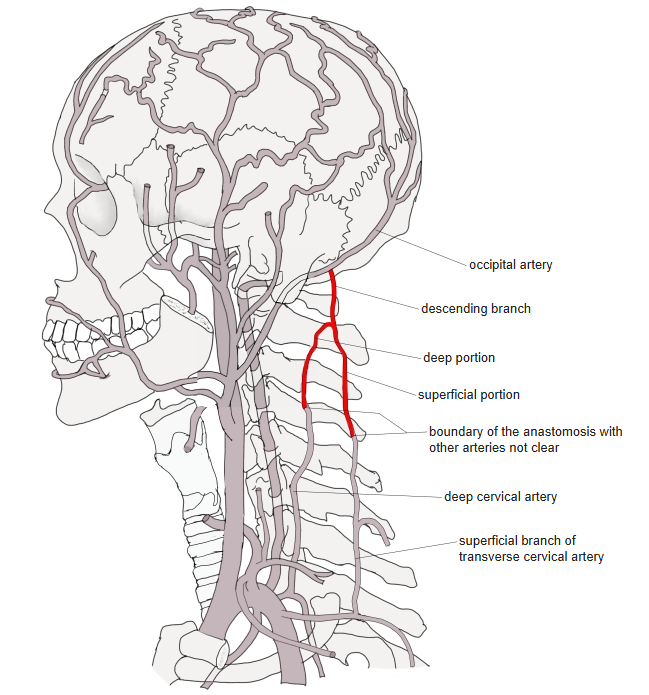
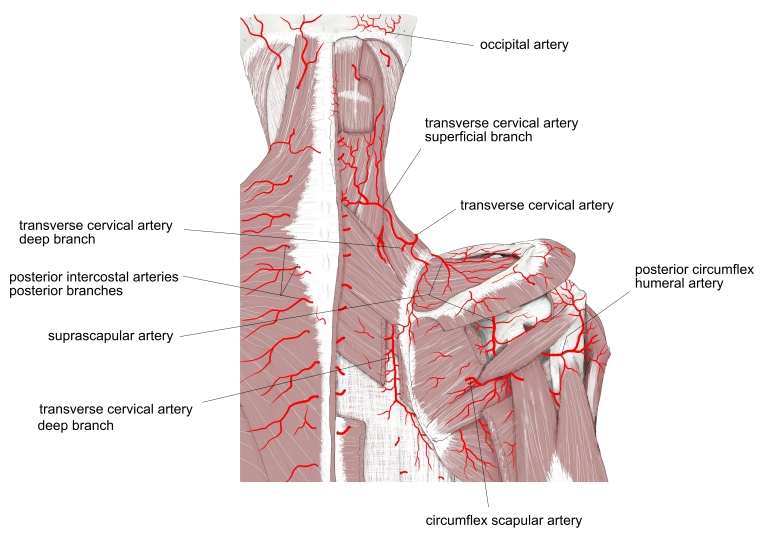
- Muscular branches of the descending branch of the occipital artery, superficial branch of the transverse cervical artery
Anatomical variations
- May be completely absent; may be fully separate from the splenius cervicis (Rauber-Kopsch)
- A narrow extra muscle from the lowest cervical or highest thoracic spines to the atlas (rhomboatlanticus, 8%)
Related terms
- Splenius cervicis
- Semispinalis capitis
- Longissimus capitis
- Sternocleidomastoid
- Nuchal ligament
- Mastoid process
References and sources
- Further reading: Splenius capitis muscle, Wikipedia.