Latin: nervus hypoglossus
Overview
- The twelfth cranial nerve (XII); motor to the muscles of the tongue.
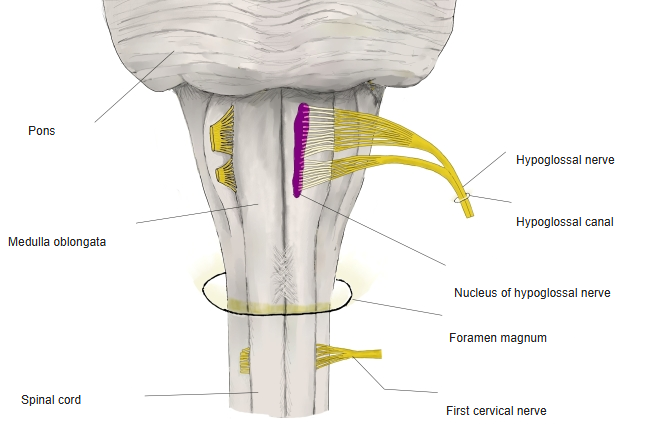
- Arises from the hypoglossal nucleus in the lower medulla (floor of the fourth ventricle).
Course of the hypoglossal nerve 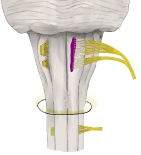
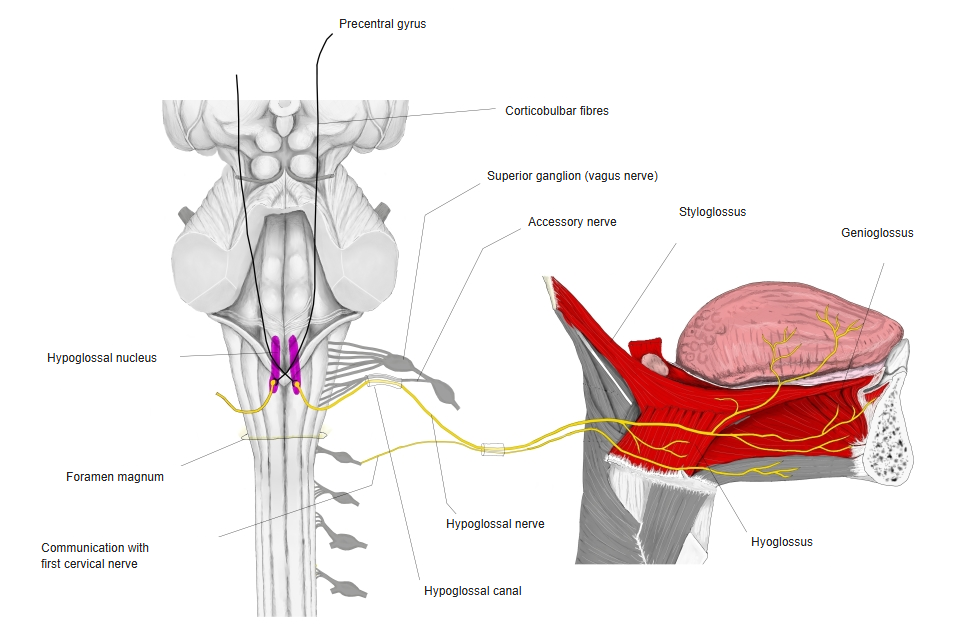
Hypoglossal nucleus and nerve (anterior view)
Course
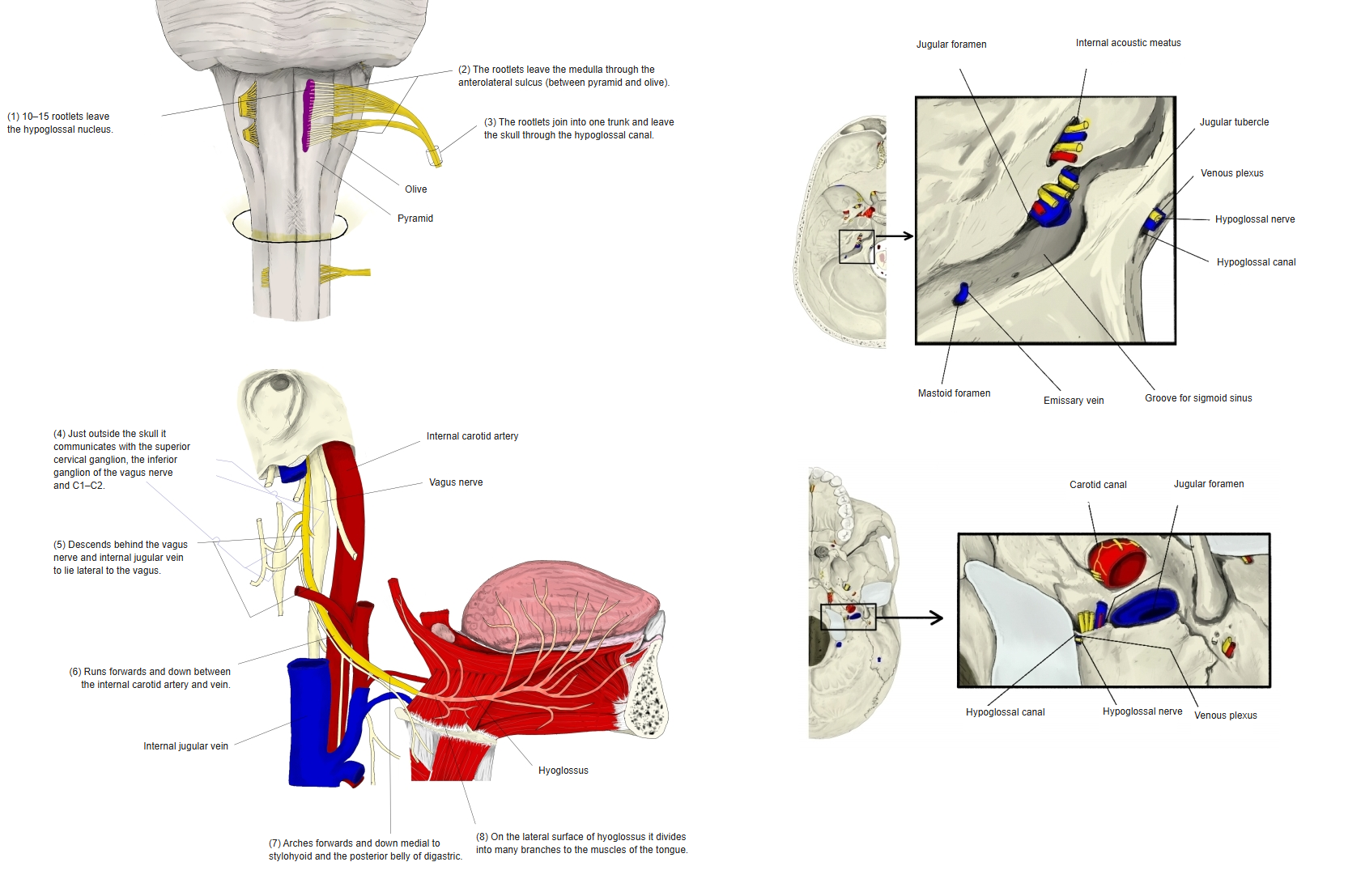
- 10–15 rootlets leave the medulla in the anterolateral sulcus, between the pyramid and the olive.
- They unite into one trunk in the hypoglossal canal of the occipital bone and leave the skull.
- Just outside the skull it communicates with the superior cervical ganglion, the inferior ganglion of the vagus and the first and second cervical nerves.
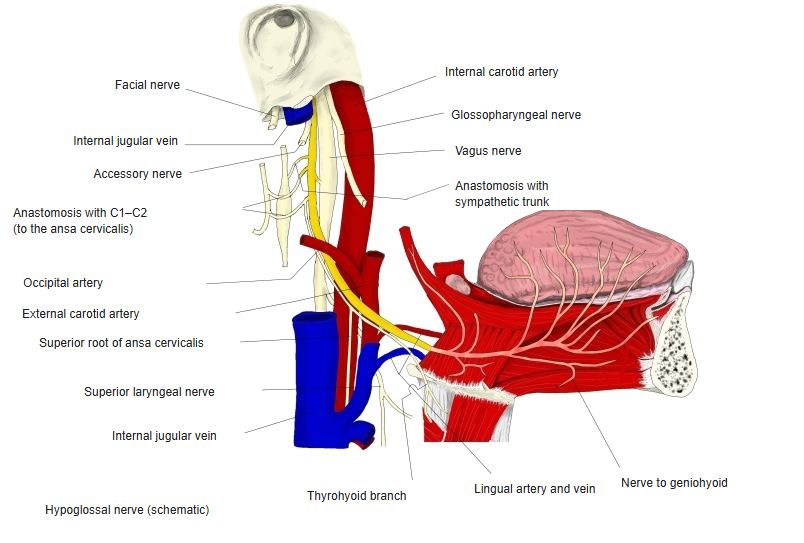
- Descends behind the vagus nerve and the internal jugular vein, then passes forwards between the internal carotid artery and the vein.
- Curves forwards medial to stylohyoid and the posterior belly of digastric and reaches the lateral surface of hyoglossus, where it divides.
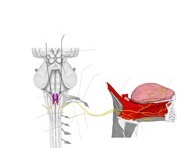
Hypoglossal nerve from cortex to tongue
Branches and distribution
| Branch | Supply |
|---|---|
| Lingual branches | All muscles of the tongue except palatoglossus (vagus nerve); they run alongside the lingual nerve at their ends |
| C1 fibres travelling with it | Superior root of the ansa cervicalis, thyrohyoid, geniohyoid |
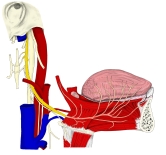
Hypoglossal nerve in the neck (schematic)
References and sources
- Further reading: Hypoglossal nerve, Wikipedia.