Latin: nervus trochlearis
Overview
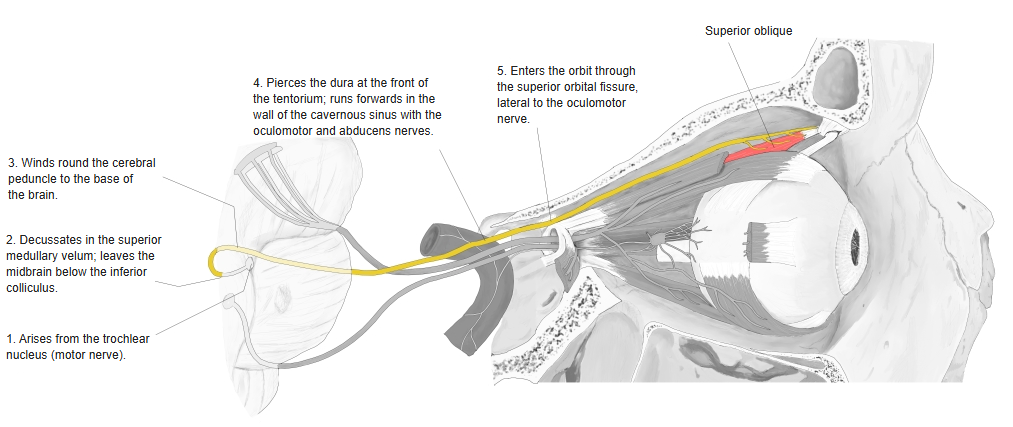
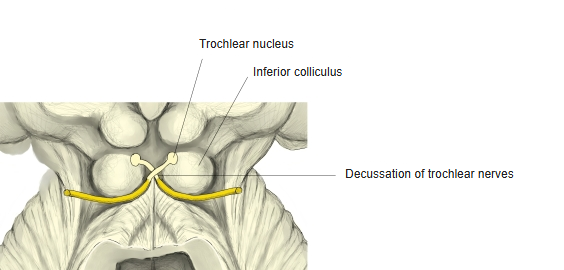
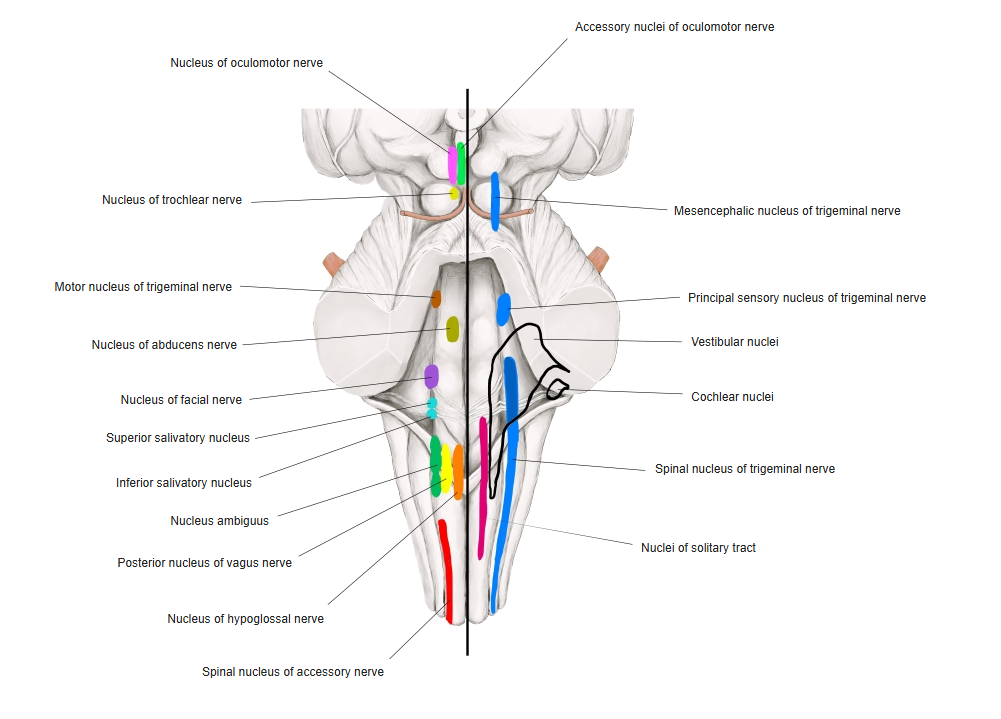
- The fourth cranial nerve (IV); the thinnest cranial nerve and the only one that leaves the back of the brainstem (below the inferior colliculi); its fibres cross before leaving.
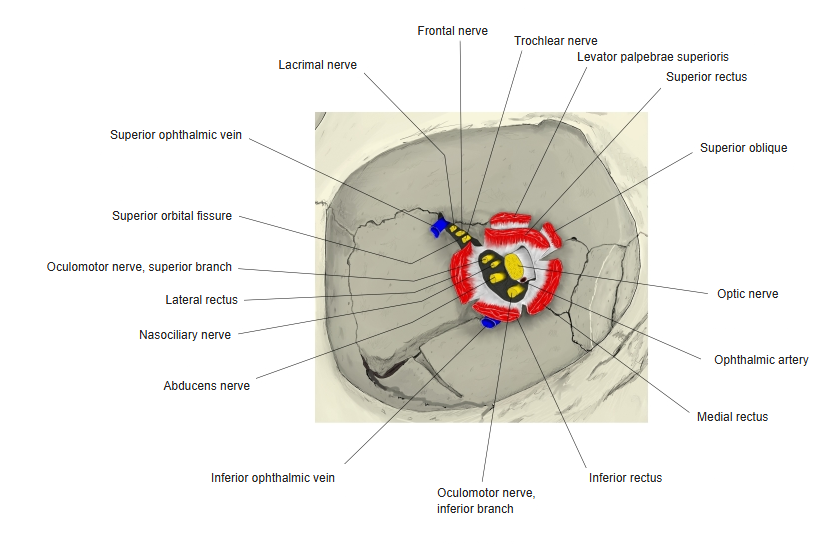
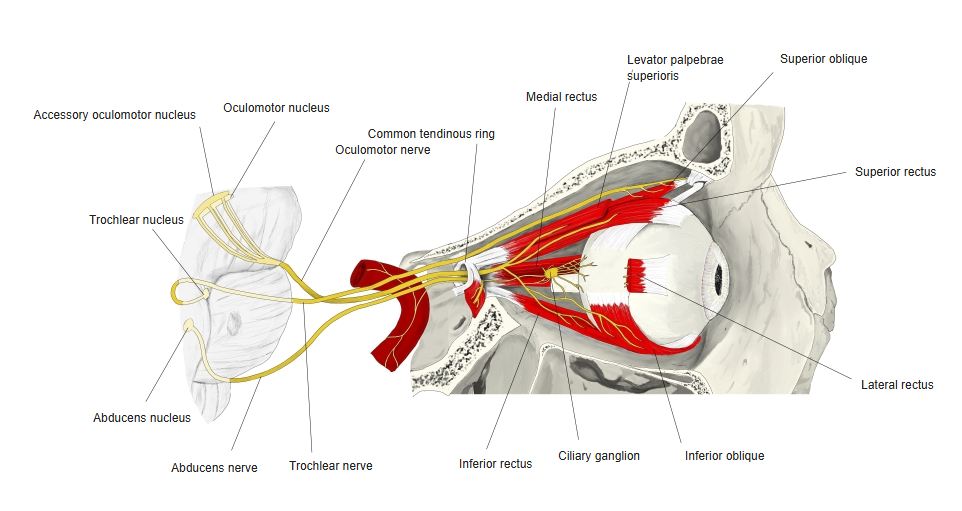
- Runs round the cerebral peduncle, through the lateral wall of the cavernous sinus and into the orbit through the superior orbital fissure, outside the common tendinous ring.
- Supplies only the superior oblique.
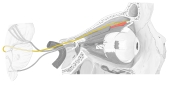
Course of the trochlear nerve 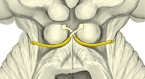
Trochlear nucleus and decussation
In the orbit
- Passes above the origin of levator palpebrae superioris and enters the superior oblique from above.
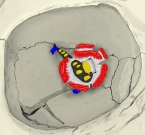
Nerves at the apex of the orbit 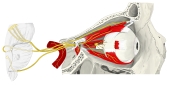
Nerves of the extraocular muscles 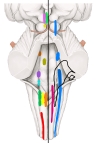
Cranial nerve nuclei in the brainstem
References and sources
- Further reading: Trochlear nerve, Wikipedia.