Latin: glandulae sebaceae
Overview
- Small sac-like (alveolar) glands that produce sebum, an oily secretion that keeps the hair and skin supple and water-repellent.
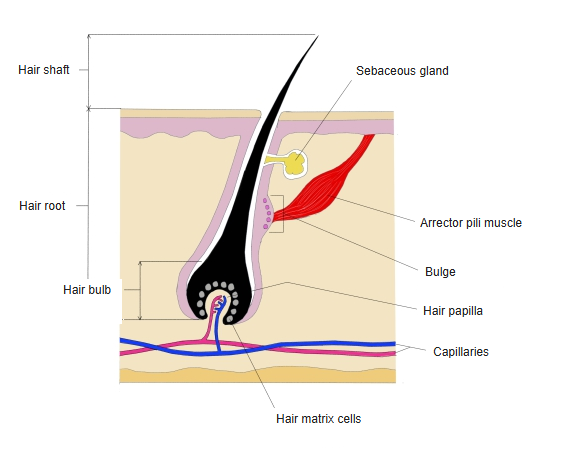
- Most open into the neck of a hair follicle; a few open directly onto the skin (lips, eyelids – tarsal glands, areola, genitalia).
- Present everywhere except the palms and soles; largest and most numerous on the face, scalp and upper trunk.
- Activity rises at puberty under the influence of androgens.
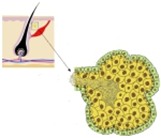
Sebaceous gland, section 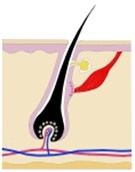
Hair and hair follicle
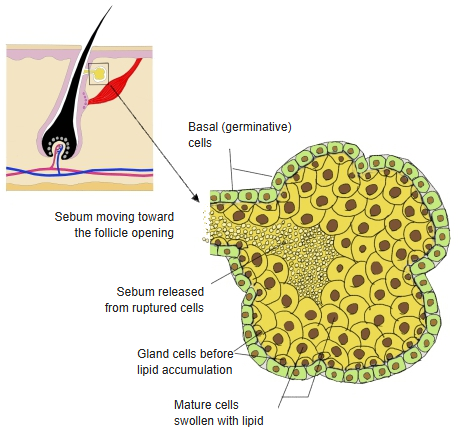
Holocrine secretion
- Basal (germinative) cells at the edge of the gland divide.
- Daughter cells move toward the centre and fill with lipid droplets.
- The mature cells break down and are released whole as sebum (holocrine secretion).
- Contraction of the arrector pili muscle helps to squeeze sebum out.
- Blockage of the gland outlet with sebum and keratin leads to comedones (acne).
References and sources
- Further reading: Sebaceous glands, Wikipedia.