Latin: nervi lumbales
Overview
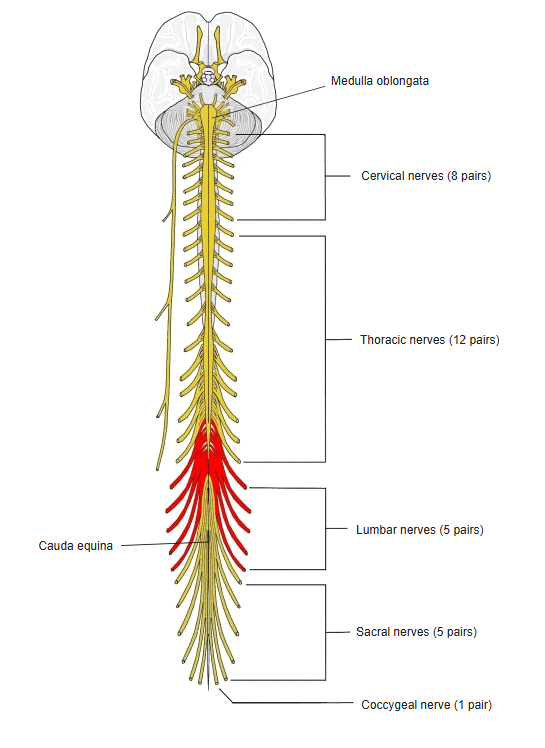
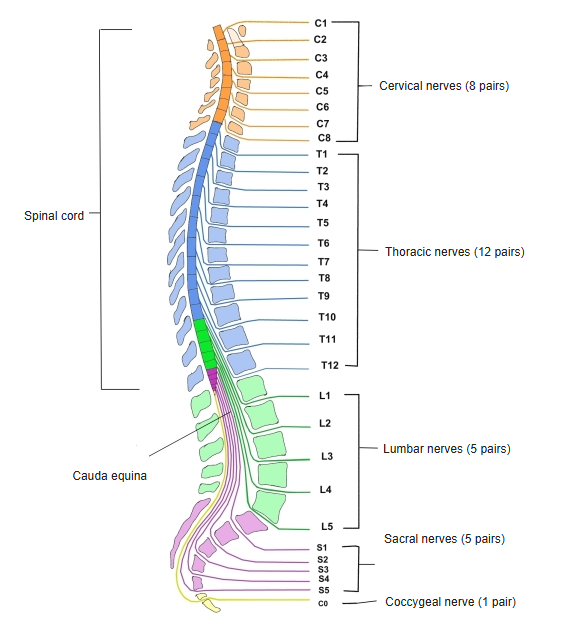
- Five pairs of spinal nerves (L1–L5), leaving through the intervertebral foramina below the corresponding lumbar vertebrae.
- Below the end of the spinal cord their roots run down in the cauda equina.
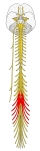
Spinal cord and spinal nerves 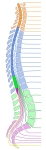
Spinal nerves (side view)
Ventral rami
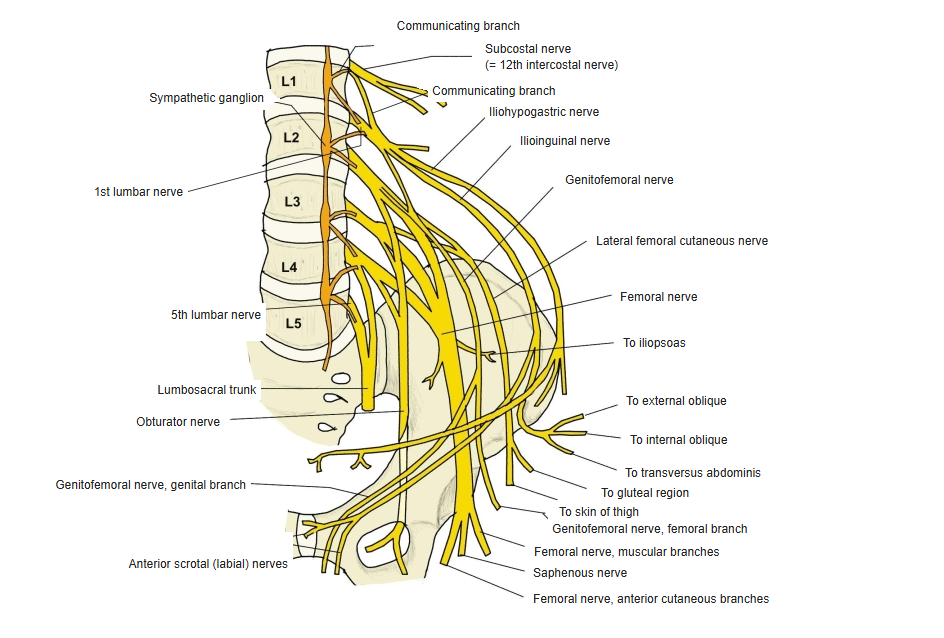
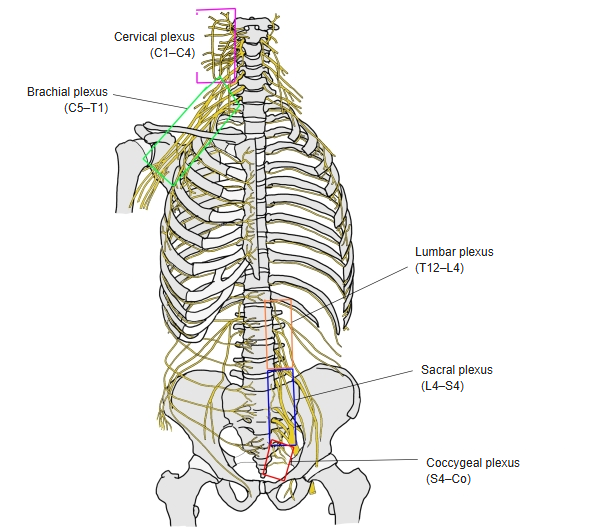
- L1–L3 and part of L4 (with a part of T12) form the lumbar plexus.
- The rest of L4 joins L5 as the lumbosacral trunk, which enters the lesser pelvis to join the sacral plexus.
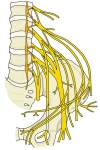
Lumbar plexus (side view) 
Plexuses of the spinal nerves 
Spinal nerves of the trunk (side view)
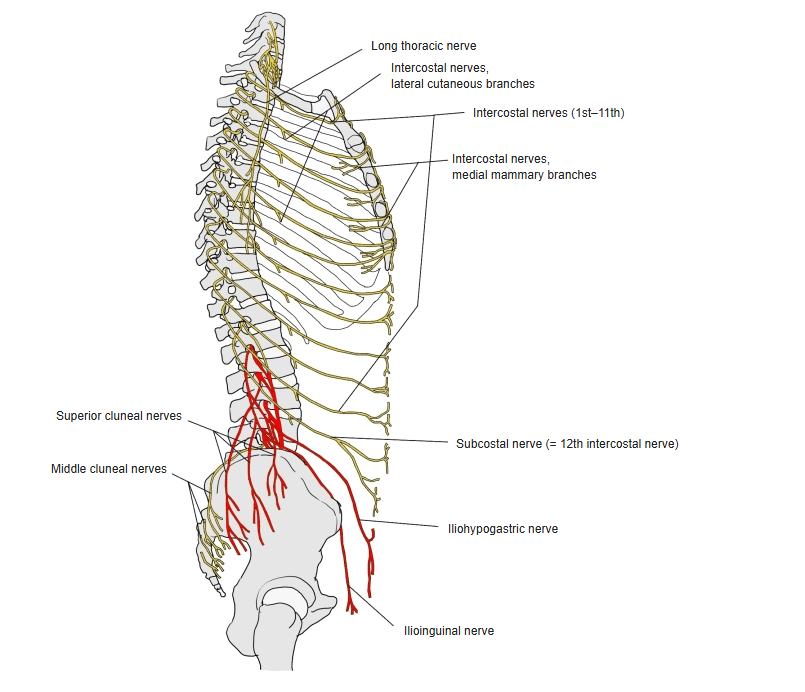
Dorsal rami
- Supply the deep muscles of the back and the skin over the lumbar region.
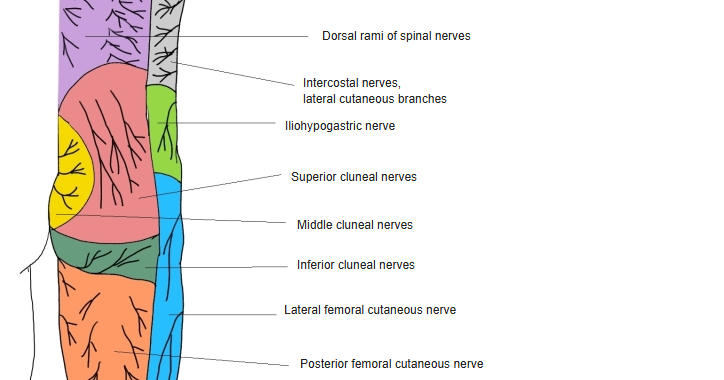
- The lateral branches of L1–L3 form the superior cluneal nerves to the skin of the upper buttock.
Cutaneous nerves of the buttock 
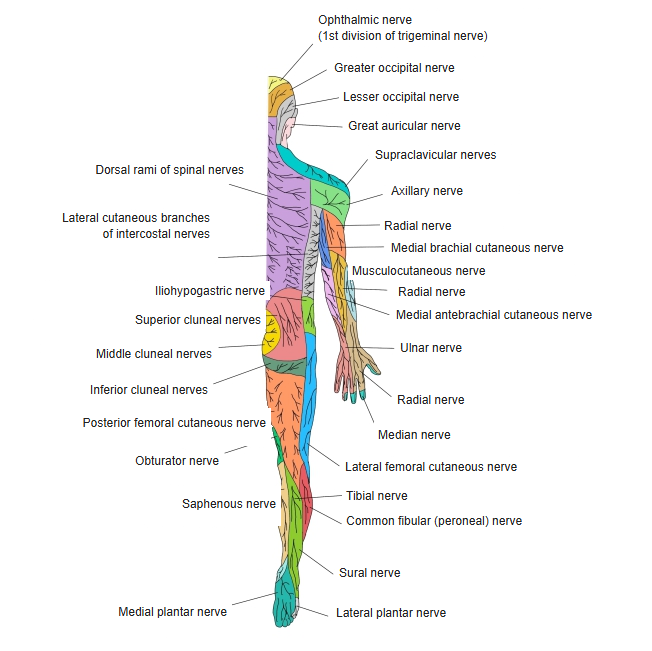
Cutaneous nerves of the whole body (back)
References and sources
- Further reading: Lumbar nerves, Wikipedia.