Latin: plexus lumbalis
Overview
- A network of nerves in the lumbar region, formed by the ventral rami of L1–L3, part of L4 and a contribution from T12.
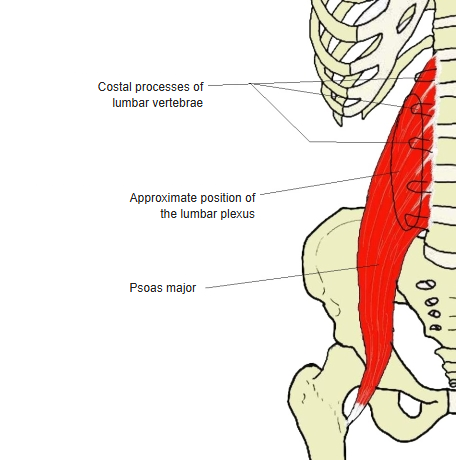
- Lies in front of the costal processes of the lumbar vertebrae, behind and within psoas major.
- Part of L4 joins L5 as the lumbosacral trunk, linking it to the sacral plexus.
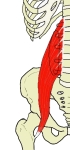
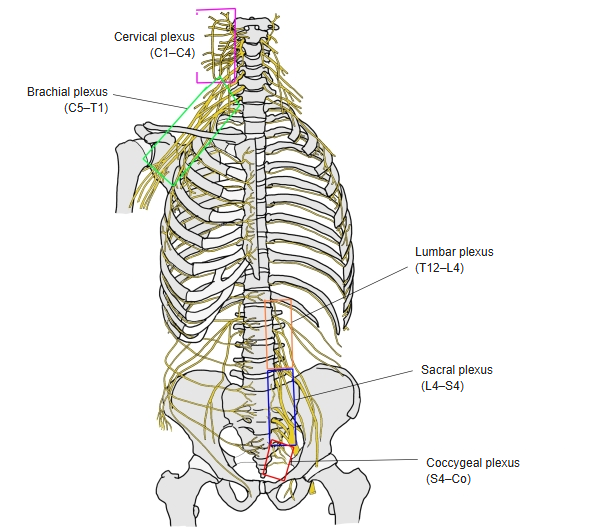
Position of the lumbar plexus 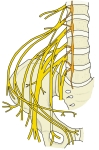
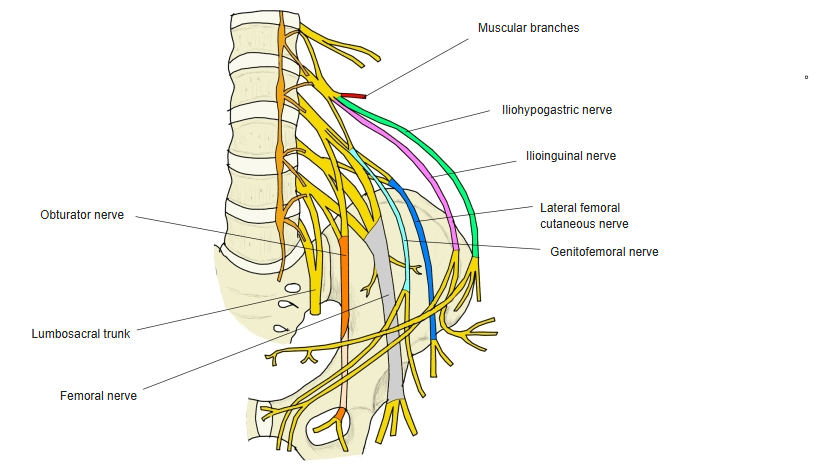
Lumbar plexus
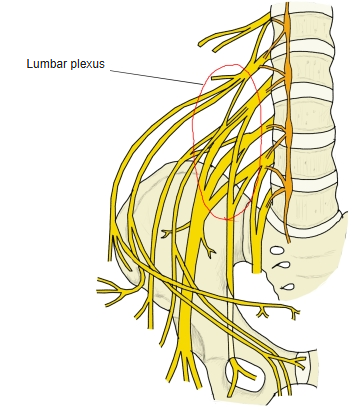
Branches
| Branch | Main destination |
|---|---|
| Muscular branches | Psoas major, quadratus lumborum, lumbar intertransverse muscles |
| Iliohypogastric nerve (T12–L1) | Lower abdominal wall, skin of the buttock and above the pubis |
| Ilioinguinal nerve (L1) | Lower abdominal wall, skin of the groin and the external genitalia |
| Genitofemoral nerve (L1–L2) | Cremaster, skin of the scrotum or labium majus and of the upper front of the thigh |
| Lateral femoral cutaneous nerve (L2–L3) | Skin of the lateral thigh |
| Femoral nerve (L2–L4) | Front of the thigh and the medial side of the leg |
| Obturator nerve (L2–L4) | Adductor muscles and skin of the medial thigh |
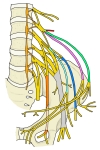
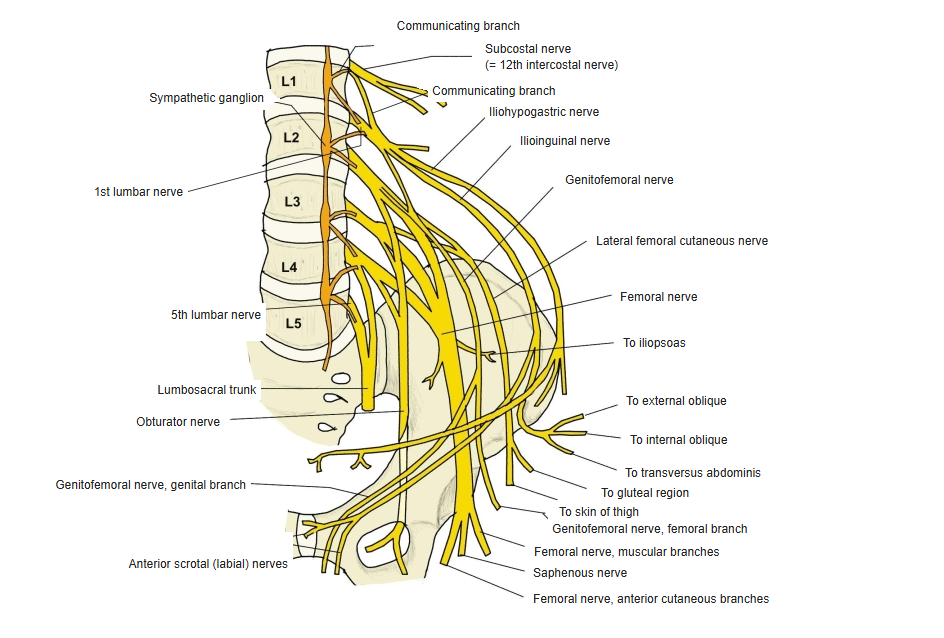
Lumbar plexus and its branches 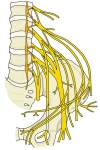
Lumbar plexus (side view) 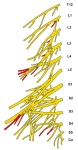
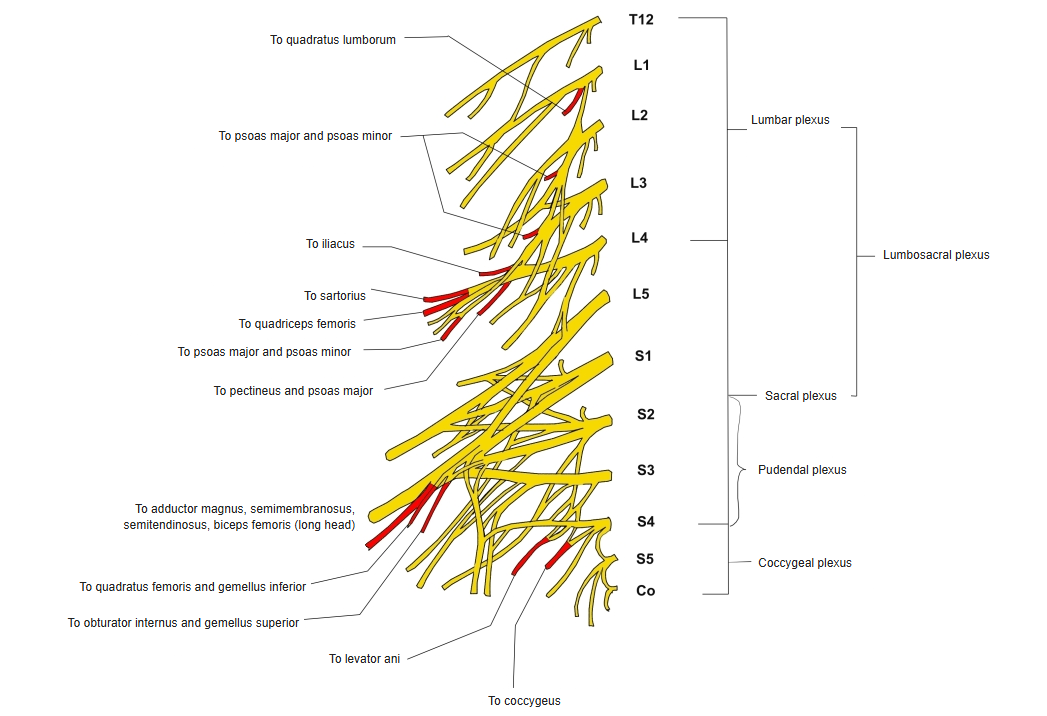
Muscular branches of the lumbosacral plexus 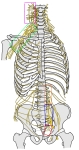
Plexuses of the spinal nerves
References and sources
- Further reading: Lumbar plexus, Wikipedia.