Latin: plexus autonomicus
Overview
- A network of autonomic nerve fibres, usually around blood vessels or organs, through which fibres reach the viscera.
- Most contain sympathetic and parasympathetic fibres together with visceral afferent (sensory) fibres; many contain ganglia.
- They branch along vessels and organs and merge into one another, so their number cannot be counted exactly.
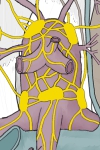
Celiac and aorticorenal ganglia (detail) 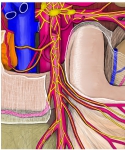
Superior mesenteric plexus
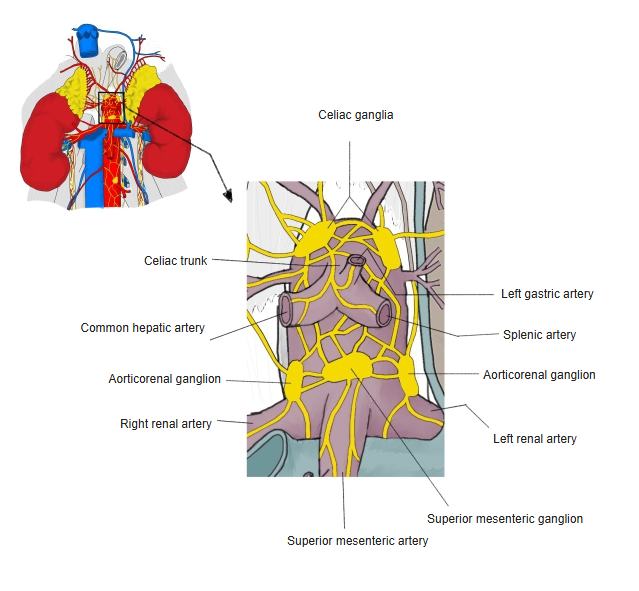
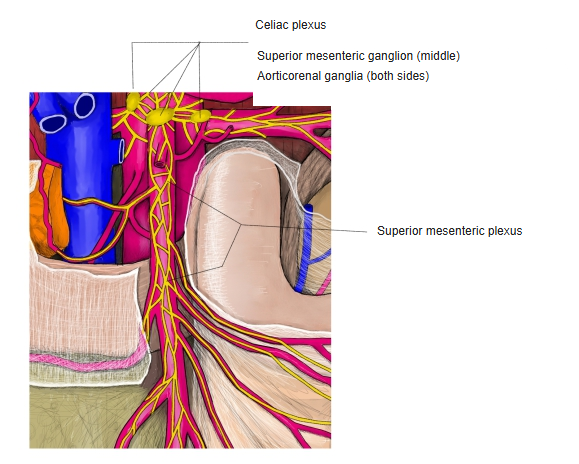
Main autonomic plexuses
| Plexus | Position | Fibres |
|---|---|---|
| Cardiac plexus | Base of the great vessels | Sympathetic (cervical and thoracic ganglia), vagus, visceral afferents |
| Pulmonary plexus | Root of the lung | Sympathetic (thoracic ganglia), vagus, visceral afferents |
| Oesophageal plexus | Around the oesophagus | Sympathetic (thoracic ganglia), vagus, visceral afferents |
| Celiac plexus | Around the celiac trunk; the largest plexus | Greater, lesser and least splanchnic nerves, vagus, visceral afferents |
| Superior mesenteric plexus | Around the superior mesenteric artery | Lesser and least splanchnic nerves, vagus; to the intestine |
| Inferior mesenteric plexus | Around the inferior mesenteric artery | Lumbar splanchnic nerves, pelvic splanchnic nerves; to the intestine |
| Renal plexus | Around the renal artery | Thoracic and lumbar splanchnic nerves, vagus; to the kidney and suprarenal gland |
| Inferior hypogastric (pelvic) plexus | In the pelvis | Hypogastric nerves, pelvic splanchnic nerves (S2–S4); to the bladder and genital organs |
References and sources
- Further reading: Autonomic plexus, Wikipedia.