Latin: ganglion sensorium nervi spinalis
Overview
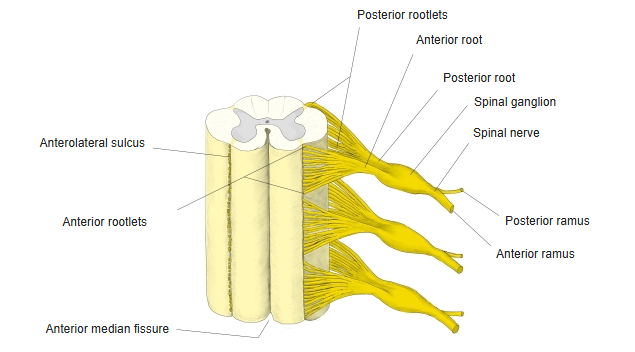
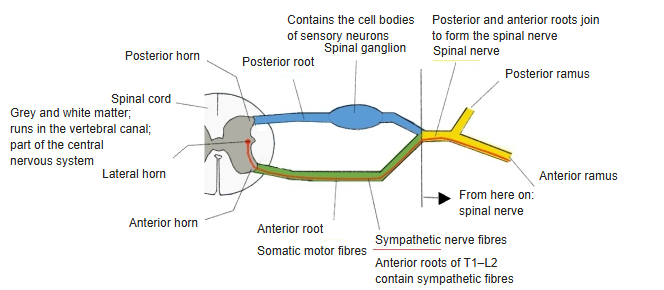
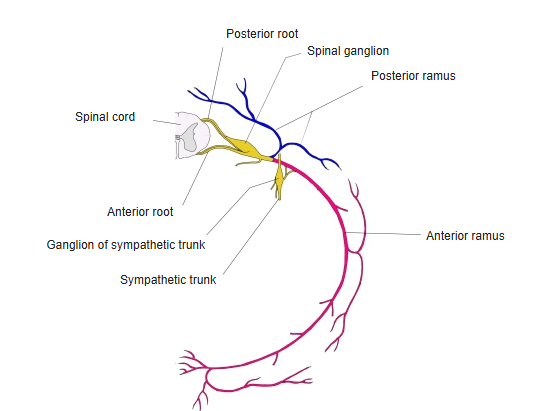
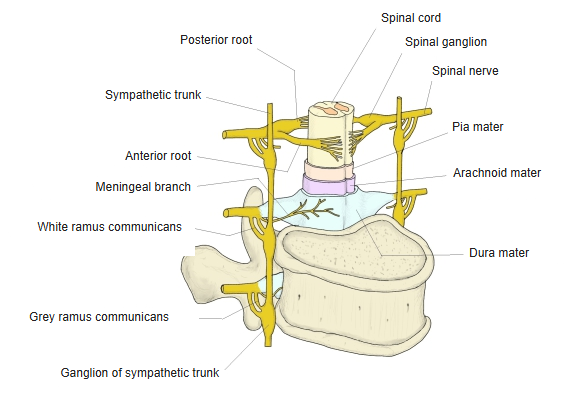
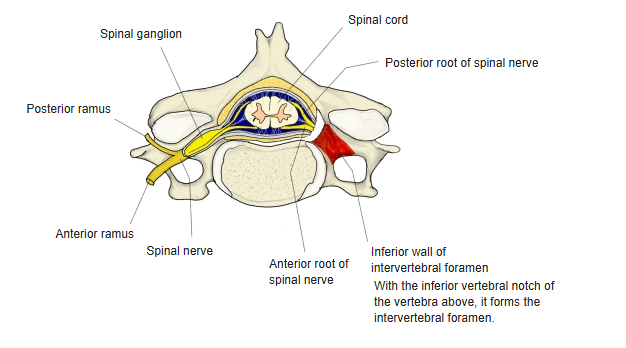
- A swelling on the dorsal root of each spinal nerve, in or near the intervertebral foramen, before the dorsal and ventral roots join.
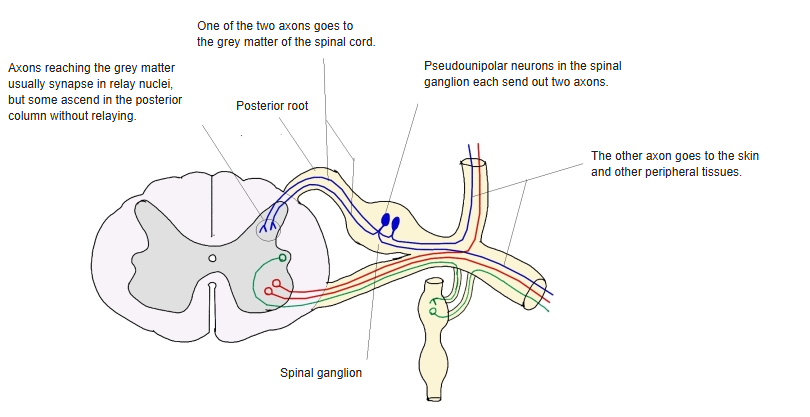
- It contains the cell bodies of pseudounipolar sensory neurons; their peripheral process comes from the body and their central process enters the spinal cord. There are no synapses in it.
- Strictly it lies on the root, not on the spinal nerve itself; the name is a convention.
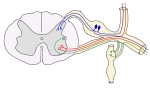
Pseudounipolar neurons of the spinal ganglion 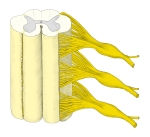
Roots and spinal ganglia (spinal cord segments)
Number and size
- 31 pairs, 62 ganglia in all. Each holds tens of thousands of neuron cell bodies, most in the ganglia for the limbs.
| Region | Pairs | Typical size |
|---|---|---|
| Cervical | 8 (C1–C8) | C5–C8 about 5–10 mm (large: upper limb) |
| Thoracic | 12 (T1–T12) | About 3–6 mm |
| Lumbar | 5 (L1–L5) | L4–L5 about 8–15 mm (largest: lower limb) |
| Sacral | 5 (S1–S5) | S1–S2 about 5–10 mm |
| Coccygeal | 1 (Co) | Very small, sometimes indistinct |
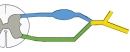
Spinal ganglion and spinal nerve (schematic) 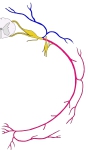
Spinal nerve and sympathetic trunk
Coverings and cells
- An outer capsule of dense connective tissue, continuous with the dura mater and epineurium, with blood vessels.
- Inside, each cell body is wrapped by satellite glial cells, which support its metabolism and control its surroundings; a basal lamina and loose connective tissue lie outside them.
Spinal ganglion, meninges and rami communicantes 
Spinal ganglion in the intervertebral foramen
References and sources
- Further reading: Spinal ganglion, Wikipedia.