Latin: musculus hyoglossus
Overview
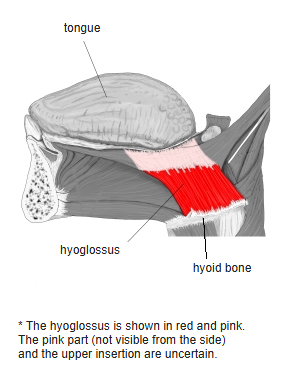
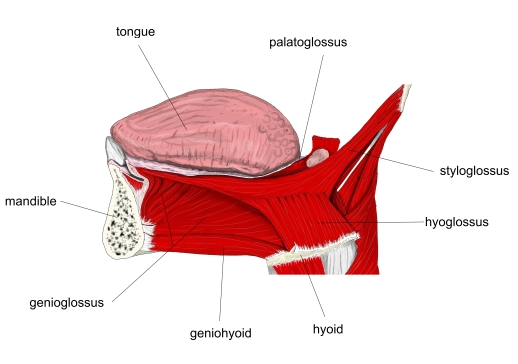
- One of the extrinsic muscles of the tongue; a thin, quadrilateral muscle lateral to the genioglossus.
- Forms part of the floor of the submandibular triangle.
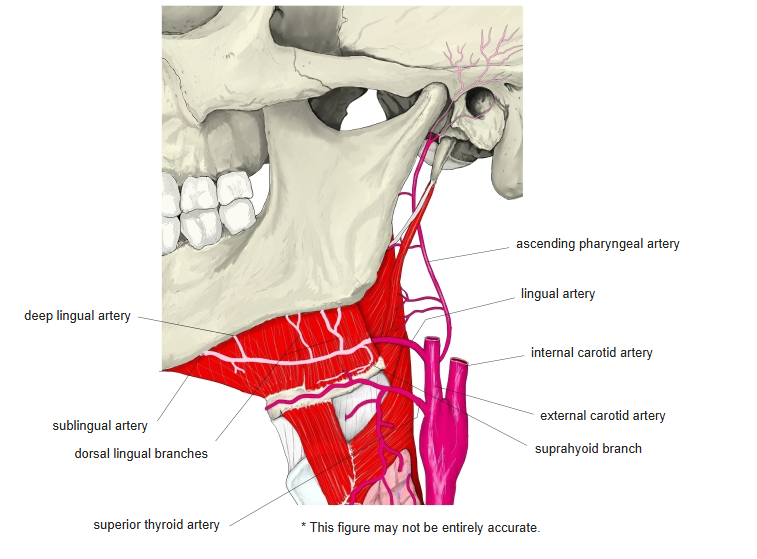
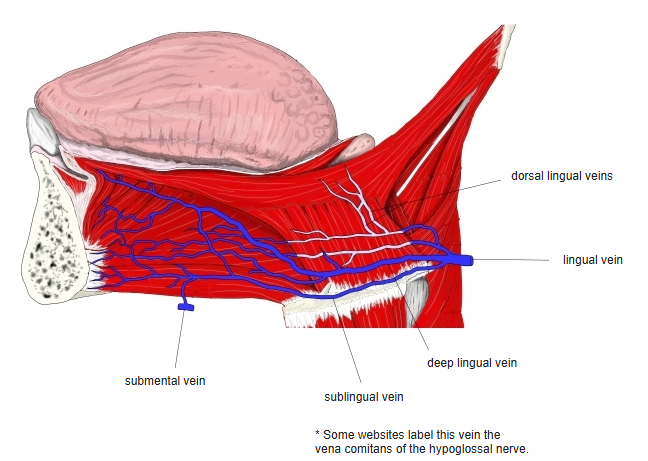
- The lingual artery passes deep to it; the lingual vein runs on its medial side.
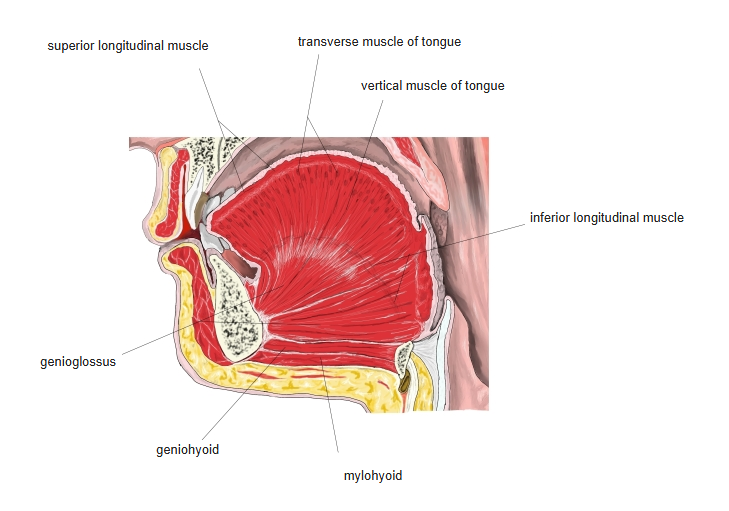
- Between the hyoglossus and the mylohyoid lie (from above downward) the sublingual gland, submandibular duct, lingual nerve, vena comitans of the hypoglossal nerve and the hypoglossal nerve.
- Important in singing.
Position in the classification
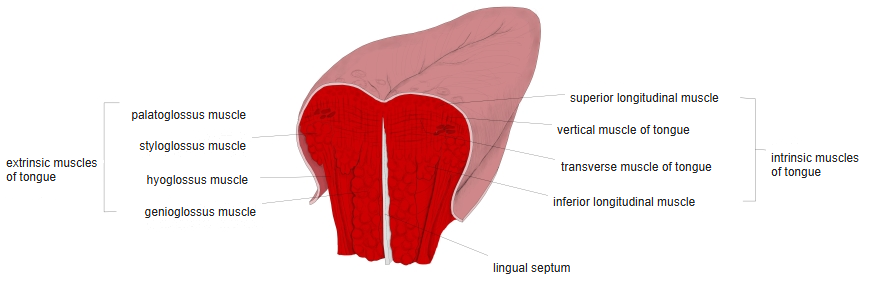
Head › Muscles of the tongue › Extrinsic muscles of the tongue
- Genioglossus
- Hyoglossus
- Styloglossus
- Chondroglossus
Illustrations
Origin / insertion
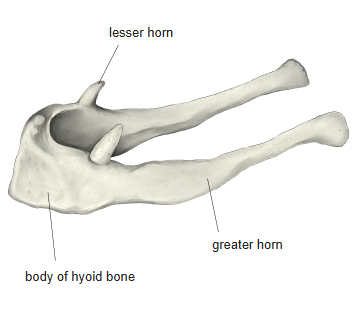
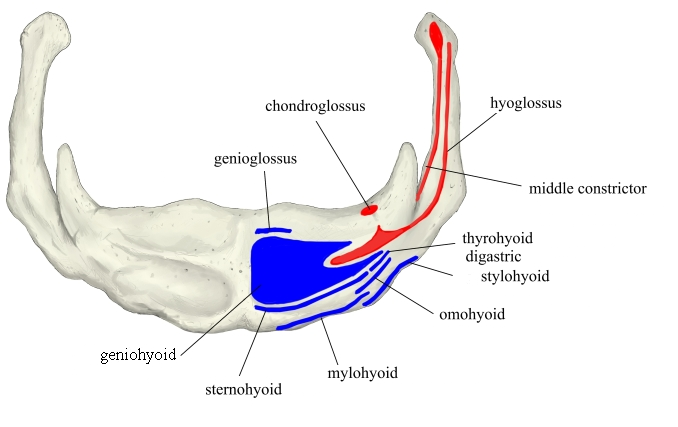
- Origin: greater horn of the hyoid bone (its whole length) and the adjoining side of the body
- Runs almost vertically upward and enters the side of the tongue between the styloglossus and the inferior longitudinal muscle.
- Insertion: side of the tongue, between the styloglossus and the inferior longitudinal muscle
Action
- Depresses the sides of the tongue, retracts the tongue and makes the dorsum convex
Innervation
- Hypoglossal nerve (cranial nerve XII, motor)
Blood supply
- Lingual artery; venous drainage by the lingual veins
Related terms
- Extrinsic muscles of the tongue
- Genioglossus
- Styloglossus
- Chondroglossus
- Hyoid bone
- Submandibular triangle
- Lingual artery
- Hypoglossal nerve
References and sources
- Further reading: Hyoglossus, Wikipedia.