Latin: musculus longitudinalis superior linguae
Overview
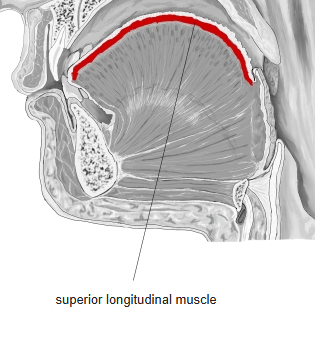
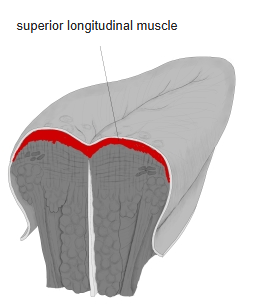
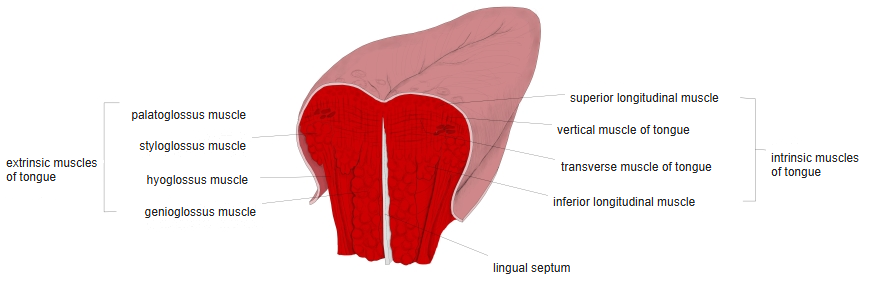
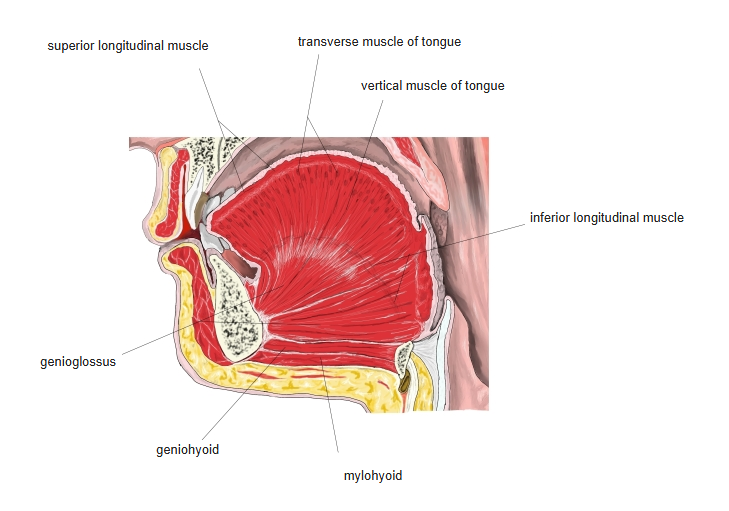
- One of the 4 intrinsic muscles of the tongue (with the inferior longitudinal, transverse and vertical muscles).
- A thin, unpaired layer of oblique and longitudinal fibres just under the mucous membrane of the dorsum of the tongue.
- Runs from the root to the tip of the tongue.
Position in the classification
Head › Muscles of the tongue › Intrinsic muscles of the tongue
- Superior longitudinal muscle
- Inferior longitudinal muscle
- Transverse muscle of tongue
- Vertical muscle of tongue
Illustrations
Origin / insertion
- Origin: root of the tongue — the submucous fibrous layer near the epiglottis and the median fibrous septum
- Insertion: tip (and edges) of the tongue
Action
- Changes the shape of the tongue (shortens it and curls the tip and sides upward)
Innervation
- Hypoglossal nerve (cranial nerve XII, motor)
Blood supply
- Not stated in the sources used here.
Related terms
- Intrinsic muscles of the tongue
- Extrinsic muscles of the tongue
- Genioglossus
- Hyoglossus
- Lingual septum
- Hypoglossal nerve
References and sources
- Further reading: Superior longitudinal muscle of tongue, Wikipedia.