Latin: canales semicirculares
Overview
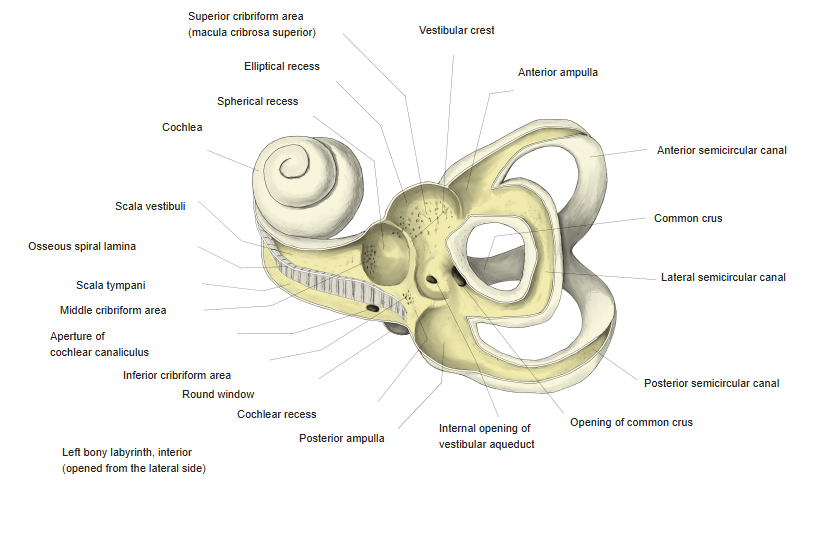
- Three bony canals of the bony labyrinth, behind and above the vestibule.
- Each forms about two-thirds of a circle and lies at right angles to the other two.
- Each has a swelling, the bony ampulla, at one end; the anterior and posterior canals share a common crus, so the three canals open into the vestibule by five openings.
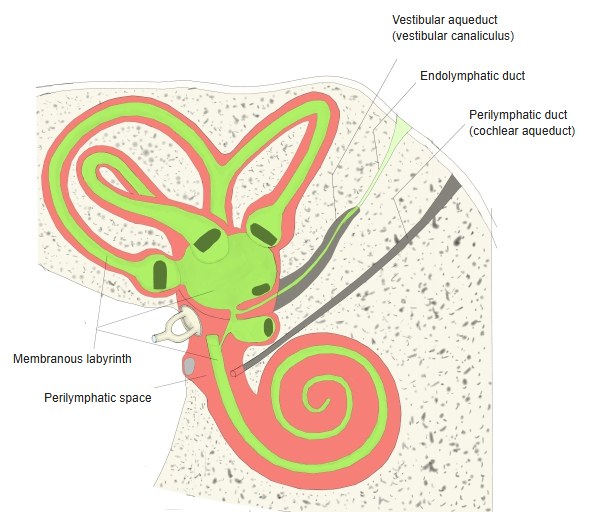
- They contain the semicircular ducts surrounded by perilymph.
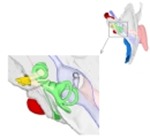
Semicircular canals in the temporal bone 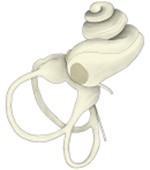
Right bony labyrinth
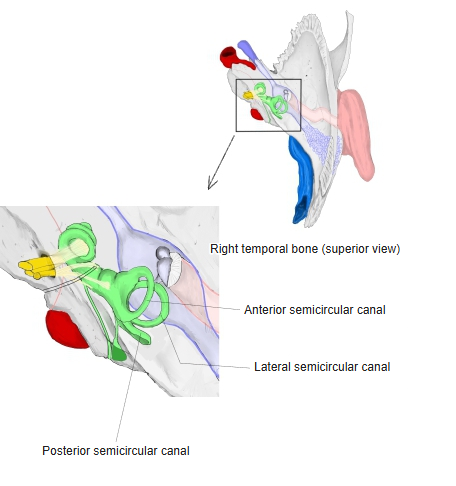
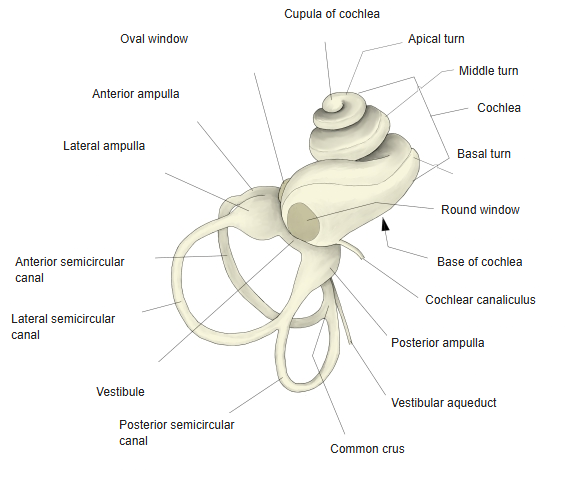
The three canals
| Canal | Position |
|---|---|
| Anterior (superior) | Vertical, at right angles to the long axis of the petrous bone; makes the arcuate eminence on its upper surface |
| Posterior | Vertical, parallel to the posterior surface of the petrous bone |
| Lateral (horizontal) | Tilted about 30° from the horizontal; bulges into the tympanic cavity as the prominence of the lateral semicircular canal |
- The canals of both sides work in pairs: the two lateral canals, and each anterior canal with the opposite posterior canal.
Perilymphatic and endolymphatic spaces 
Left bony labyrinth, interior
References and sources
- Further reading: Semicircular canals, Wikipedia.