Latin: Ductus venosus
Overview
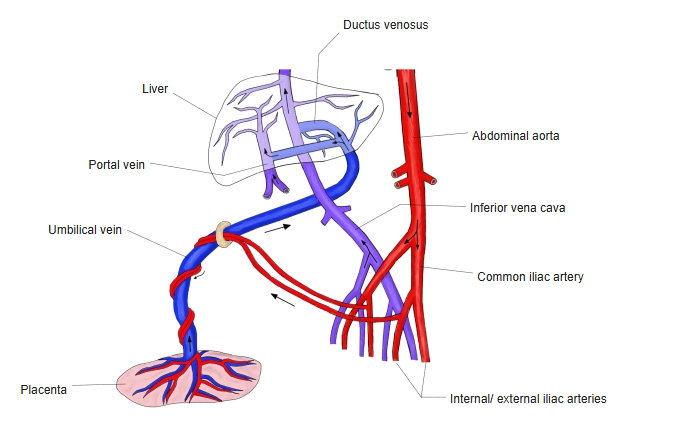
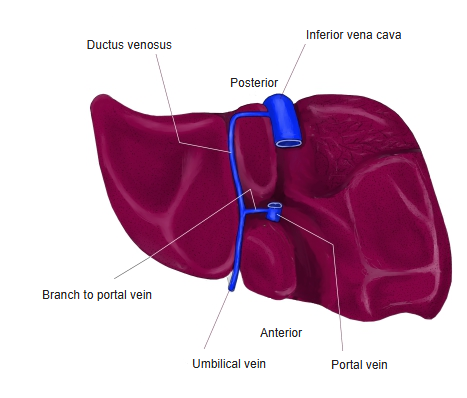
- A fetal vein that carries oxygen-rich blood from the umbilical vein directly to the inferior vena cava, bypassing most of the liver.
- Closes within days after birth and becomes the fibrous ligamentum venosum.
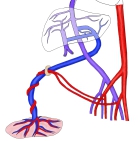
Fetal circulation through the liver
Course
- Begins from the left branch of the portal vein, where the umbilical vein joins it.
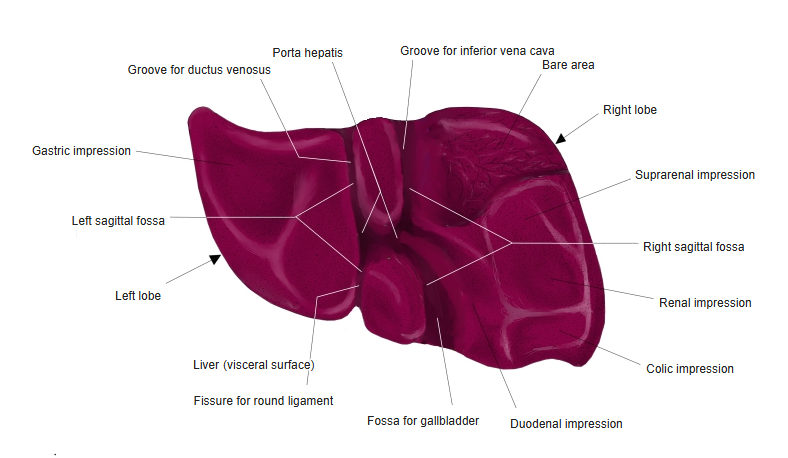
- Runs in the fissure on the visceral surface of the liver between the caudate and left lobes.
- Ends in the inferior vena cava or the left hepatic vein just below the diaphragm.
After birth
- The ligamentum venosum lies in the fissure for the ligamentum venosum; it is continuous with the round ligament of the liver (remnant of the umbilical vein).
- In a few newborns the duct stays open (patent ductus venosus), letting portal blood bypass the liver.
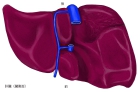
Remnants of the fetal veins on the liver 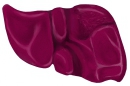
Visceral surface of the liver
References and sources
- Further reading: Ductus venosus, Wikipedia.