Latin: Vena saphena magna
Overview
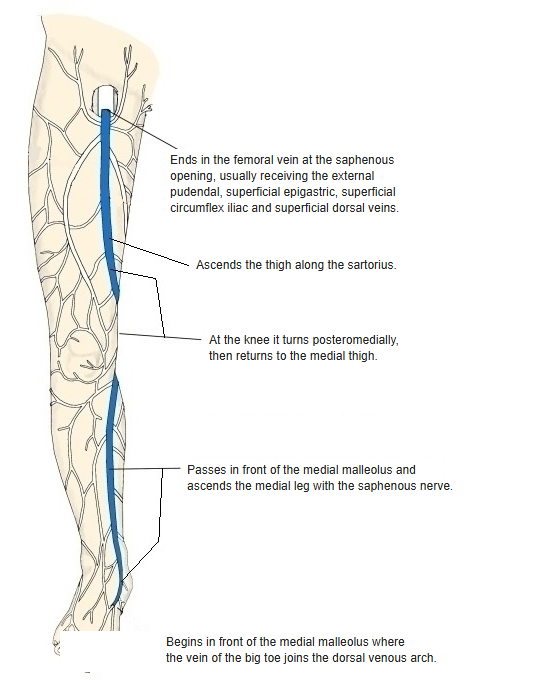
- The longest vein of the body; the main superficial vein of the lower limb.
- Begins at the medial end of the dorsal venous arch of the foot.
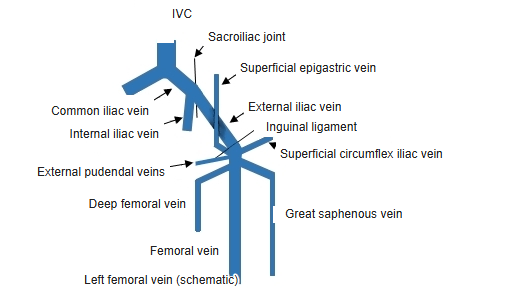
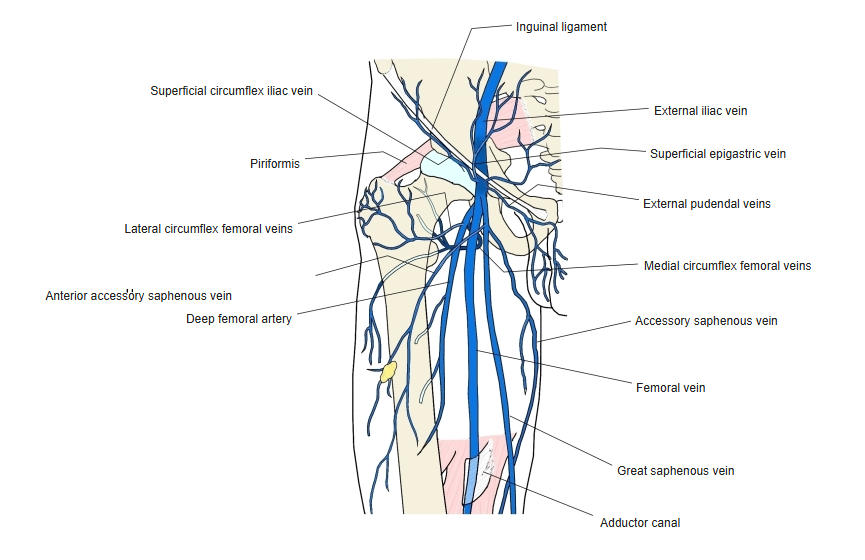
- Ends in the femoral vein at the saphenous opening, about 3–4 cm below and lateral to the pubic tubercle.
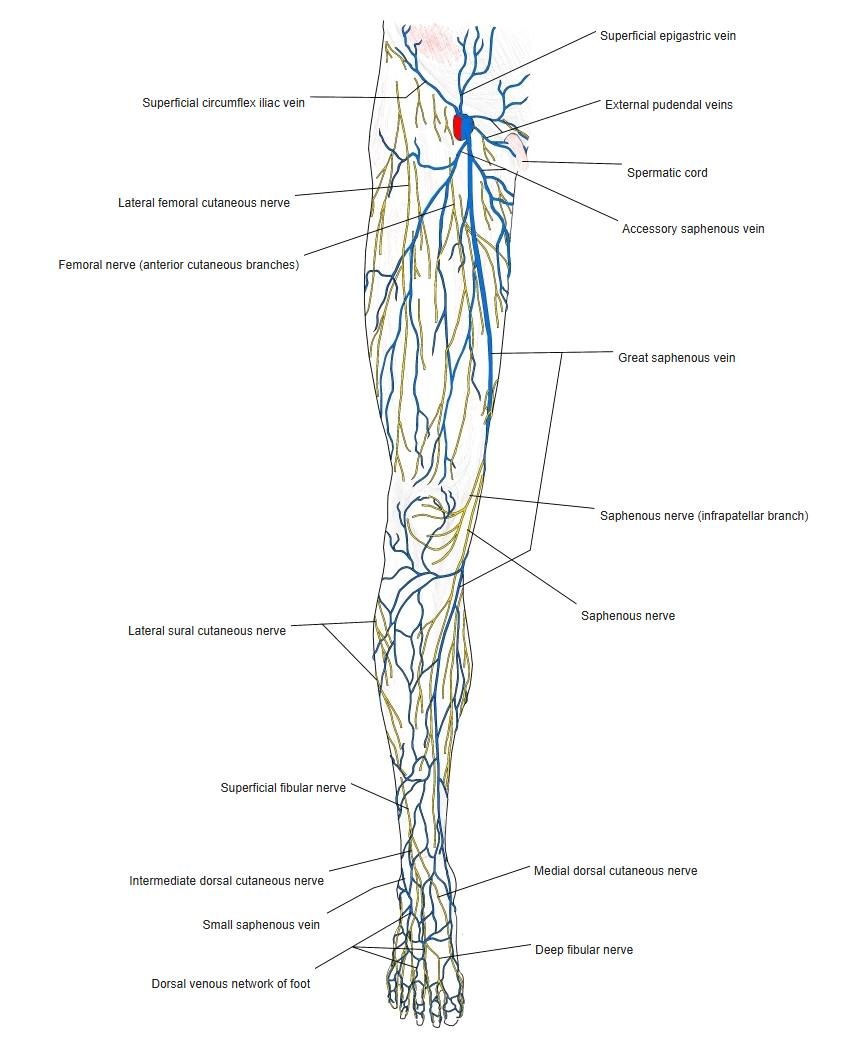
Superficial veins of the lower limb 
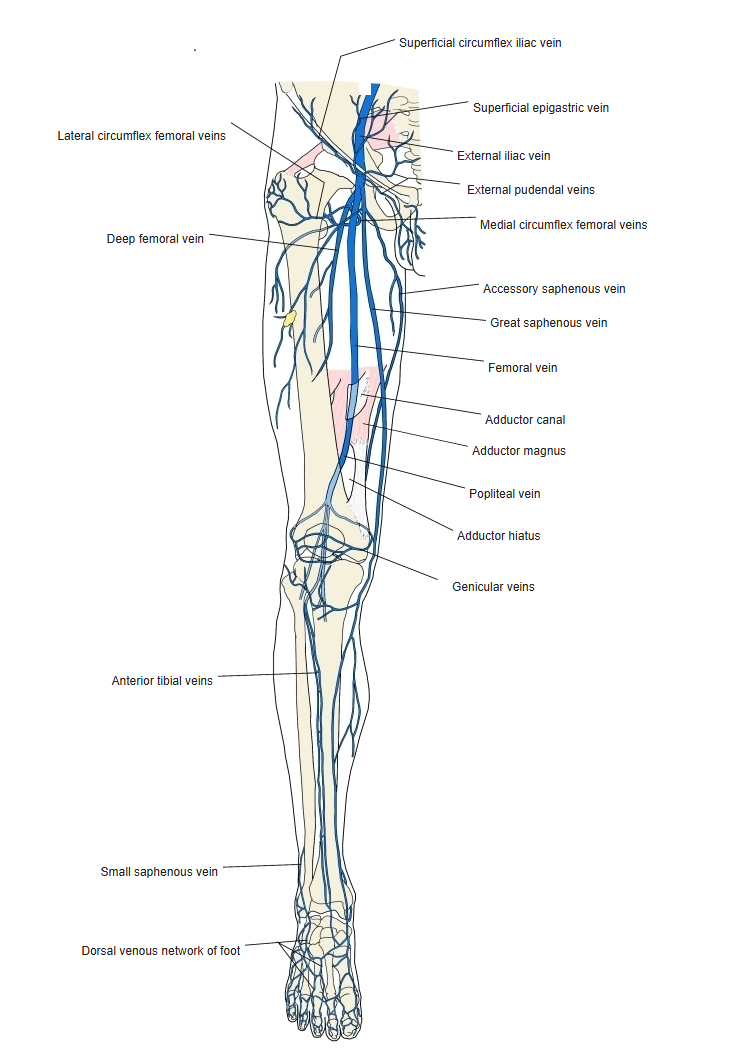
Veins of the lower limb (front view)
Course
- Passes in front of the medial malleolus (a reliable landmark).
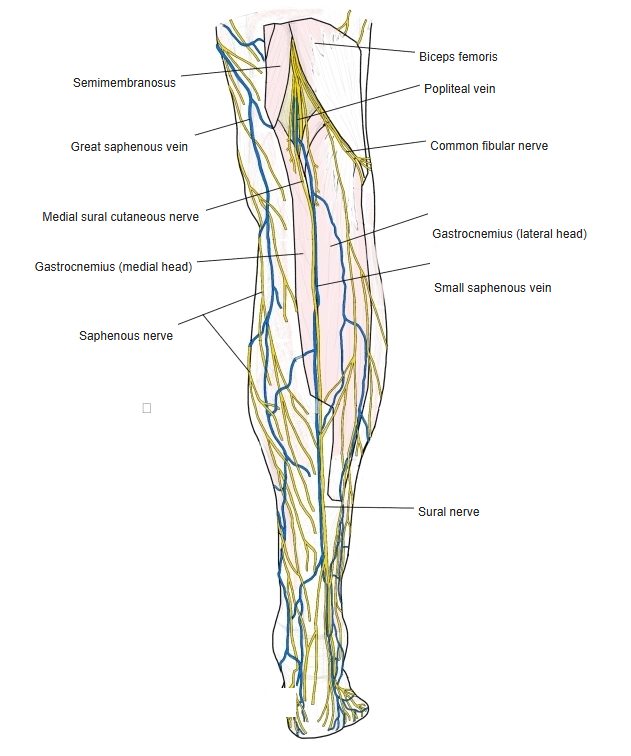
- Runs up the medial side of the leg with the saphenous nerve.
- Passes behind the medial condyle of the femur, about a hand's breadth behind the patella.
- Ascends on the medial side of the thigh to the saphenous opening, where it pierces the cribriform fascia.
Tributaries
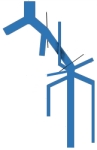
- Near its end: superficial epigastric, superficial circumflex iliac and external pudendal veins.
- Accessory saphenous veins from the thigh.
- Many cutaneous veins of the leg; connected with the deep veins by perforating veins.
Veins of the lower limb (diagram) 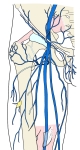
Veins of the front of the thigh
Clinical notes
- Faulty valves at the saphenofemoral junction lead to varicose veins.
- Commonly harvested as a graft for coronary artery bypass surgery.
- Can be opened in front of the medial malleolus (venous cutdown) when other veins cannot be reached.
Veins of the back of the lower limb
References and sources
- Further reading: Great saphenous vein, Wikipedia.