Latin: Plexus venosi pelvis
Overview
- In the pelvis, blood from the organs is collected not by single veins but by dense networks of thin, valveless veins around each organ.
- They connect freely with one another, can store blood when the organs change in size (bladder, uterus, rectum) and drain mainly into the internal iliac vein.
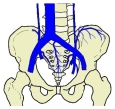
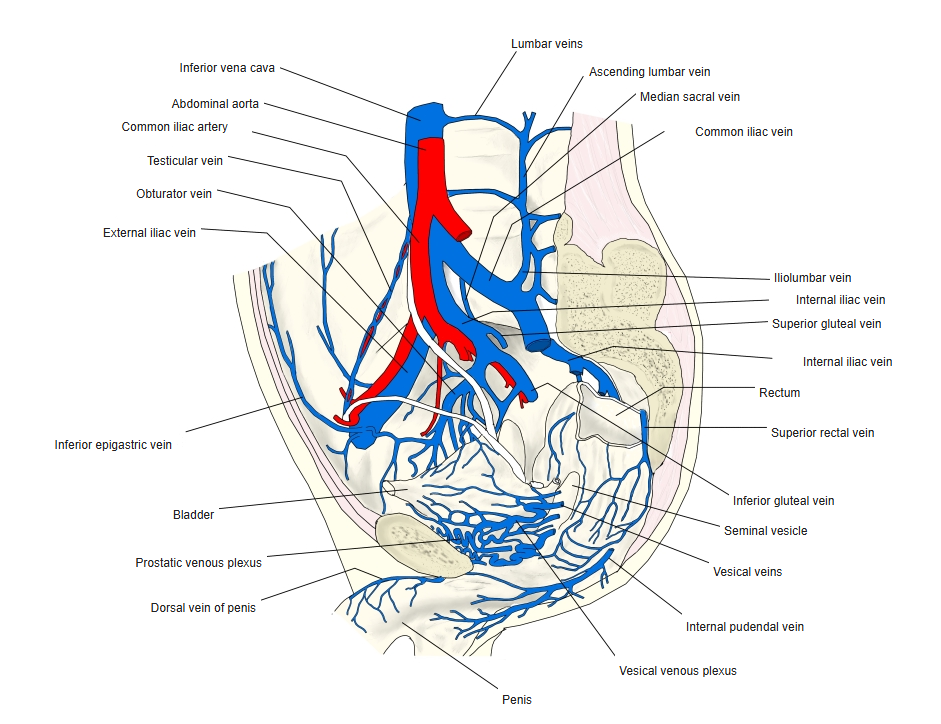
Median sacral vein and pelvic veins 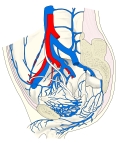
Veins of the male pelvis 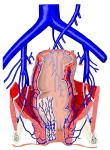
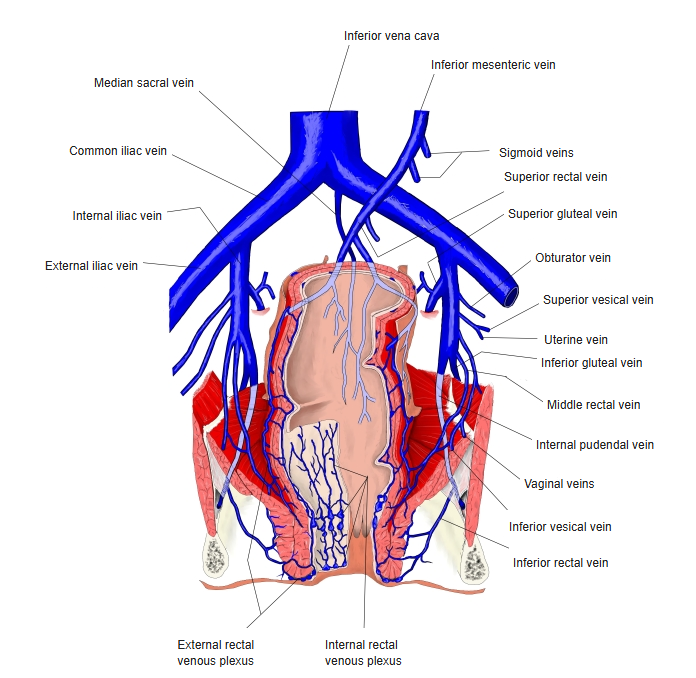
Rectal venous plexus and pelvic veins
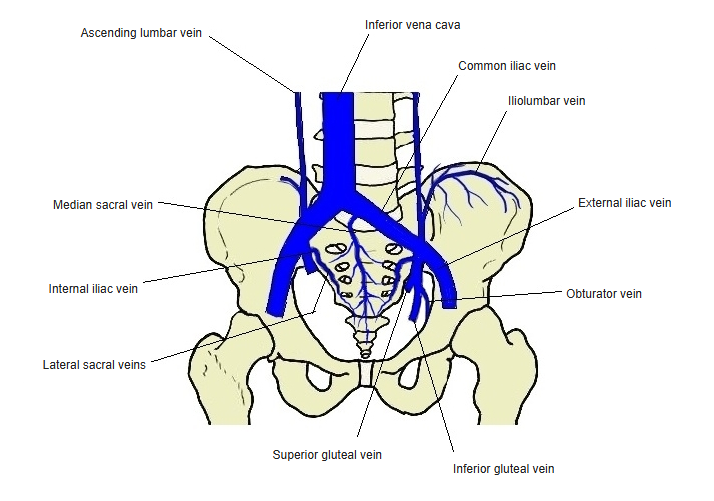
Members
| Plexus | Position | Drains to |
|---|---|---|
| Vesical venous plexus | Around the base of the bladder | Internal iliac vein |
| Prostatic venous plexus (male) | Around the prostate | Vesical plexus, internal iliac vein |
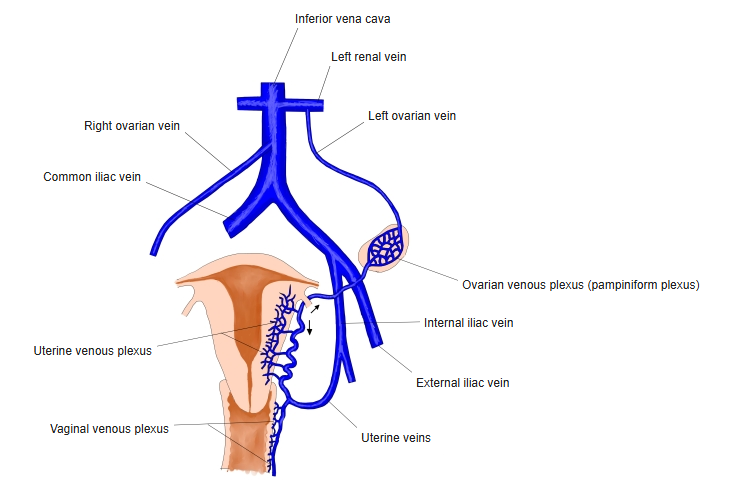
| Uterine venous plexus (female) | Beside the uterus in the broad ligament | Uterine veins, internal iliac vein |
| Vaginal venous plexus (female) | Around the vagina | Internal iliac vein |
| Rectal venous plexus | Around the rectum and anal canal | Superior rectal (portal) and middle and inferior rectal (systemic) veins |
| Sacral venous plexus | Front of the sacrum | Internal iliac and common iliac veins |
Ovarian veins Rectal venous plexus and pelvic veins
Clinical notes
- Connections with the vertebral venous plexuses (Batson) let tumors and infections spread from pelvic organs to the spine.
References and sources
- Further reading: Pelvic venous plexus, Wikipedia.