Latin: Vena iliaca interna
Overview
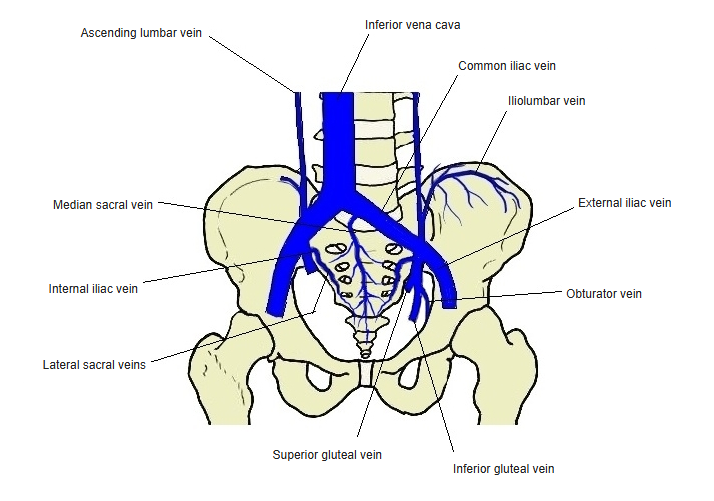
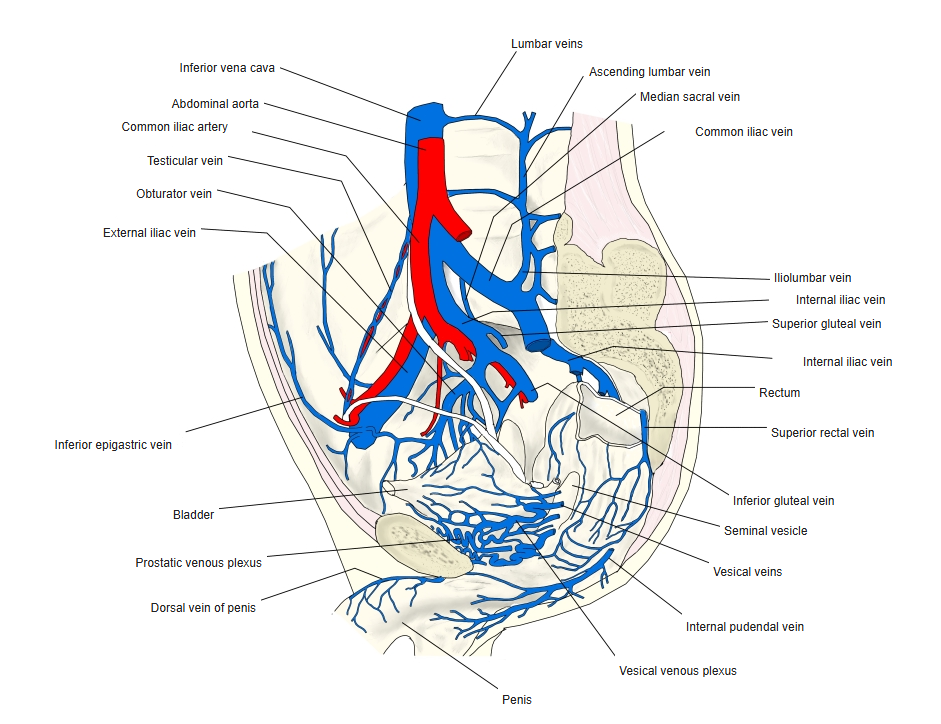
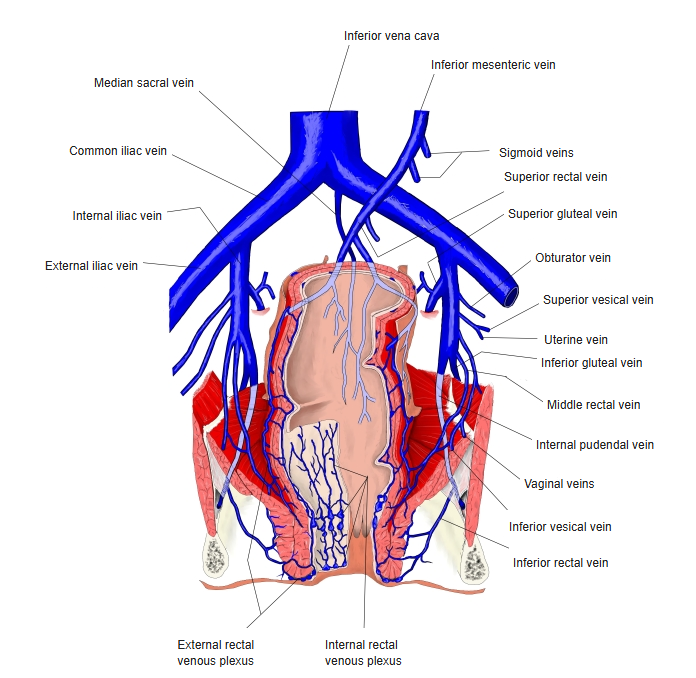
- Drains the pelvic organs, pelvic walls, gluteal region and perineum.
- Formed near the upper part of the greater sciatic foramen; a short trunk (about 3 cm) that runs up behind and medial to the internal iliac artery.
- Joins the external iliac vein in front of the sacroiliac joint to form the common iliac vein.
- Its tributaries follow the branches of the internal iliac artery, except that there is no vein with the umbilical artery and the iliolumbar vein usually ends in the common iliac vein.
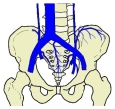
Median sacral vein and pelvic veins 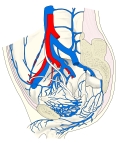
Veins of the male pelvis
Tributaries
| Group | Veins |
|---|---|
| Parietal (outside the pelvis) | Superior gluteal, inferior gluteal, internal pudendal, obturator veins |
| Parietal (pelvic wall) | Lateral sacral veins |
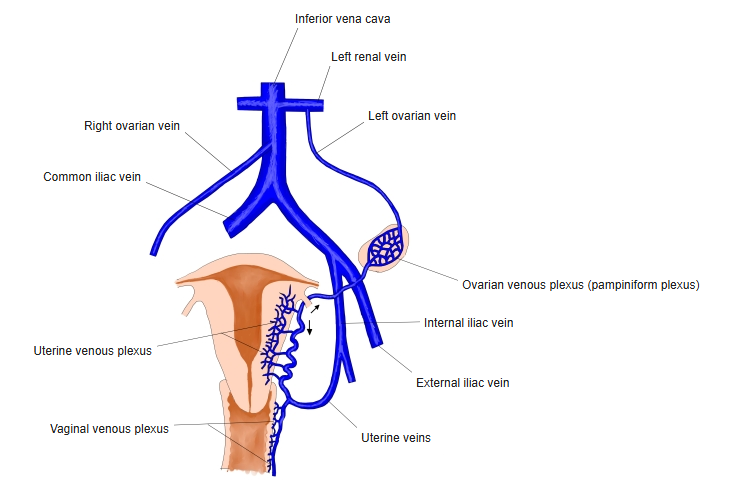
| Visceral (plexuses) | Vesical, prostatic, uterine, vaginal and rectal venous plexuses |
Rectal venous plexus and pelvic veins 
Ovarian veins
Clinical notes
- The pelvic plexuses have few valves and connect with the vertebral venous plexuses, a route for spread of pelvic tumors (e.g. prostate cancer) to the spine.
References and sources
- Further reading: Internal iliac vein, Wikipedia.