Latin: musculus depressor anguli oris (also called musculus triangularis)
Overview
- A triangular facial muscle below the angle of the mouth, associated with frowning.
- Broad at the lower border of the mandible, it narrows as it runs upward and medially.
- Some fibres occasionally cross under the chin to the other side; these form the transversus menti.
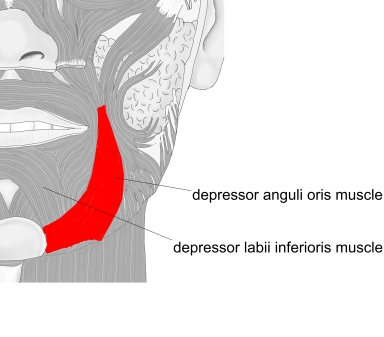
The red area in this figure is only approximate.
Illustrations
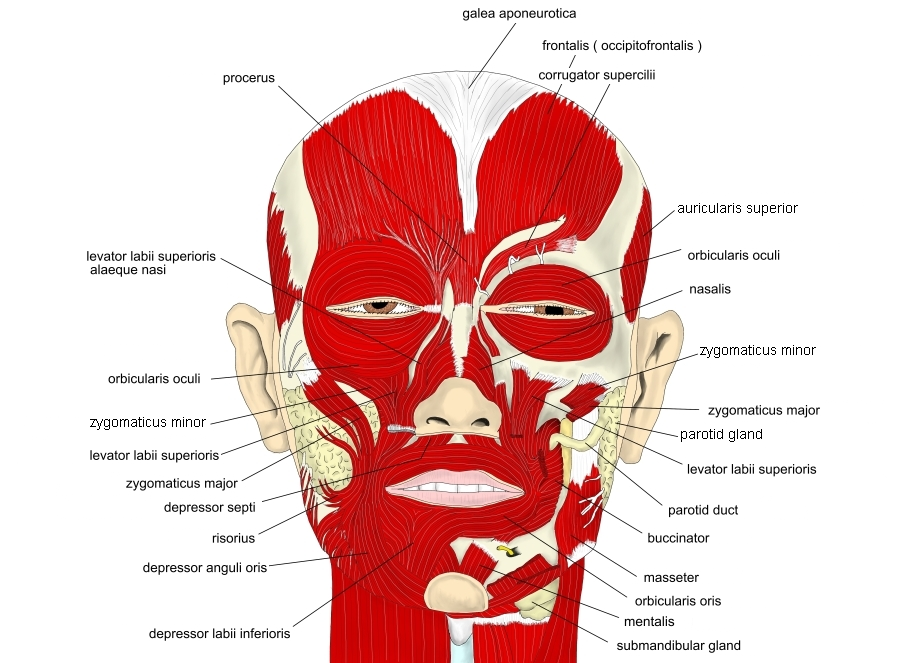
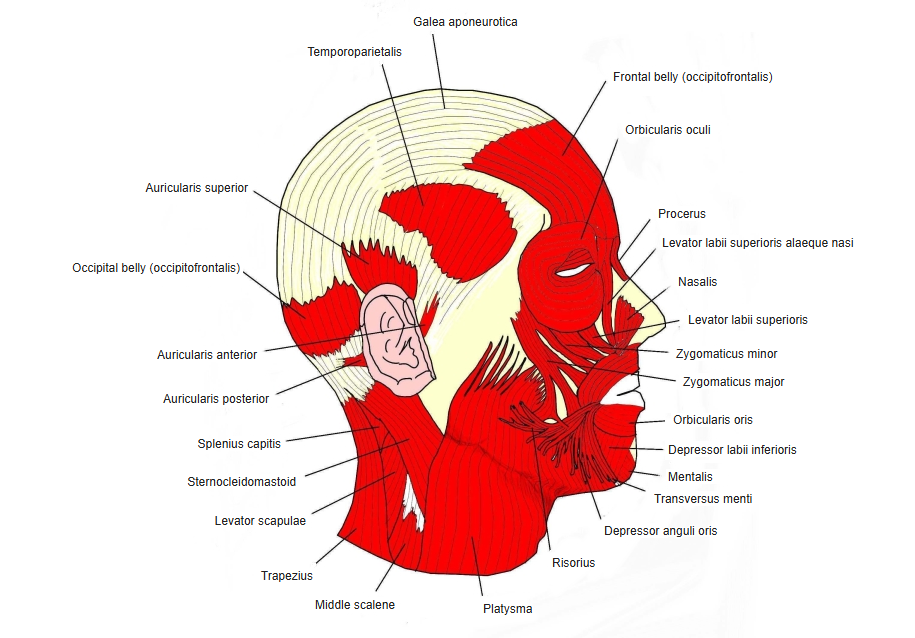
Origin / insertion
- Origin: lower border of the mandible (oblique line); continuous with the platysma
- Insertion: mostly the angle of the mouth; some fibres continue into the orbicularis oris of the upper lip (with the levator anguli oris), and some are described as blending with the risorius
Action
- Pulls the angle of the mouth and the upper lip downward
Innervation
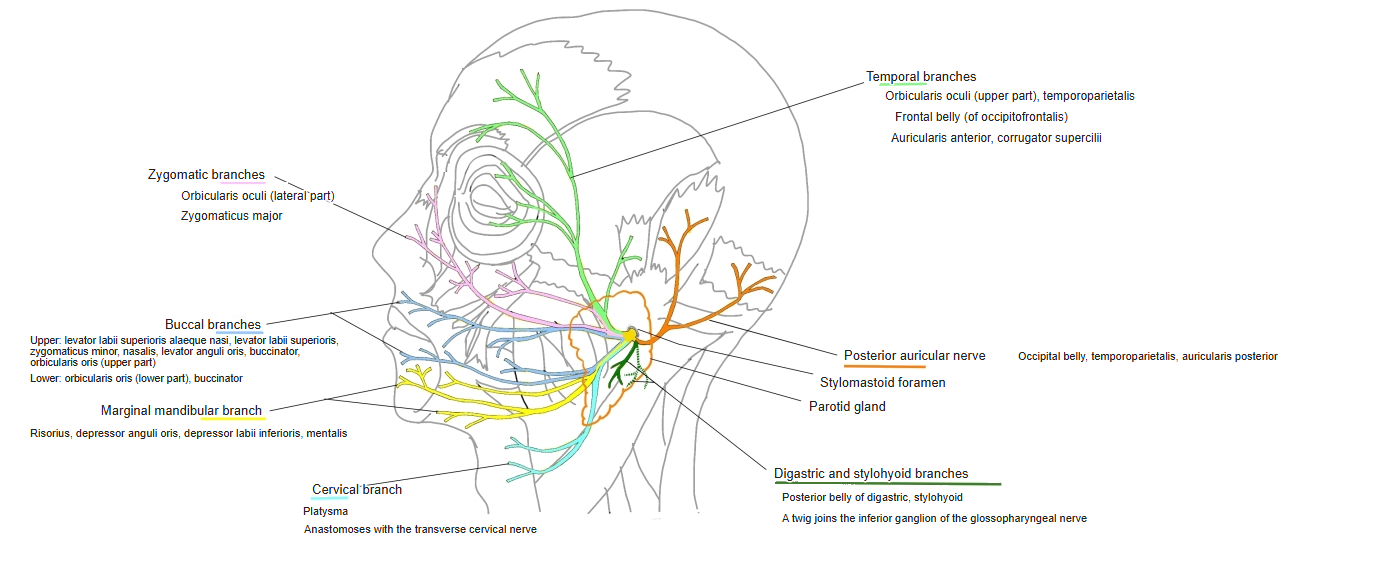
- Facial nerve – marginal mandibular branch (from the parotid plexus)
Blood supply
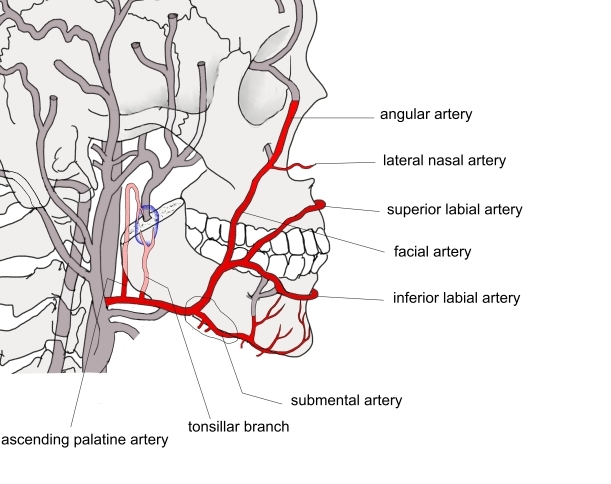
- Facial artery (branches around the angle of the mouth)
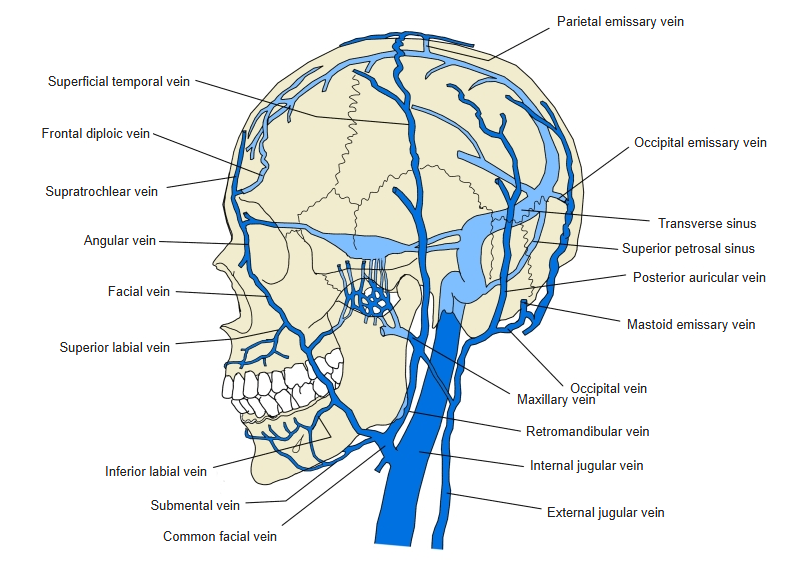
- Veins drain to the facial vein
Related terms
- Transversus menti
- Depressor labii inferioris
- Platysma
- Risorius
- Levator anguli oris
- Marginal mandibular branch
References and sources
- Further reading: Depressor anguli oris muscle, Wikipedia.