Muscles of facial expression
Overview
- Thin muscles, most attached to the skin, that open and close the openings of the face (eyes, nose, mouth, ears).
- In humans they are also highly differentiated for speech and facial expression.
- They develop from the second pharyngeal (hyoid) arch; all are supplied by the facial nerve (VII).
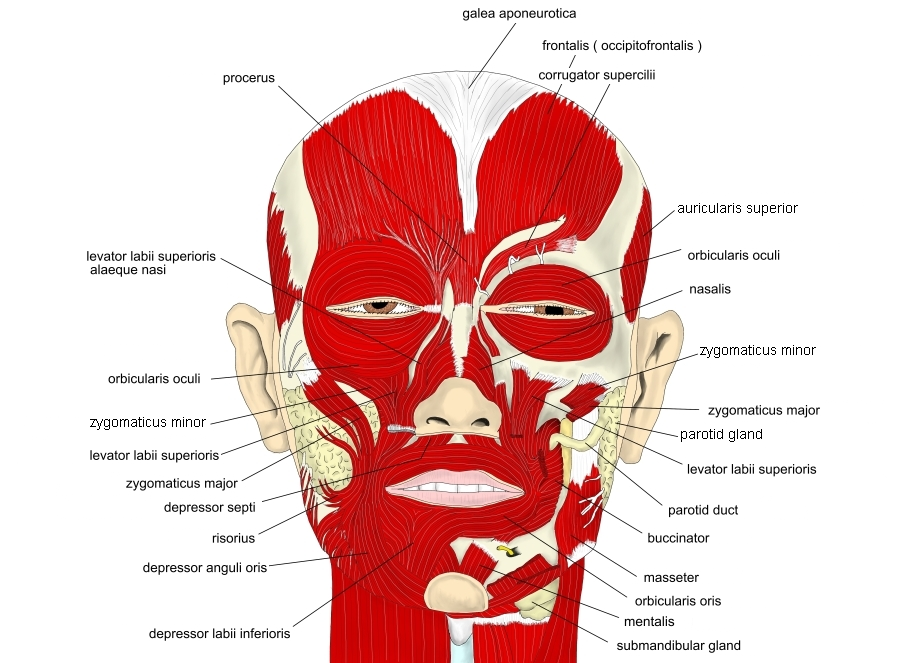
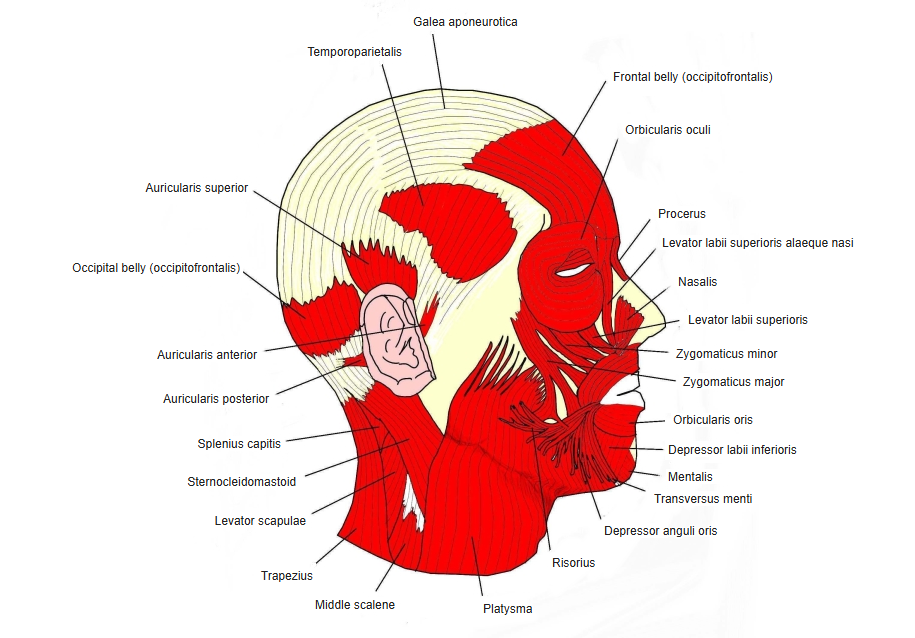
List of the facial muscles (24)
- Scalp: frontal belly and occipital belly of the occipitofrontalis, temporoparietalis
- Around the eye: orbicularis oculi, corrugator supercilii, depressor supercilii
- Around the nose: procerus, nasalis, depressor septi nasi
- Around the mouth and cheek: levator labii superioris alaeque nasi, levator labii superioris, zygomaticus minor, zygomaticus major, levator anguli oris, risorius, buccinator, orbicularis oris, depressor anguli oris, depressor labii inferioris, mentalis, transversus menti
- Around the ear: auricularis anterior, auricularis superior, auricularis posterior
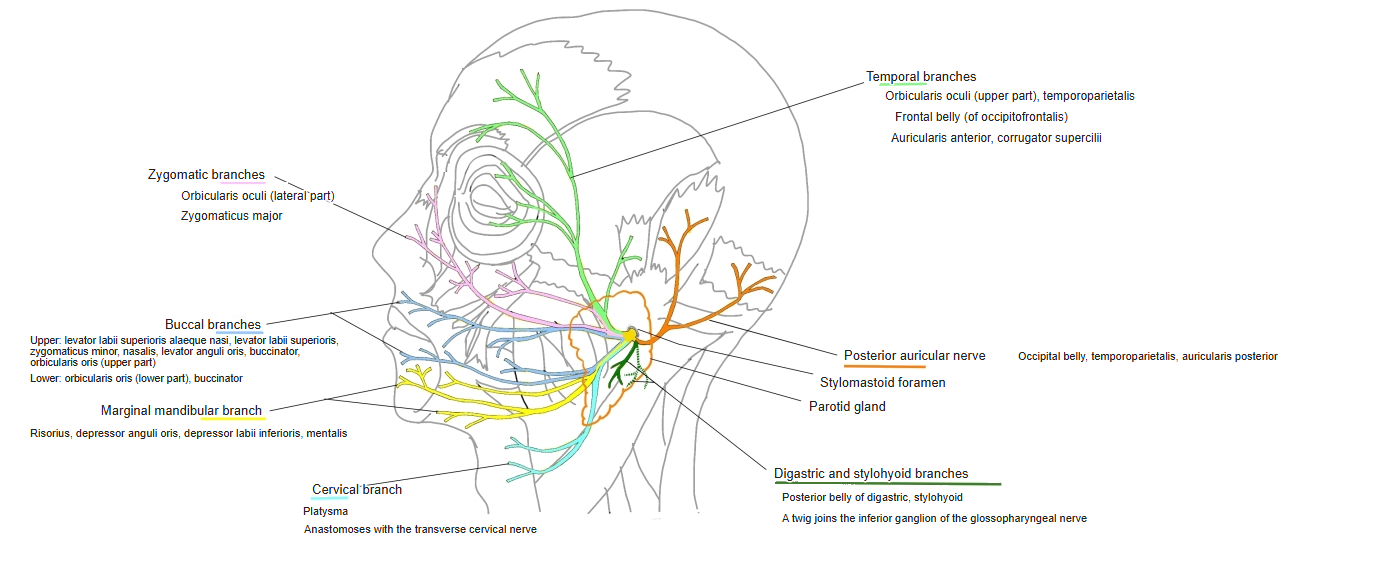
Innervation
- Facial nerve (cranial nerve VII): temporal, zygomatic, buccal, marginal mandibular and cervical branches, and the posterior auricular nerve
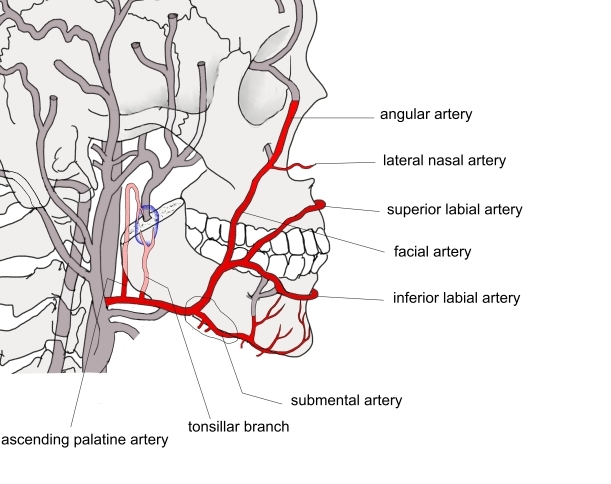
Blood supply
- Mainly branches of the facial artery and the superficial temporal artery
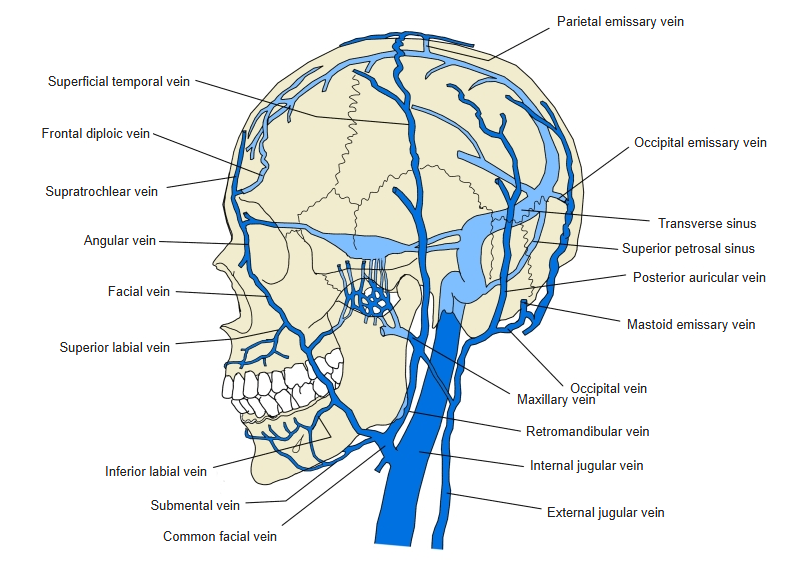
Compiled from standard anatomy references.
Related terms
- Facial nerve
- Muscles of mastication
- Platysma
References and sources
- Further reading: Facial muscles, Wikipedia.