Latin: Arteria labyrinthi
Overview
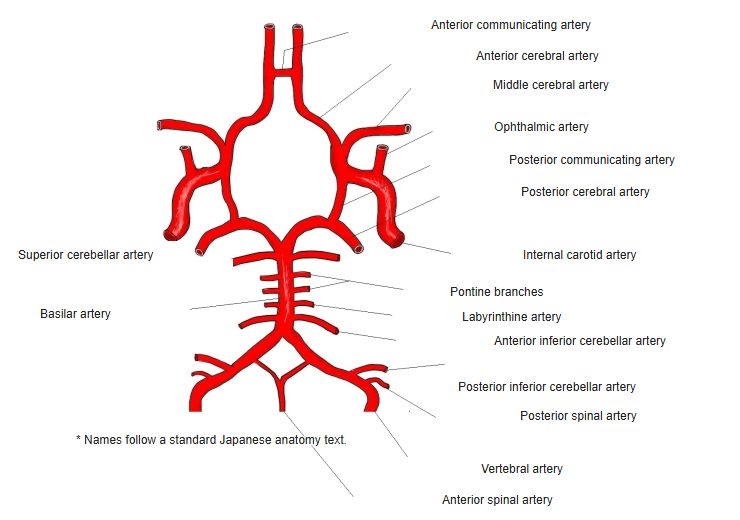
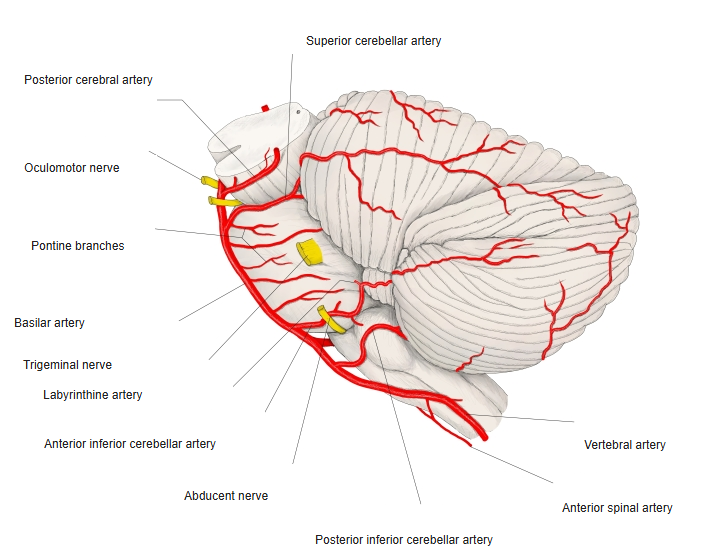
- A long, thin artery, usually from the anterior inferior cerebellar artery (sometimes from the basilar artery).
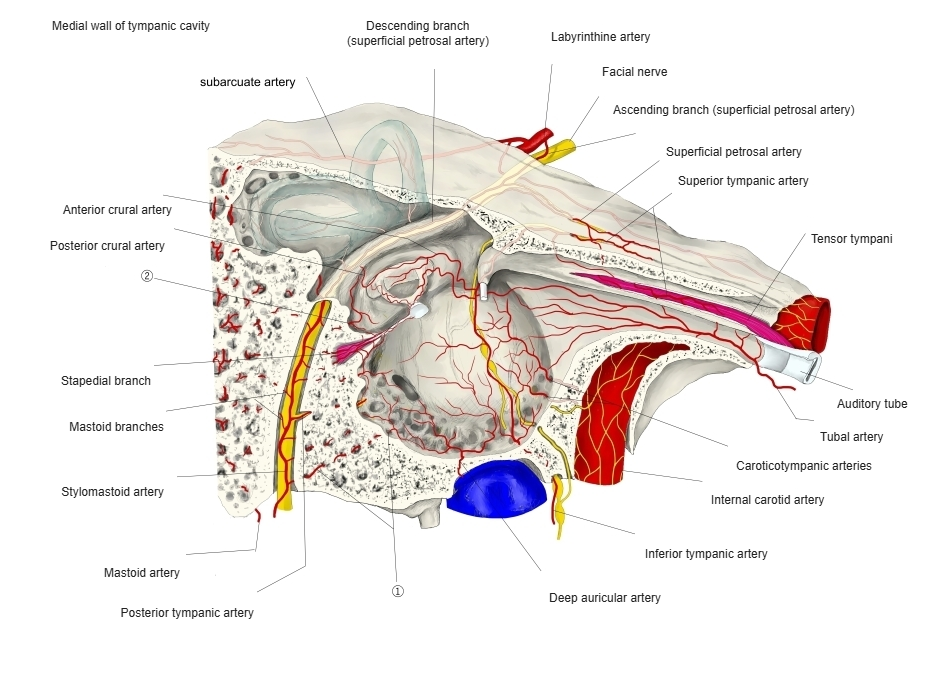
- Enters the internal acoustic meatus with the facial and vestibulocochlear nerves.
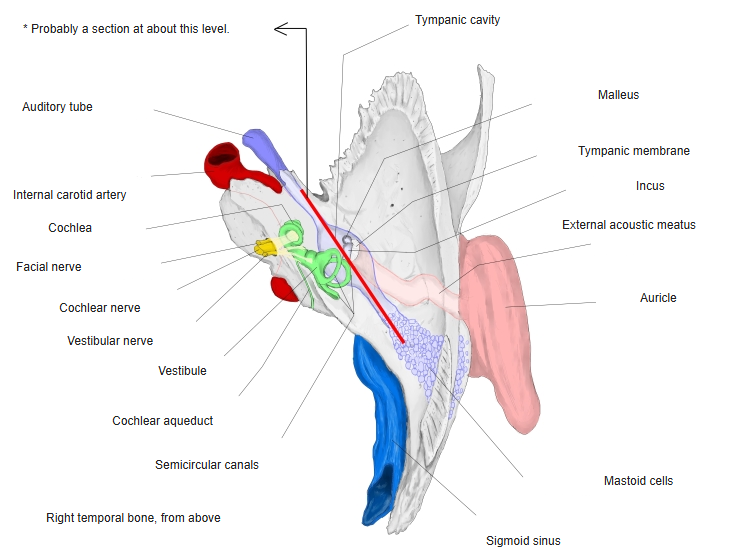
- Supplies the inner ear (cochlea and vestibular apparatus); it has cochlear and vestibular branches.
- Also called the internal auditory artery.
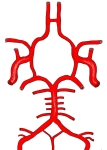
Arteries of the brainstem and cerebellum (diagram) 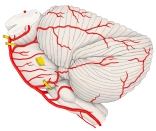
Arteries of the brainstem (side view)
Illustrations
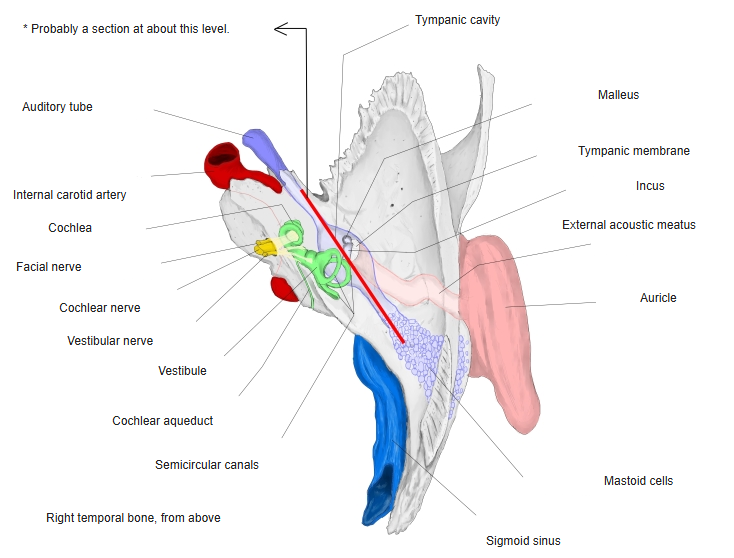
Ear and the inner ear 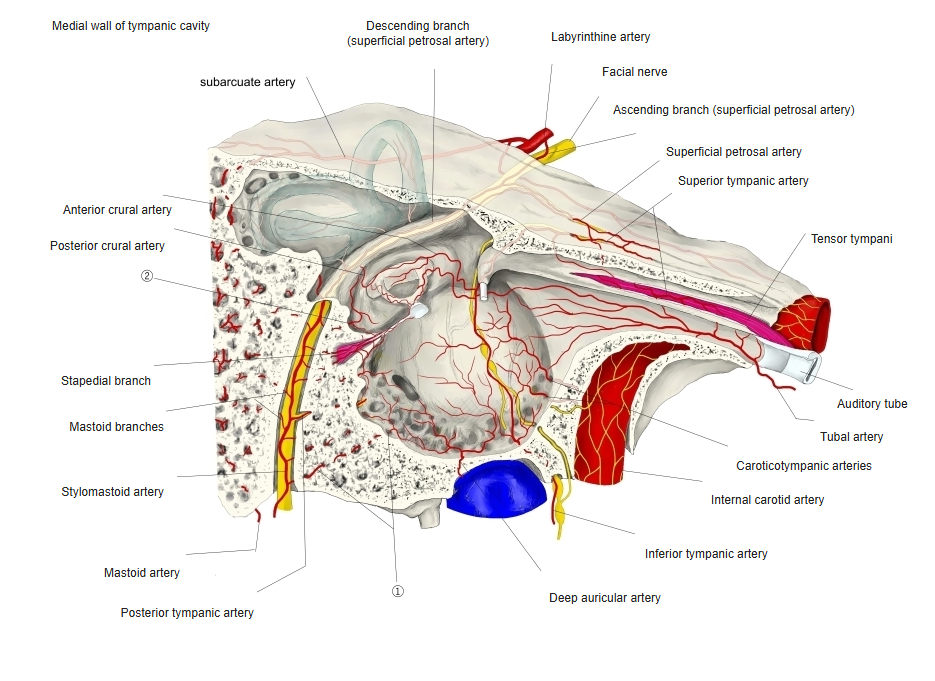
Arteries of the tympanic cavity
Clinical notes
- It is an end artery: its blockage can cause sudden hearing loss and vertigo.
References and sources
- Further reading: Labyrinthine artery, Wikipedia.