Latin: musculus infraspinatus
Overview
- One of the muscles of the shoulder girdle and one of the four rotator cuff muscles.
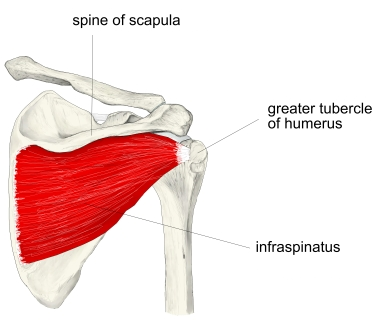
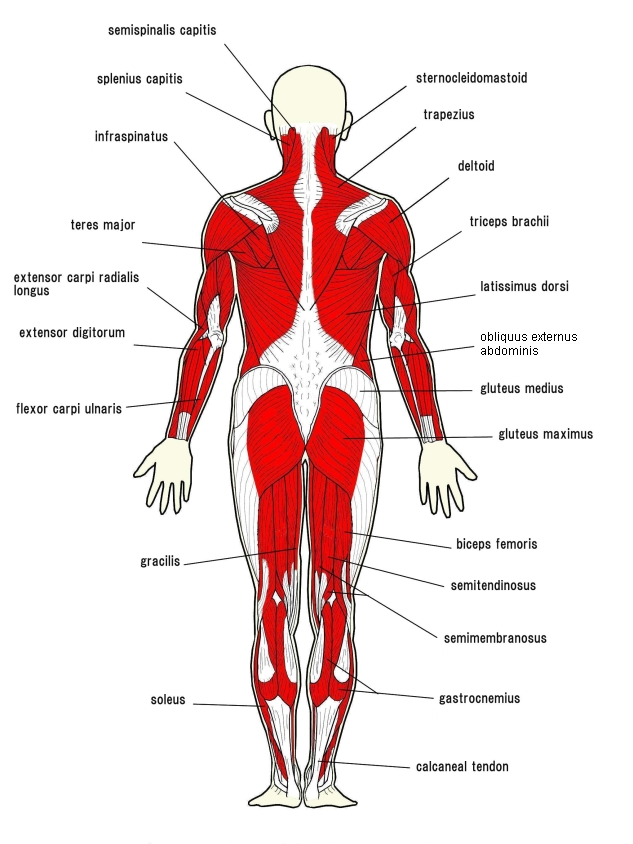
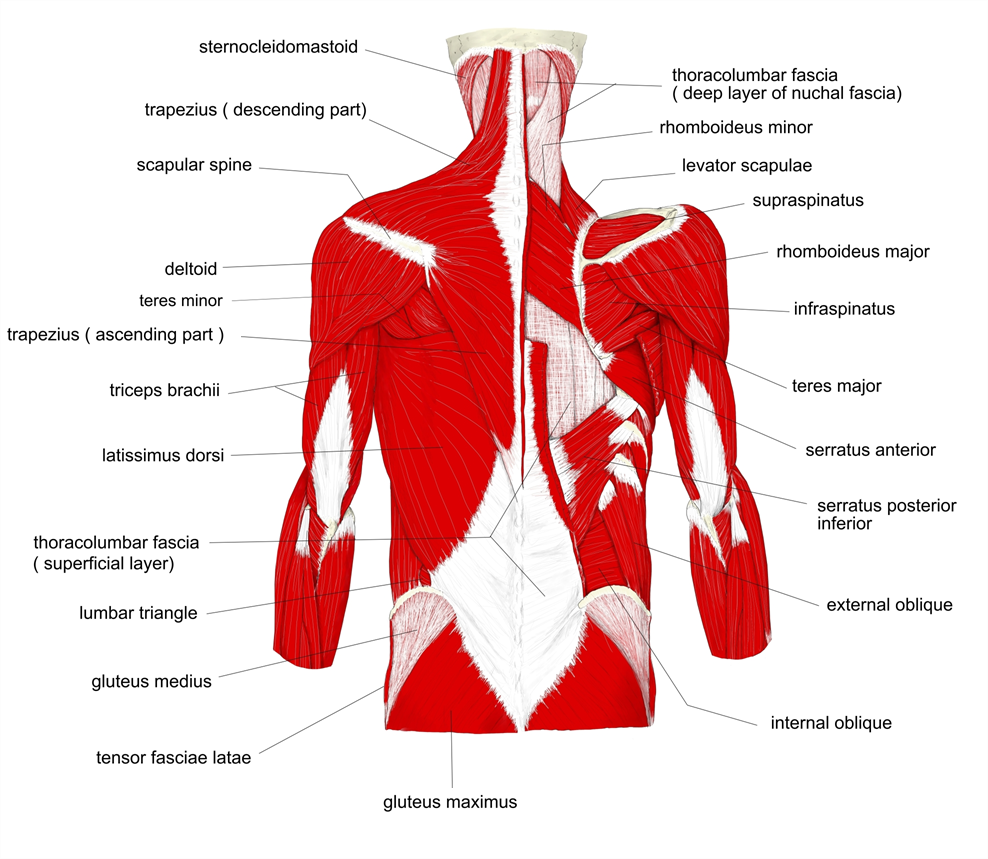
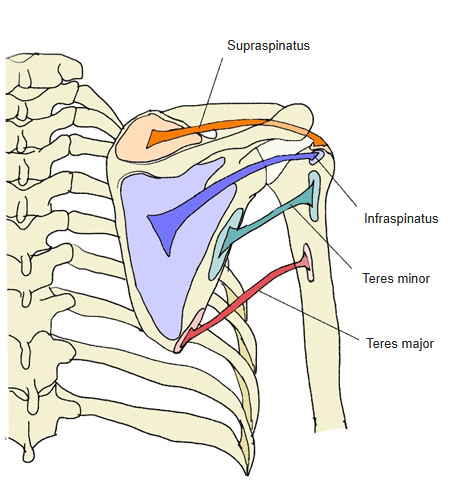
- A thick, triangular muscle filling most of the infraspinous fossa of the scapula.
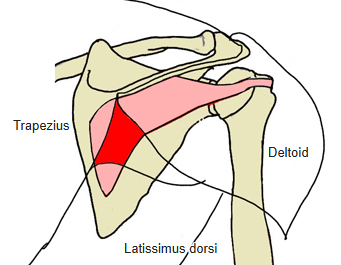
- Partly covered by the deltoid, trapezius and latissimus dorsi; the rest lies just under the skin and can be felt.
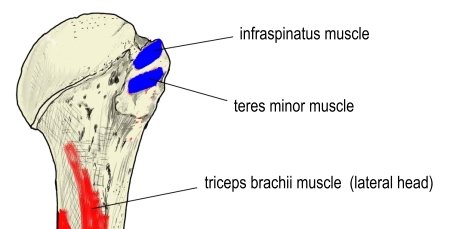
- Its insertion on the humerus is broad, which is why it is involved in rotator cuff tears about as often as the supraspinatus.
Position in the classification
Upper Limb › Shoulder girdle
Illustrations
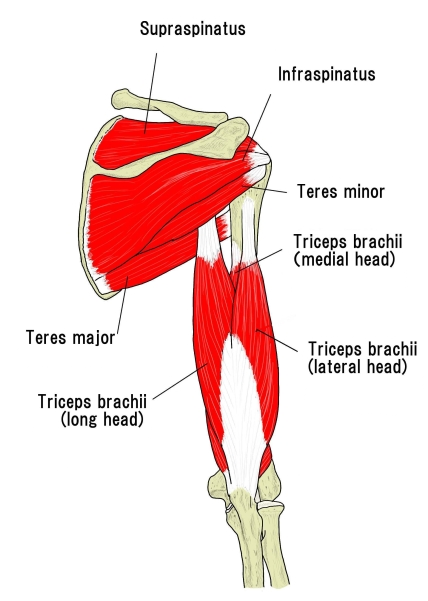
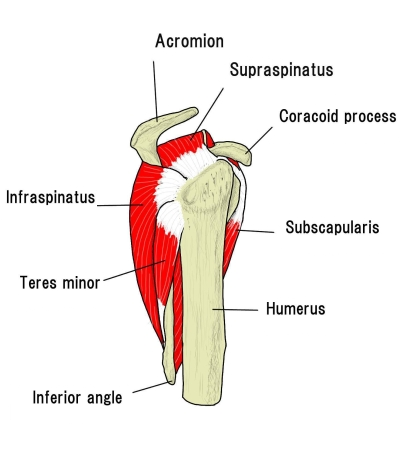
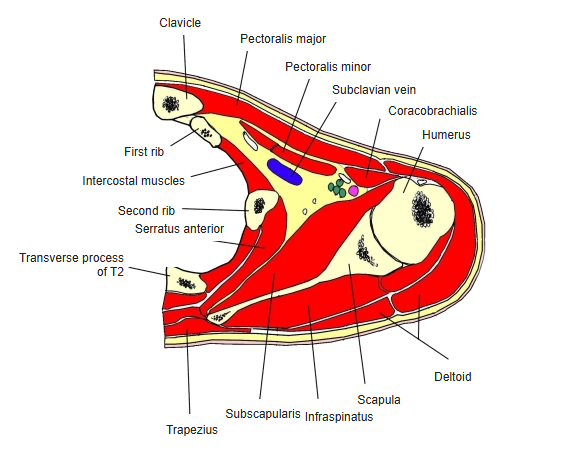
Origin / insertion
- Origin: infraspinous fossa of the scapula (medial two-thirds) and the infraspinous fascia covering it
- Insertion: middle facet of the greater tubercle of the humerus and the capsule of the shoulder joint
- The tendon crosses the back of the shoulder-joint capsule; a bursa may lie between them.
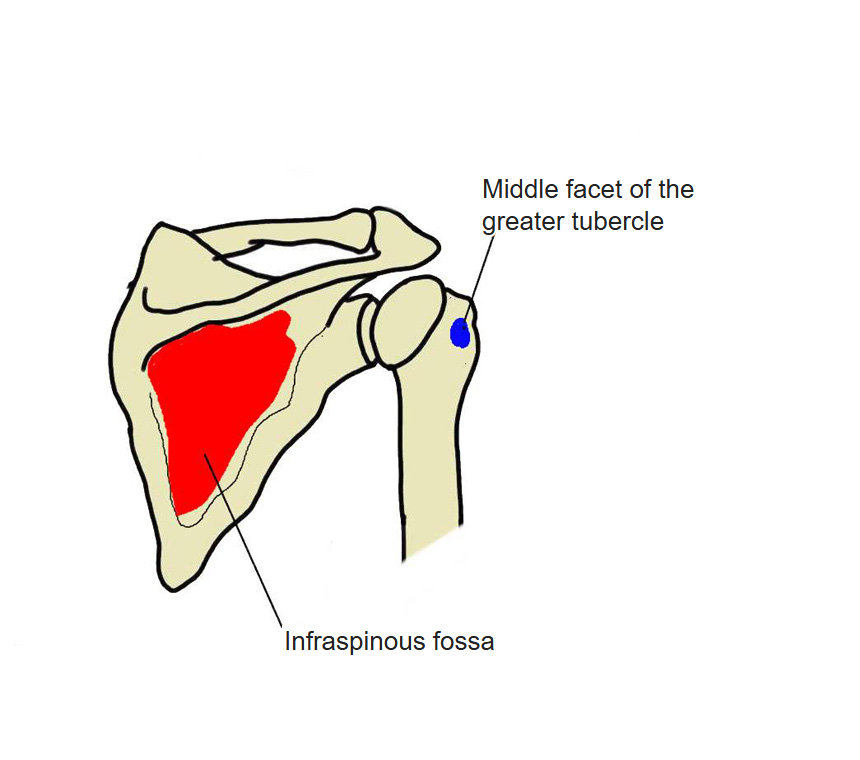
Action
- Laterally rotates the arm at the shoulder joint
- As part of the rotator cuff, stabilizes the shoulder joint
Innervation
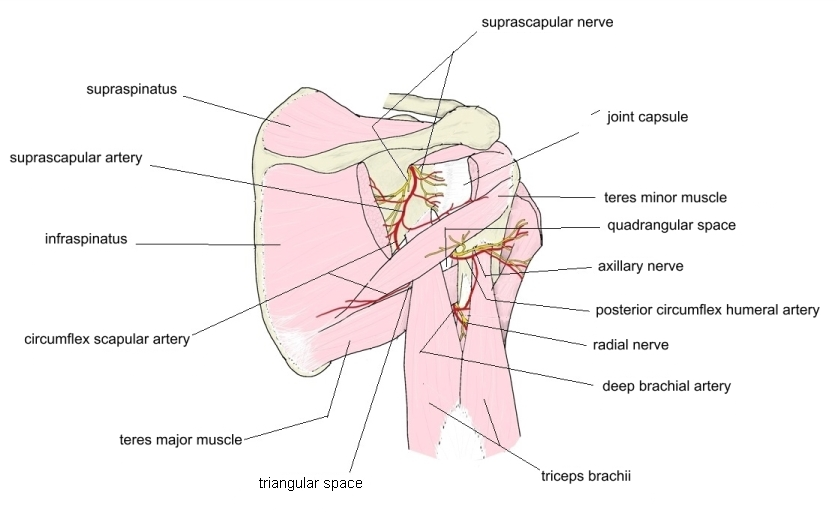
- Suprascapular nerve (C5–C6)
Blood supply
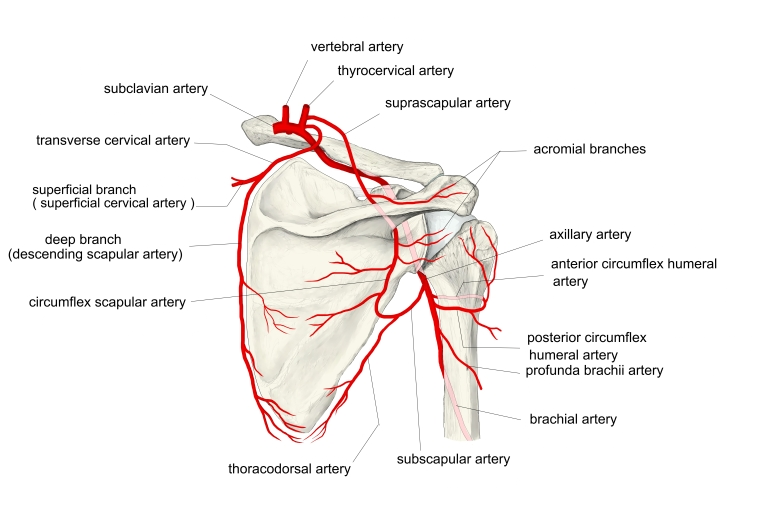
- Suprascapular artery
- Circumflex scapular artery
Anatomical variations
- Frequently fused with the teres minor
Related terms
- Supraspinatus
- Teres minor
- Subscapularis
- Rotator cuff
- Infraspinous fossa
- Greater tubercle
- Suprascapular nerve
- Suprascapular artery
References and sources
- Further reading: Infraspinatus muscle, Wikipedia.