Latin: musculus serratus posterior inferior
Overview
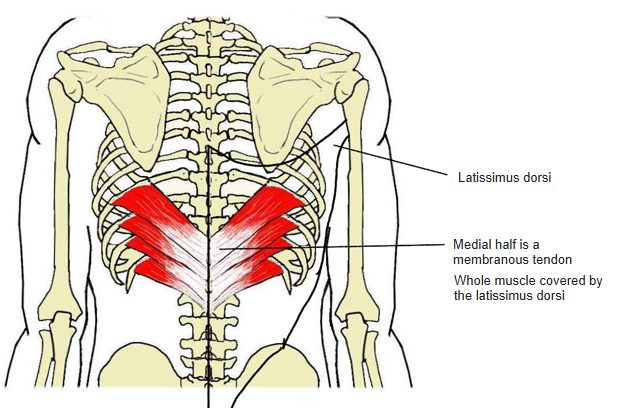
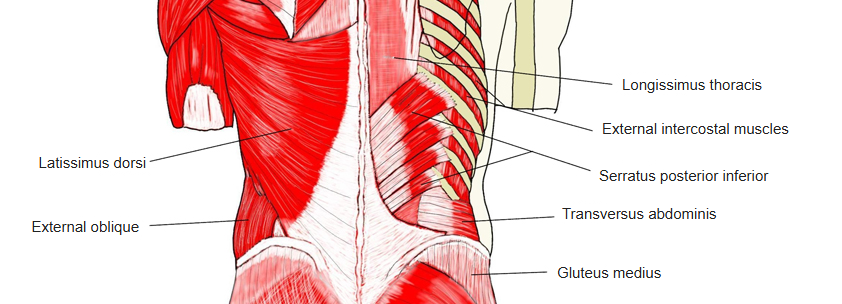
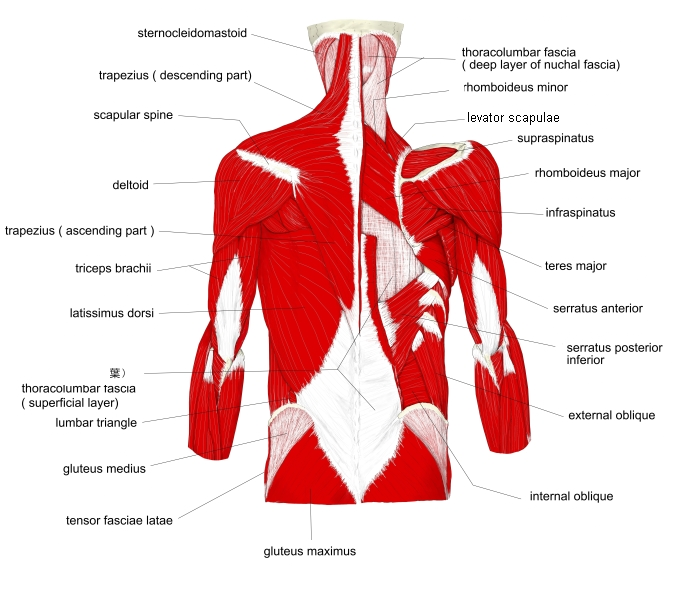
- A thin, quadrilateral muscle at the junction of the thoracic and lumbar regions, covered by the latissimus dorsi.
- Its aponeurosis of origin blends with the thoracolumbar fascia and the aponeurosis of the latissimus dorsi; the medial half is membranous.
- Four broad slips, partly overlapping each other.
- Broader than the serratus posterior superior.
Position in the classification
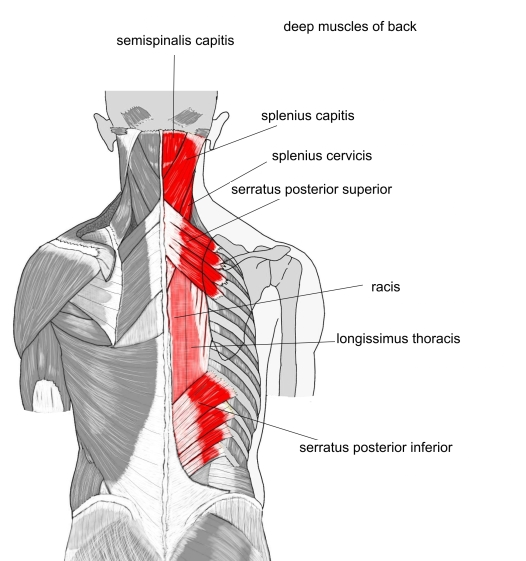
Trunk › Back › Deep back muscles › First layer
- Serratus posterior superior
- Serratus posterior inferior
Illustrations
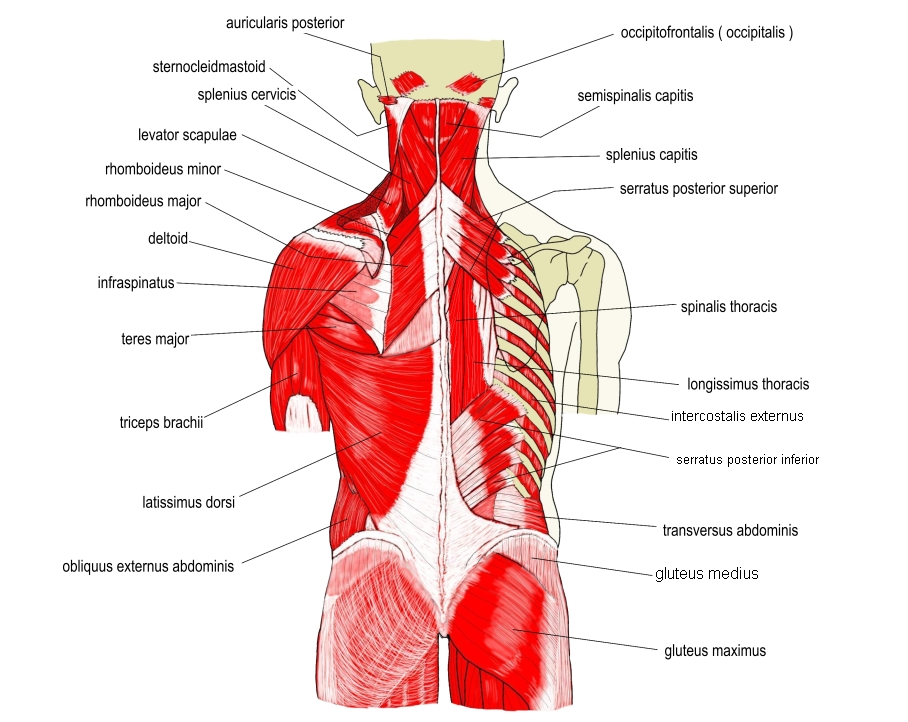
Origin / insertion
- Origin: superficial layer of the thoracolumbar fascia from T11 to L2 (spinous processes)
- Insertion: lower borders of the lateral parts of ribs 9–12
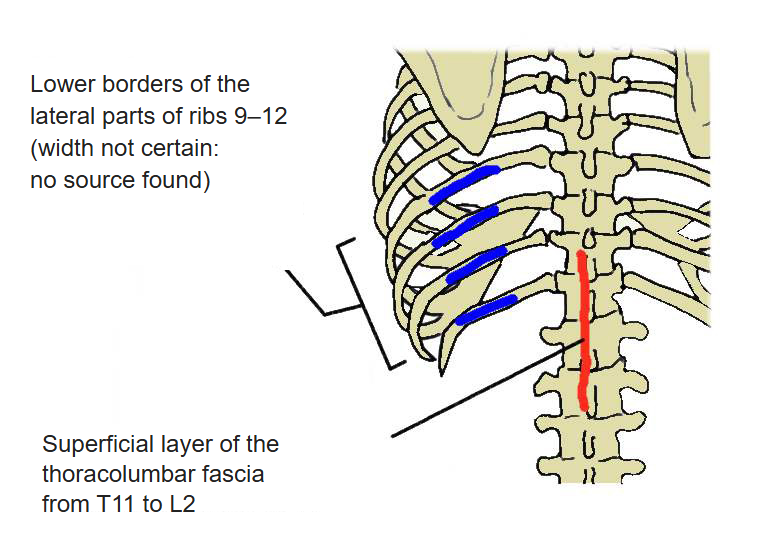
The width of the insertions in the figure is not certain.
Action
- Pulls ribs 9–12 downward and backward (medially), assisting breathing
Innervation
- Intercostal nerves 9–11 and the subcostal nerve (T9–T12)
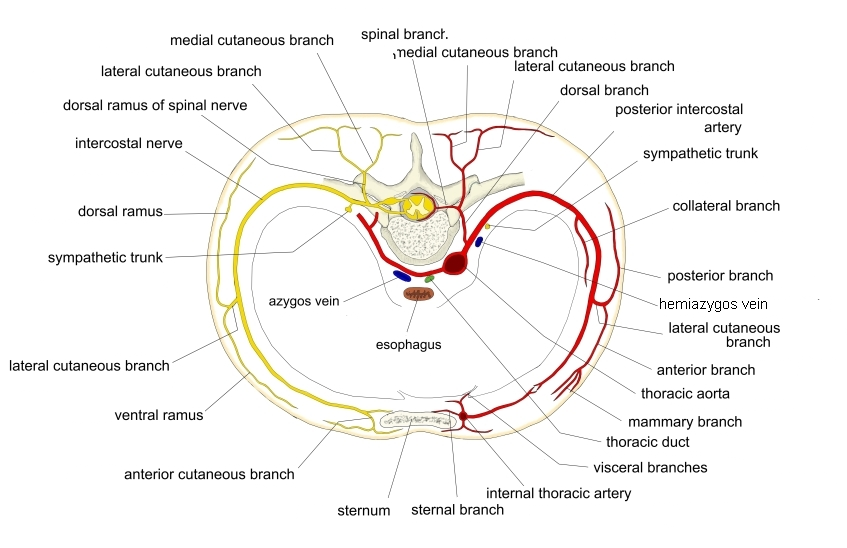
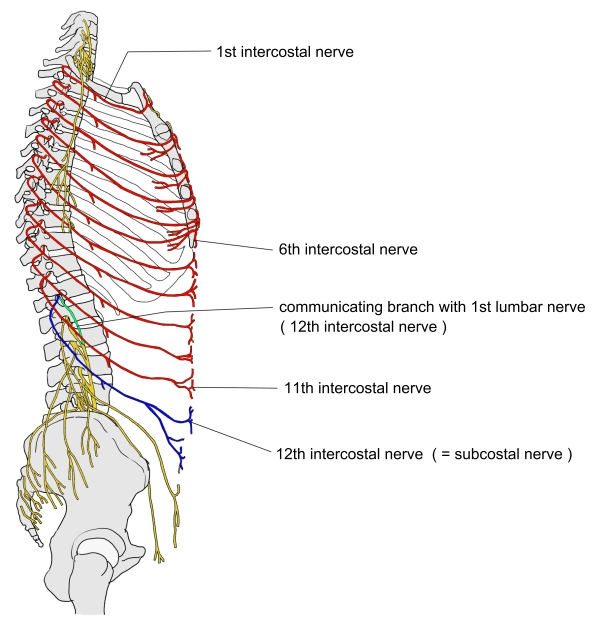
Blood supply
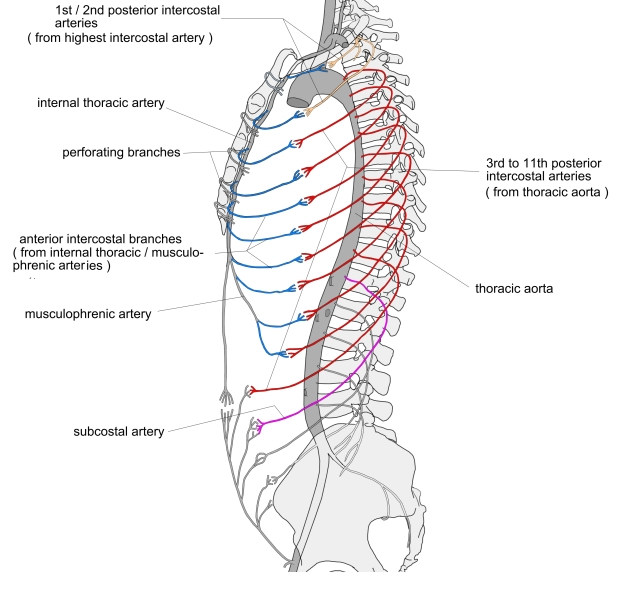
- Subcostal artery
- Dorsal branches of the posterior intercostal arteries
Related terms
- Serratus posterior superior
- Latissimus dorsi
- Thoracolumbar fascia
- Intercostal nerve
References and sources
- Further reading: Serratus posterior inferior muscle, Wikipedia.