Latin: musculus flexor pollicis longus
Overview
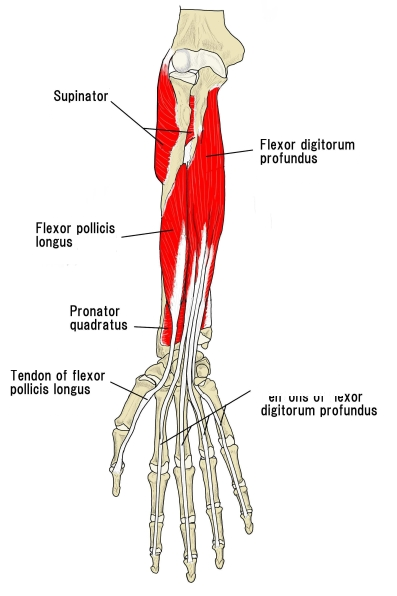
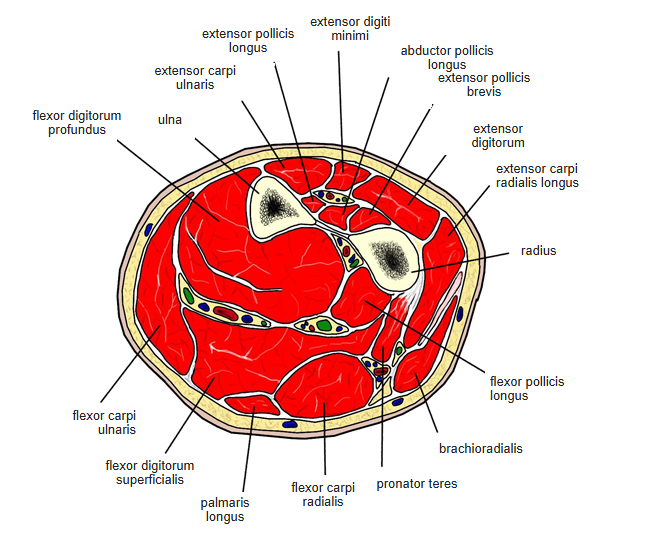
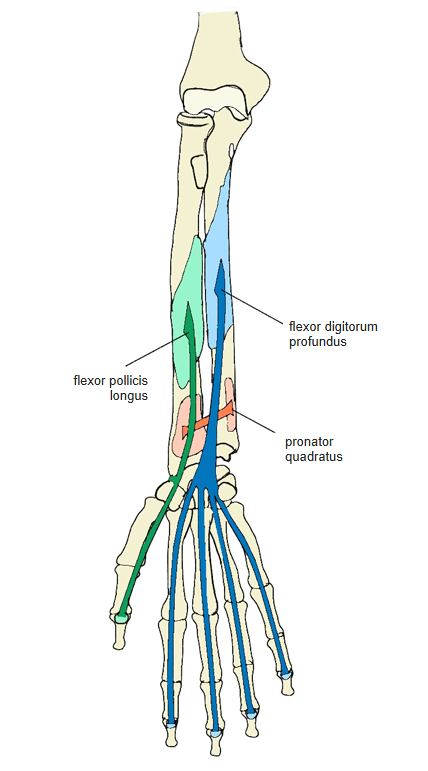
- A deep forearm flexor in the same plane as the flexor digitorum profundus; phylogenetically a separated part of it.
- Among living apes, a separate belly of this muscle is found only in humans; in other apes it is rudimentary or absent.
- Part of the belly can be felt under the skin lateral to the flexor carpi radialis tendon when the thumb tip is bent.
- An accessory head (Gantzer's muscle) arising from the medial epicondyle or the coronoid process of the ulna is common (about 40%).
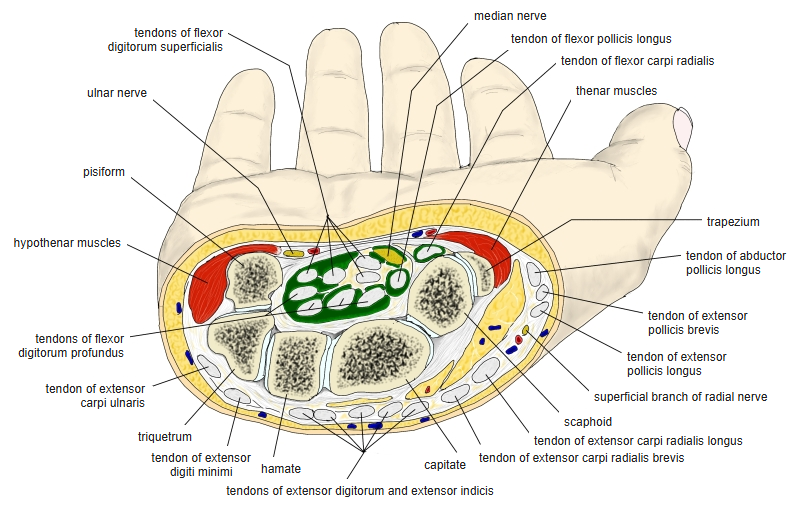
- Its tendon passes through the carpal tunnel.
Position in the classification
Upper Limb › Forearm › Flexor group › Second and third layers
- Flexor digitorum superficialis
- Flexor digitorum profundus
- Flexor pollicis longus
Illustrations
Origin / insertion
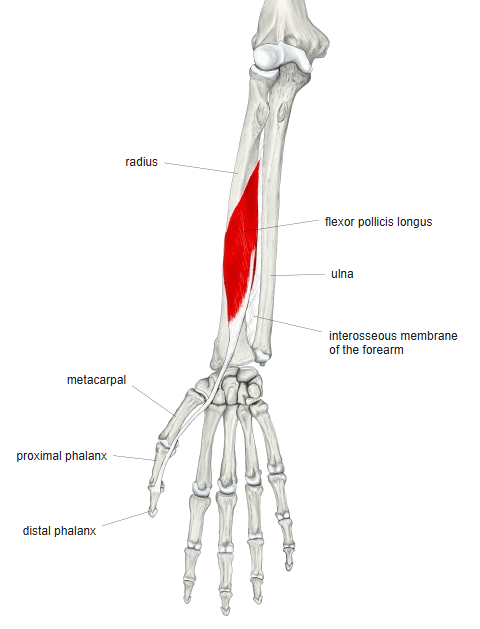
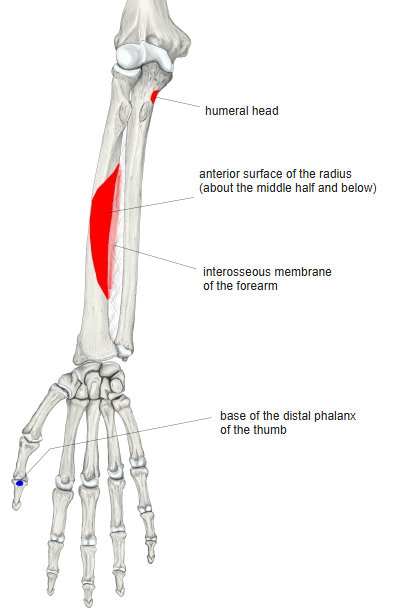
- Origin: anterior surface of the radius, from just below the radial tuberosity to near the pronator quadratus, and the adjacent interosseous membrane; accessory head, if present, from the medial epicondyle or coronoid process
- Insertion: base of the distal phalanx of the thumb
Action
- Flexes the interphalangeal joint of the thumb
- Also flexes the metacarpophalangeal joint of the thumb and, when the thumb is fixed, assists in flexing the wrist
Innervation
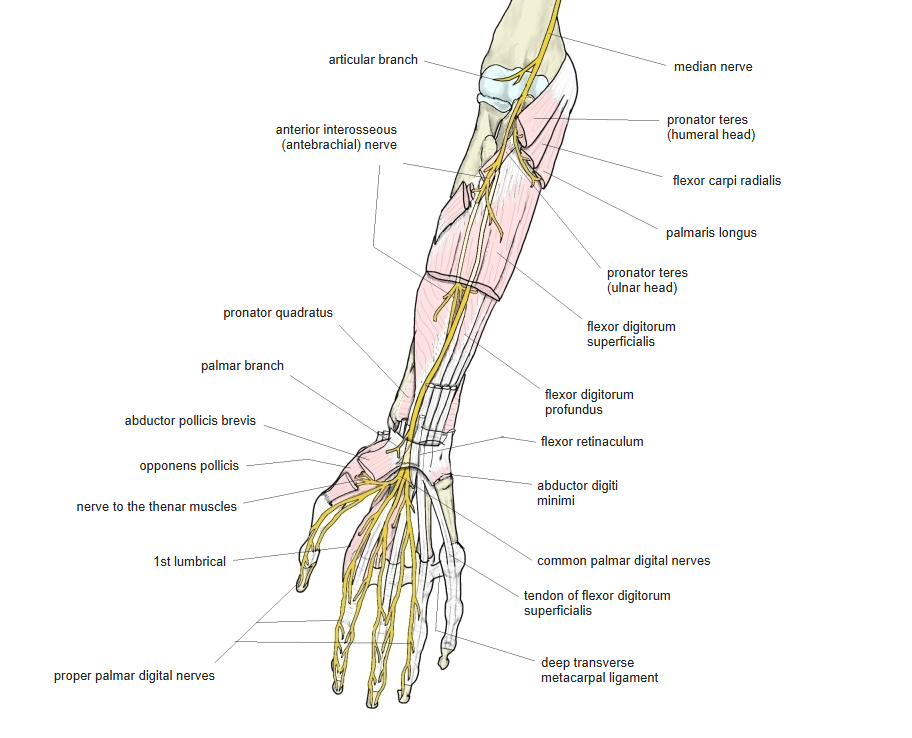
- Anterior interosseous nerve, a branch of the median nerve (C6, C7; some sources include C8)
Blood supply
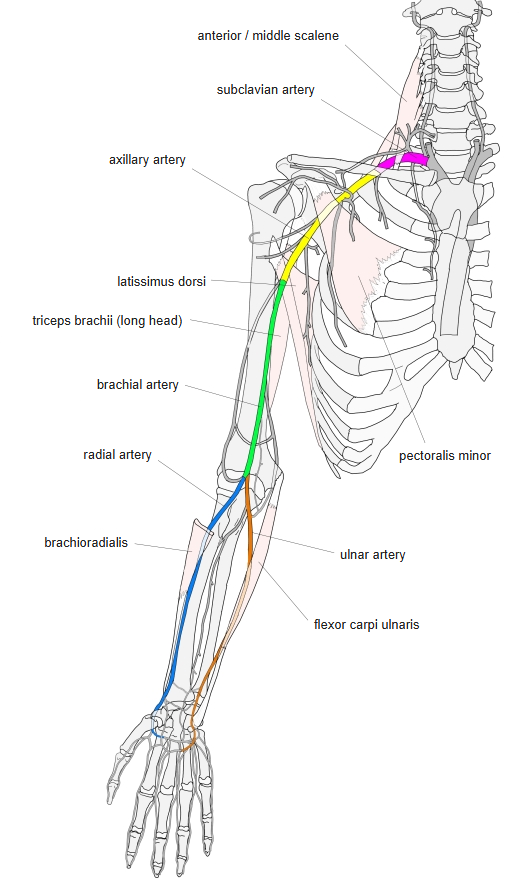
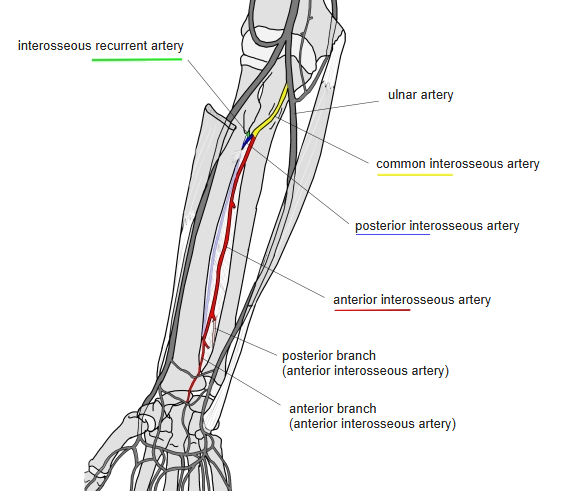
- Radial artery, ulnar artery, anterior interosseous artery
Anatomical variations
- Very rarely absent; the origin may be short or extend over three-quarters of the radius; connections to other flexors are known
- An extra tendon to the index finger is sometimes found
Related terms
- Flexor digitorum profundus
- Pronator quadratus
- Radius
- Anterior interosseous nerve
- Median nerve
References and sources
- Further reading: Flexor pollicis longus muscle, Wikipedia.