Sarcolemma
Also called the myolemma
= Myolemma (another name for the same membrane; the Latin-Greek name means "flesh sheath")
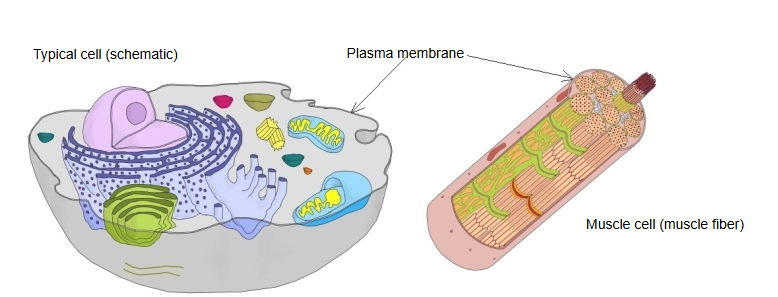
· Like the membrane of any cell, it separates the inside of the fibre from the tissue fluid around it and controls what passes in and out.
· On its outer side lies a basement membrane (basal lamina) rich in collagen and laminin; proteins crossing the sarcolemma link the inner framework of the fibre to this layer. Some texts include the basal lamina in the term.
· At regular intervals it dips deep into the fibre as transverse tubules (T tubules), which carry the electrical signal for contraction to the sarcoplasmic reticulum.
· In skeletal muscle the many nuclei of each fibre lie just under the sarcolemma. At the ends of the fibre it is joined to the collagen fibres of the tendon.
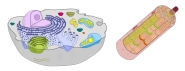 Plasma membrane and sarcolemma
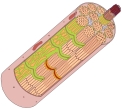 Skeletal muscle fibre
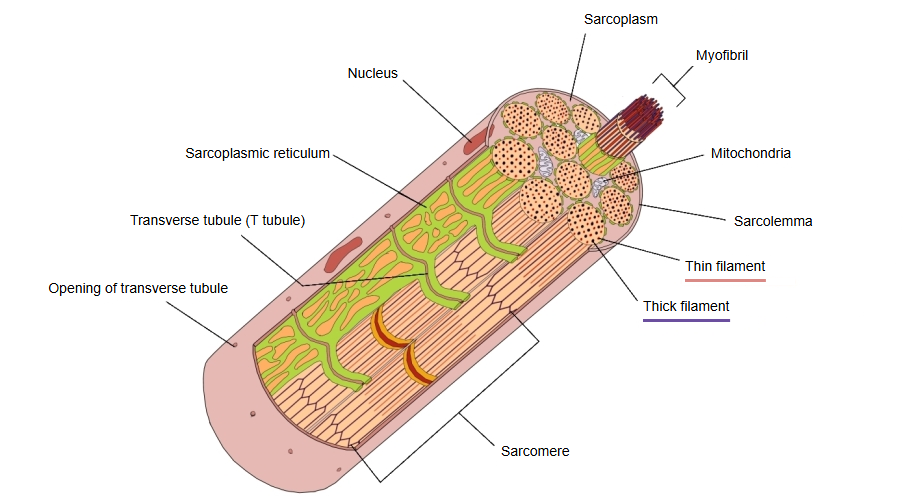
Muscle is built in levels: myofilaments form sarcomeres, sarcomeres form myofibrils, myofibrils form a muscle fibre (wrapped by the endomysium), fibres form a fascicle (wrapped by the perimysium), and fascicles form the whole muscle (wrapped by the epimysium).
Related terms
References and sources
- Further reading: Sarcolemma, Wikipedia.
- Federative International Programme for Anatomical Terminology (FIPAT). Terminologia Anatomica, 2nd ed. (TA2), 2019.