Latin: musculi interossei dorsales manus
Overview
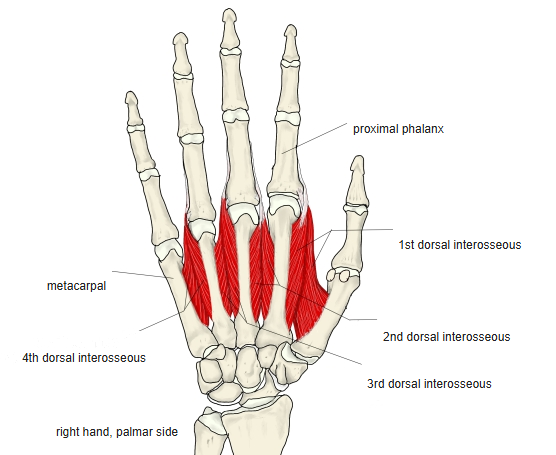
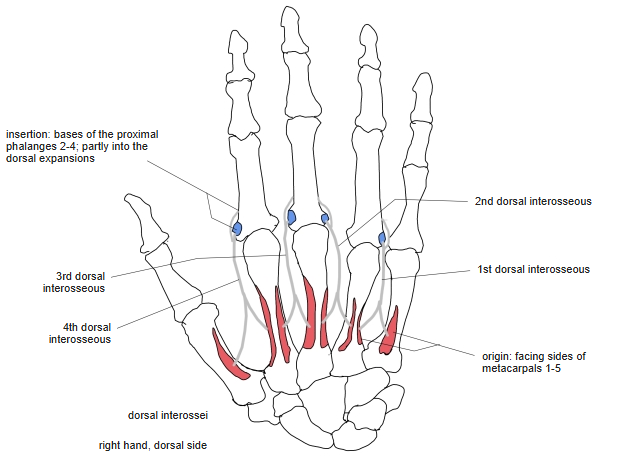
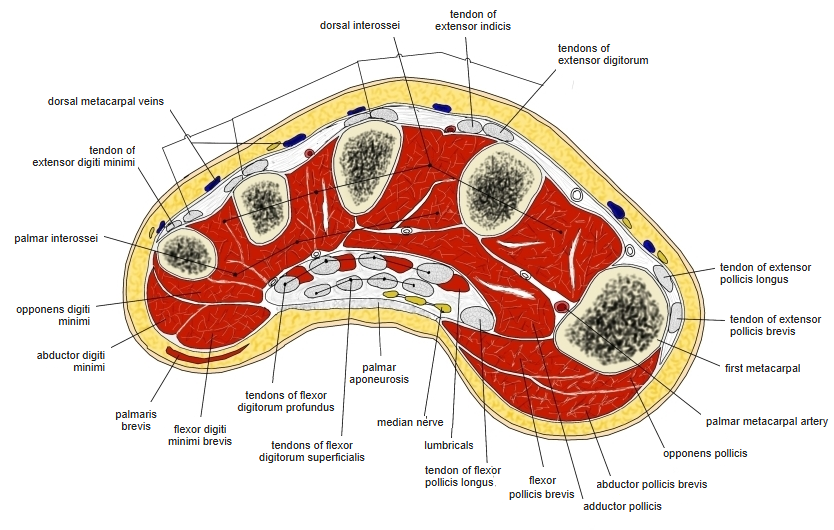
- Four bipennate muscles, each arising by two heads from adjacent metacarpals.
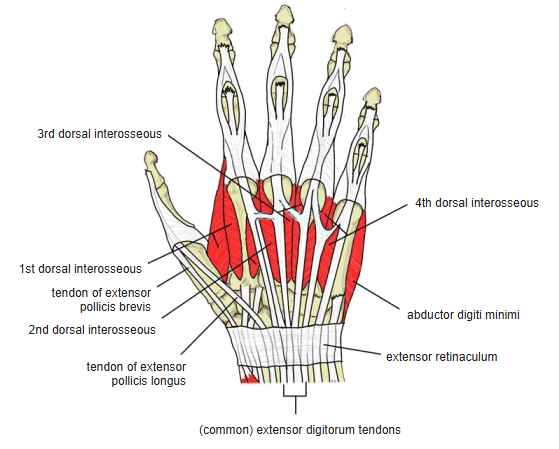
- The 1st is the largest; the radial artery passes between its two heads. Branches of the deep palmar arch pass between the heads of the 2nd–4th.
- The middle finger receives two of them; the abductor digiti minimi acts like a 5th dorsal interosseous (Wikipedia).
- They spread the fingers (like the "paper" in rock-paper-scissors); the palmar interossei bring them together.
- Damage to the ulnar nerve makes these movements impossible.
Position in the classification
Upper Limb › Hand › Metacarpal muscles
- Lumbricals (hand)
- Dorsal interossei (hand)
- Palmar interossei
Illustrations
Origin / insertion
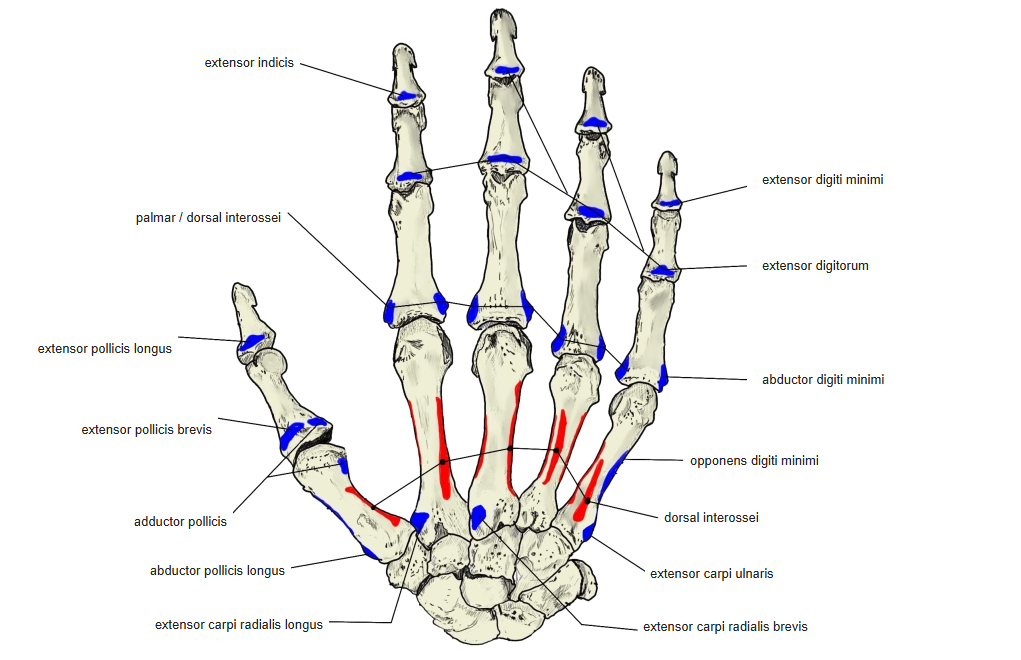
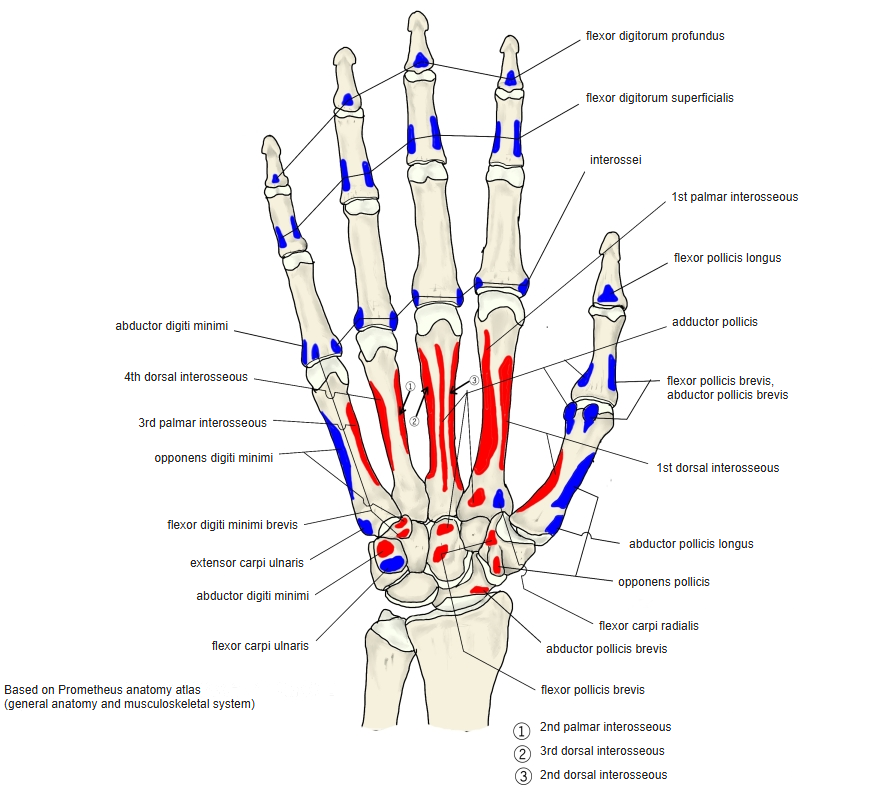
- Origin: adjacent sides of the 1st–5th metacarpals (each by two heads, more extensively from the metacarpal of the finger it inserts into)
- Insertion: bases of the proximal phalanges of fingers 2–4 and the dorsal digital expansions (of the extensor digitorum tendons)
Action
- Draw the index and middle fingers towards the thumb side and the middle and ring fingers towards the little-finger side: spread the fingers
- Together with the palmar interossei and the lumbricals: flex the metacarpophalangeal joints and extend the interphalangeal joints
Innervation
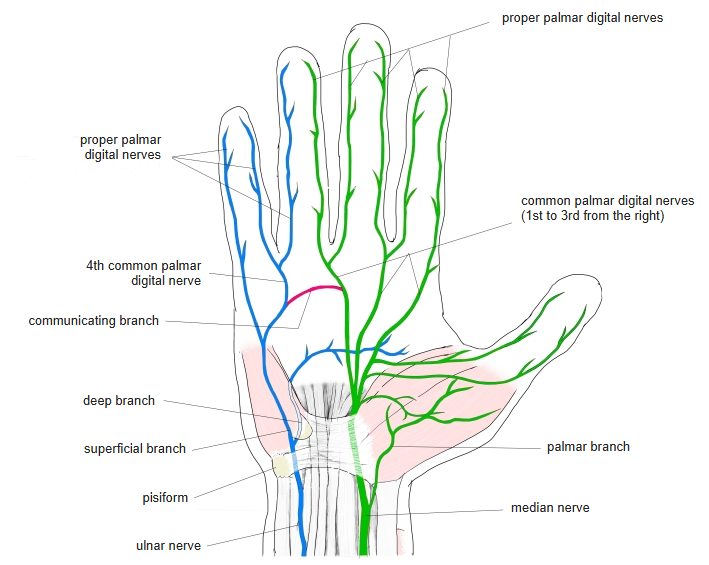
- Deep branch of the ulnar nerve (C8, T1)
Blood supply
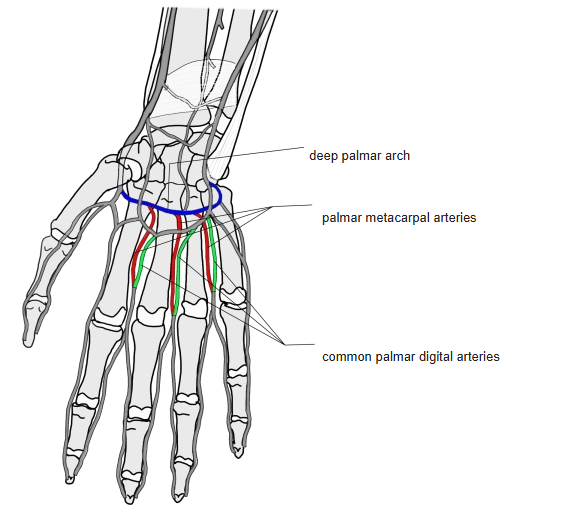
- Dorsal and palmar metacarpal arteries (the palmar metacarpal arteries arise from the deep palmar arch)
Related terms
- Palmar interossei
- Lumbricals (hand)
- Abductor digiti minimi (hand)
- Ulnar nerve
References and sources
- Further reading: Dorsal interossei of the hand, Wikipedia.