Latin: musculus semitendinosus
Overview
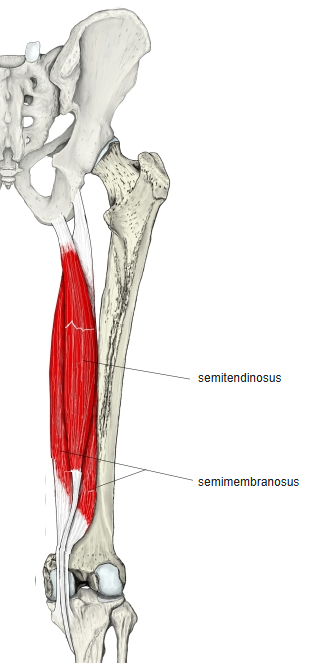
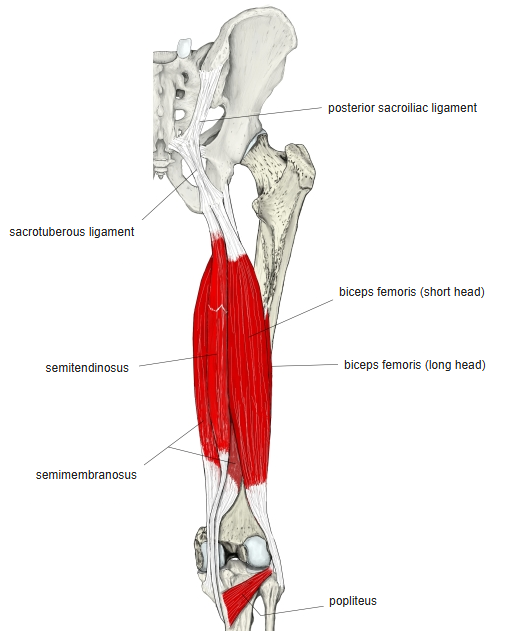
- One of the hamstrings; the upper half is a thick belly and the lower part mostly tendon, which gives the muscle its name.
- Arises near the long head of the biceps femoris and runs down in a groove formed by the semimembranosus.
- With the gracilis and sartorius it forms the pes anserinus.
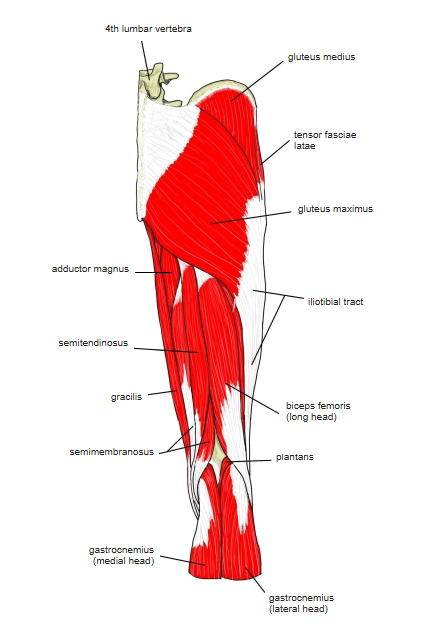
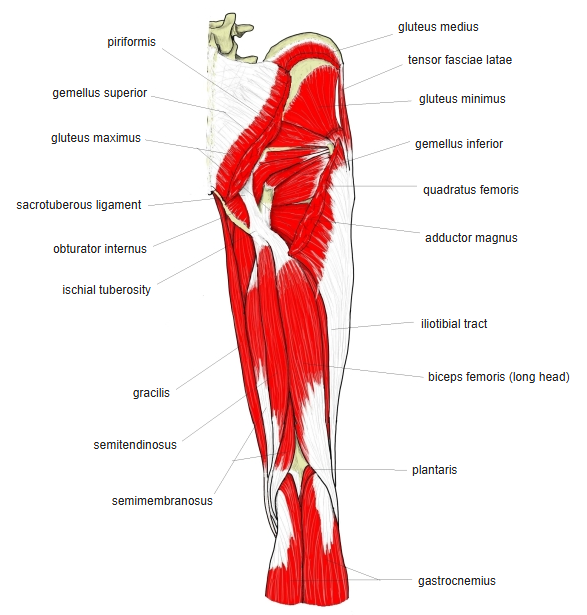
- Continuous in places with the long head of the biceps femoris, semimembranosus, sartorius, gracilis, adductor magnus and gastrocnemius.
Position in the classification
Lower Limb › Thigh › Flexor group
- Biceps femoris
- Semitendinosus
- Semimembranosus
Illustrations
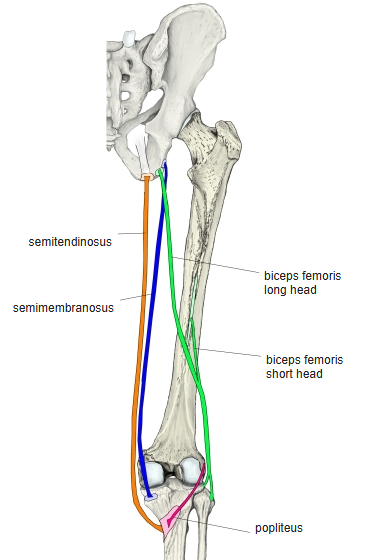
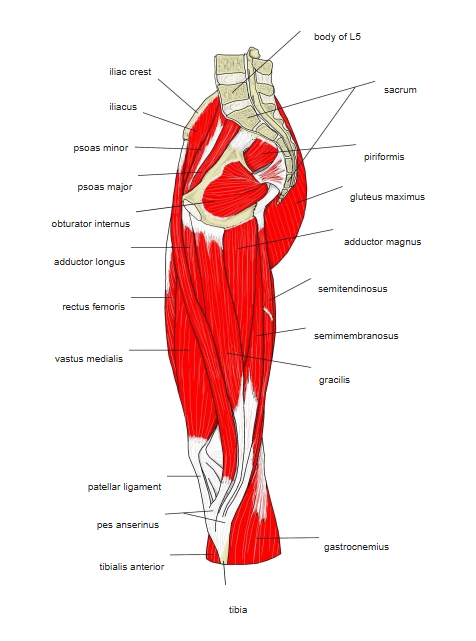
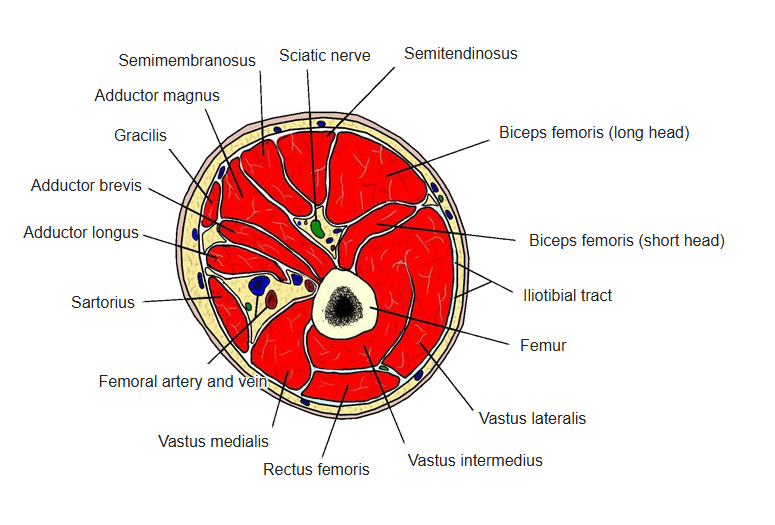
Origin / insertion
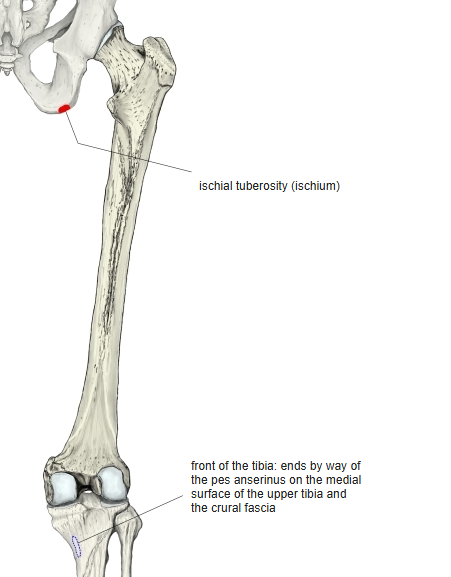
- Origin: ischial tuberosity
- Insertion: medial surface of the upper tibia along the tibial tuberosity, behind and below the gracilis (pes anserinus), and the crural fascia
Action
- Flexes the knee and rotates the leg medially
- With the thigh fixed, raises the pelvis upright
- Prometheus: hip extension, steadies the pelvis; knee flexion and medial rotation
Innervation
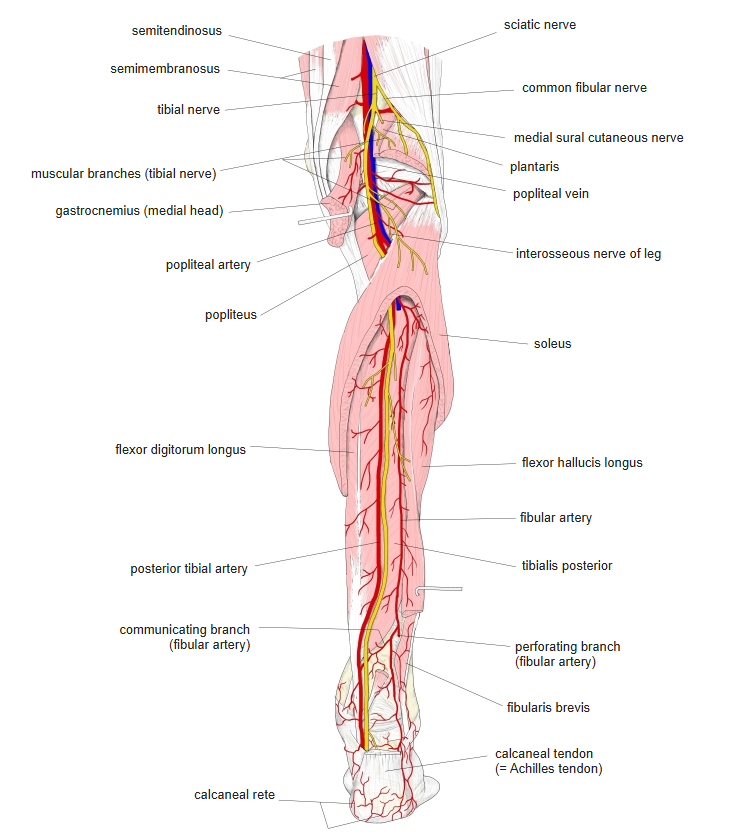
- Tibial nerve (L4–S2)
Blood supply
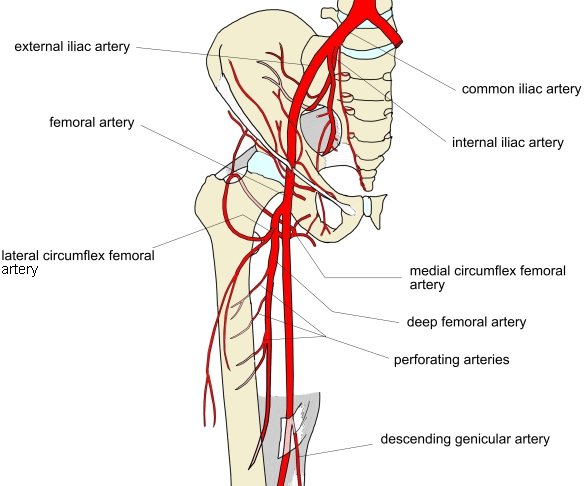
- Perforating branches of the deep femoral artery; some sources add the internal iliac and popliteal arteries
Related terms
- Semimembranosus
- Biceps femoris
- Hamstrings
- Gracilis
- Pes anserinus
- Ischial tuberosity
- Tibial nerve
References and sources
- Further reading: Semitendinosus muscle, Wikipedia.