Latin: musculus quadratus lumborum
Overview
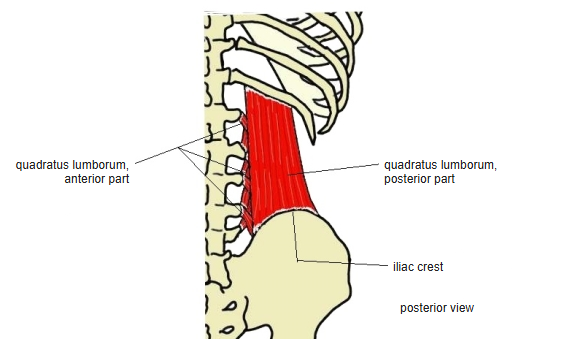
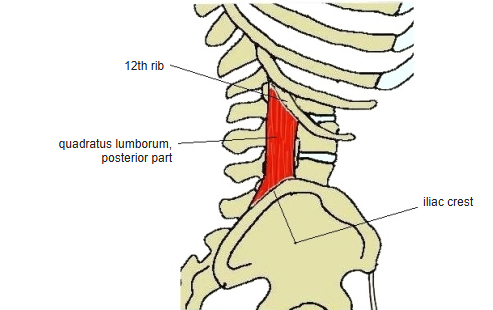
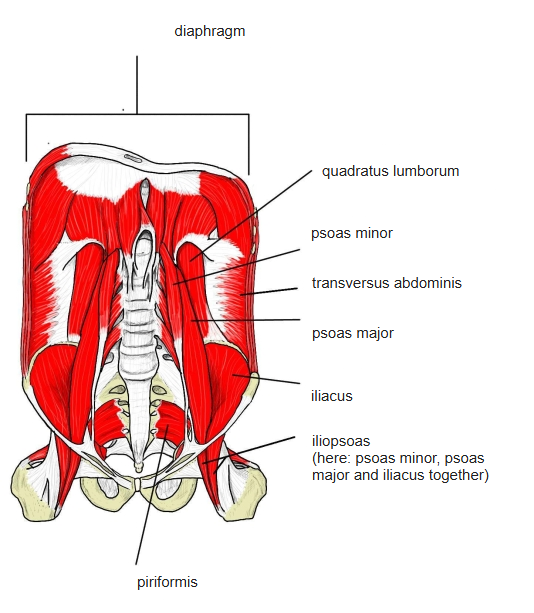
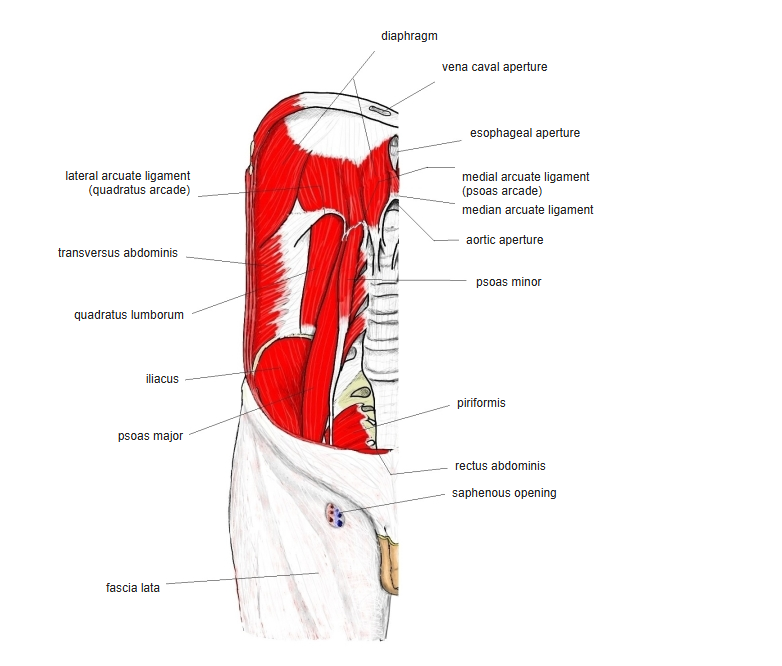
- Flat, four-sided muscle in the posterior abdominal wall, lateral to the lumbar vertebrae.
- Rauber-Kopsch describes an anterior and a posterior part, joined to each other in various ways; other sources do not divide it.
- Behind its medial two-thirds lie the iliocostalis lumborum and the longissimus thoracis.
- Keeps the pelvis and spine in position; strain from a sudden movement or poor balance is a common cause of low back pain.
- Joined by connecting fibres to the psoas major, diaphragm, longissimus and iliocostalis.
Position in the classification
Trunk › Abdomen › Posterior abdominal muscles
- Quadratus lumborum
Illustrations
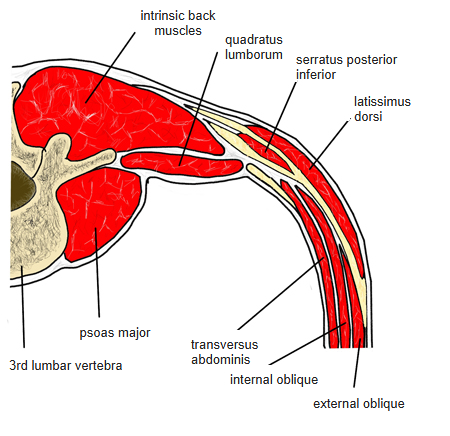
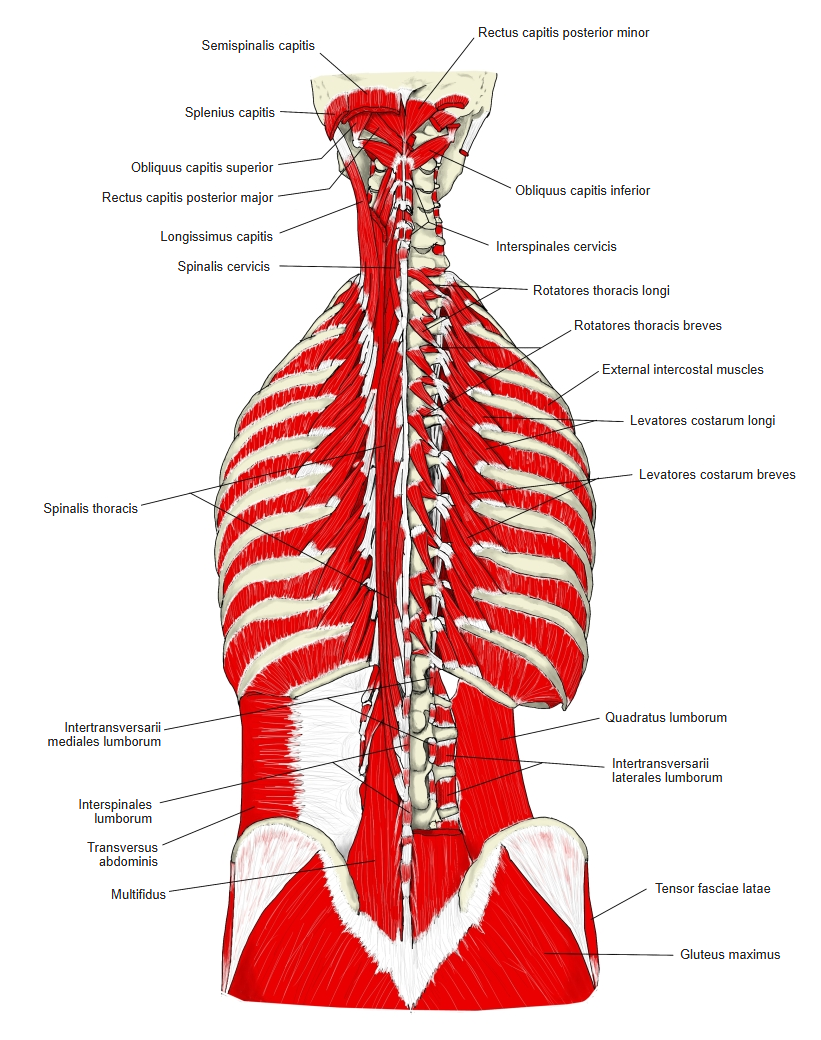
Origin / insertion
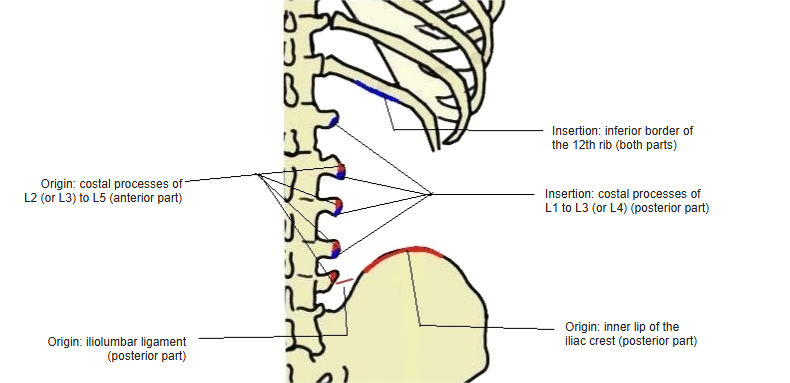
- Origin:
- Posterior part: inner lip of the iliac crest (about 5 cm, Wikipedia) and the iliolumbar ligament
- Anterior part: costal (transverse) processes of L2 (or L3) to L5
- Insertion:
- Anterior part: lower border of the 12th rib (about half its length, Wikipedia)
- Posterior part: costal processes of L1 to L3 (or L4) and the 12th rib
Action
- Both sides: pull the 12th rib down
- One side: bends the trunk to the same side
- Its role in breathing is doubtful
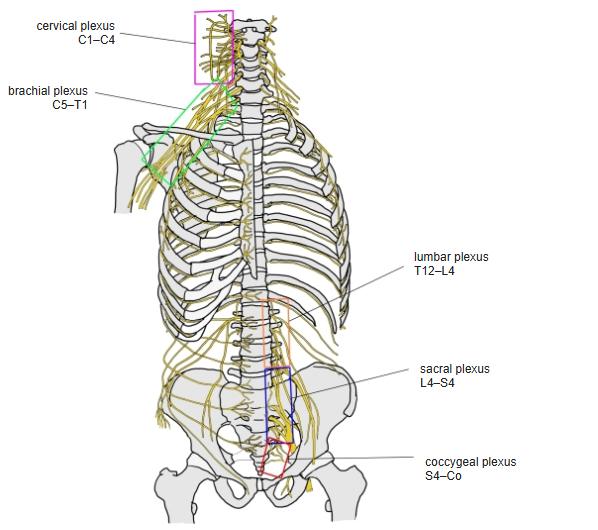
Innervation
- Lumbar plexus (T12–L3)
Blood supply
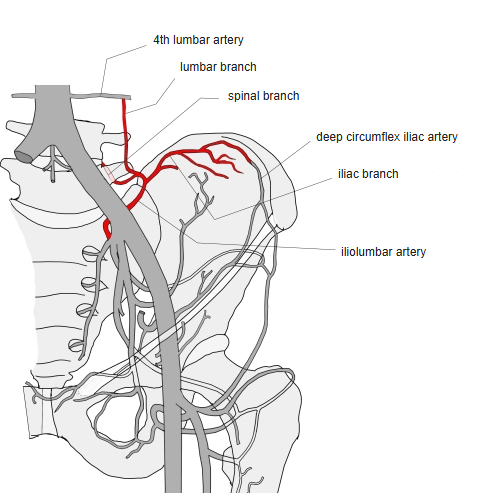
- Lumbar branch of the iliolumbar artery
Anatomical variations
- The anterior part may reach the body of the 12th thoracic vertebra; the number of origin slips may be larger or smaller than usual (Rauber-Kopsch)
Related terms
- Psoas major
- Diaphragm
- Iliocostalis lumborum
- Iliac crest
- Iliolumbar ligament
- Lumbar plexus
References and sources
- Further reading: Quadratus lumborum muscle, Wikipedia.