Latin: musculus pubococcygeus (part of the levator ani)
Overview
- One of the three parts of the levator ani (perineal muscles, pelvic floor): a broad muscle running from the pubis to the coccyx.
- Like a hammock it supports the pelvic organs and keeps the rectum closed.
- Terminologia Anatomica (TA2) lists the following as parts of the pubococcygeus:
- Puboperinealis: ends in the perineal body
- Puboprostaticus (male) / pubovaginalis (female): ends in the prostate or the vaginal wall
- Puboanalis: mingles with the wall of the anal canal
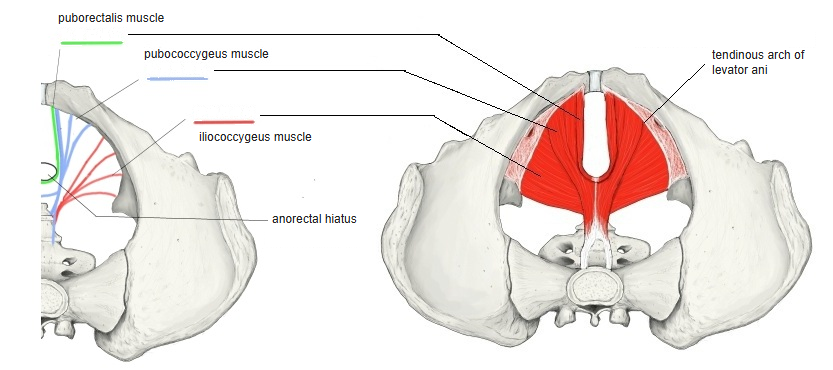
Illustrations
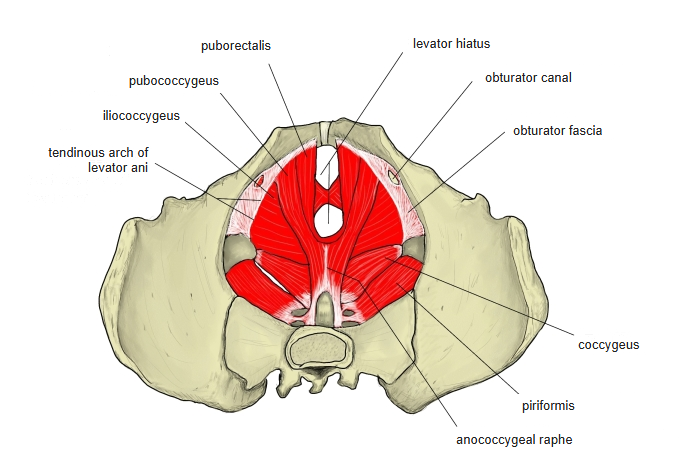
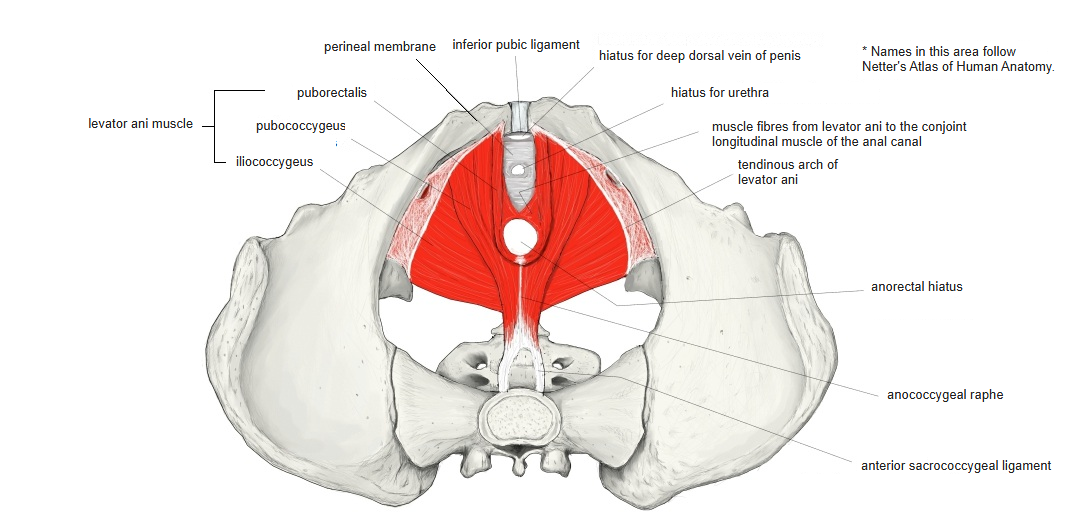
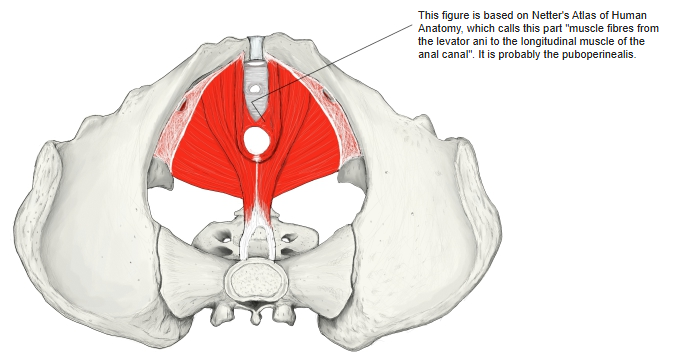
Origin / insertion
- Origin: inner surface of the pubis and the tendinous arch of the levator ani (some sources: the pubis only)
- Insertion: the coccyx (tip and surroundings) and the anococcygeal raphe
- The width of the attachments differs widely between sources (origin from about 1 cm to 6 cm).
Action
- Supports the pelvic organs (bladder, rectum and, in women, the uterus) and keeps them in place against gravity and abdominal pressure, preventing prolapse
- Helps to control urination and defecation and prevents incontinence
Innervation
- Pudendal nerve (from the sacral plexus): voluntary contraction
- Nerve to levator ani, direct branches of the anterior ramus of S4 and others: reflex contraction and resting tone
Blood supply
- Branches of the internal iliac artery:
- Inferior rectal artery (from the internal pudendal artery)
- Perineal artery (from the internal pudendal artery)
- Inferior gluteal artery
Related terms
- Levator ani
- Puborectalis
- Iliococcygeus
- Puboperinealis
- Tendinous arch of levator ani
- Anococcygeal raphe
- Pudendal nerve
References and sources
- Further reading: Pubococcygeus muscle, Wikipedia.