Latin: nervus pudendus
Overview
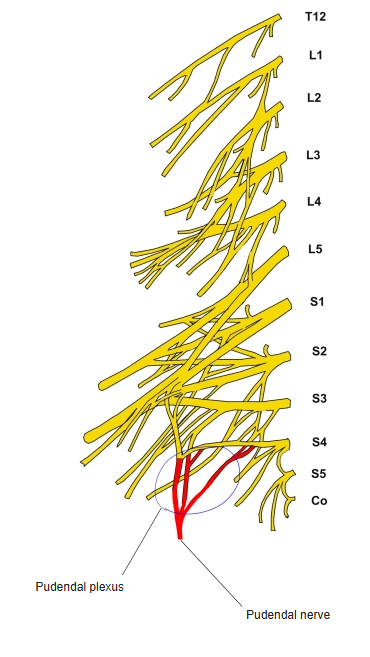
- The nerve of the perineum, from S2–S4 (pudendal plexus).
- Motor to the muscles of the perineum and the external anal sphincter; sensory to the skin of the perineum and the external genitalia.
Pudendal plexus 
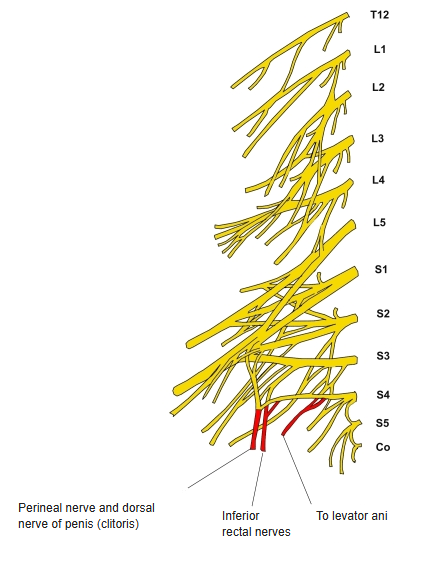
Branches of the pudendal nerve
Course
- Leaves the pelvis through the greater sciatic foramen below piriformis (infrapiriform foramen) with the internal pudendal artery and vein.
- Winds around the back of the ischial spine and re-enters through the lesser sciatic foramen into the ischioanal fossa.
- Runs forward in the pudendal canal (Alcock’s canal), gives off the inferior rectal nerves and divides near the posterior border of the urogenital triangle.
Lumbar, sacral and coccygeal plexuses
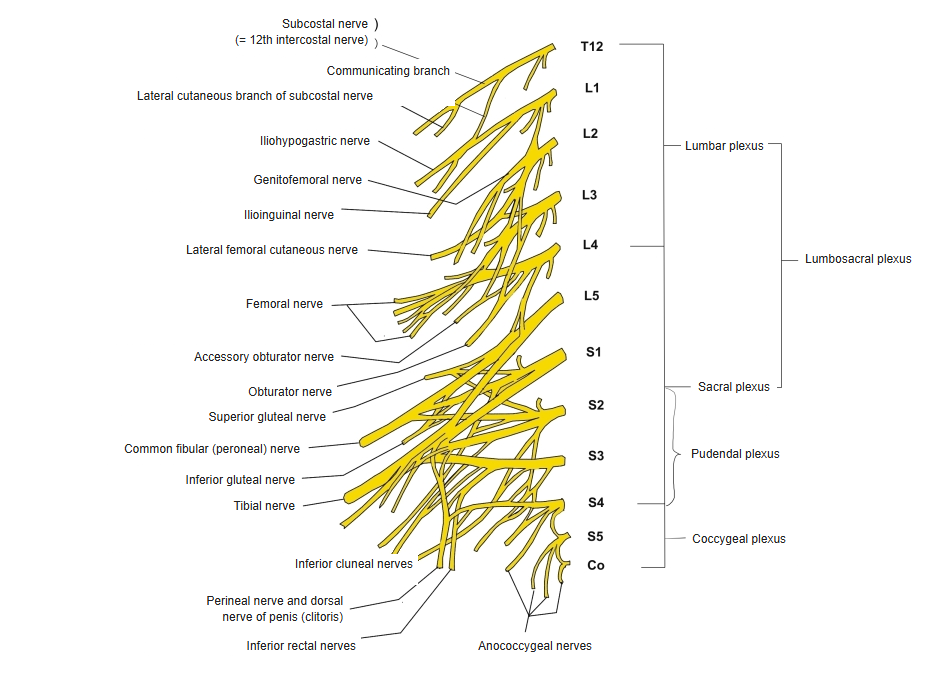
Branches
| Branch | Supplies |
|---|---|
| Inferior rectal nerves | External anal sphincter; skin around the anus |
| Perineal nerve | Superficial perineal muscles; skin of the perineum and the back of the scrotum or labia |
| Dorsal nerve of penis / dorsal nerve of clitoris | Skin of the penis or clitoris |
| Branches to the pelvic organs | Levator ani, coccygeus, bladder and urethral sphincter, upper vagina |
References and sources
- Further reading: Pudendal nerve, Wikipedia.