Latin: musculus puborectalis (part of the levator ani)
Overview
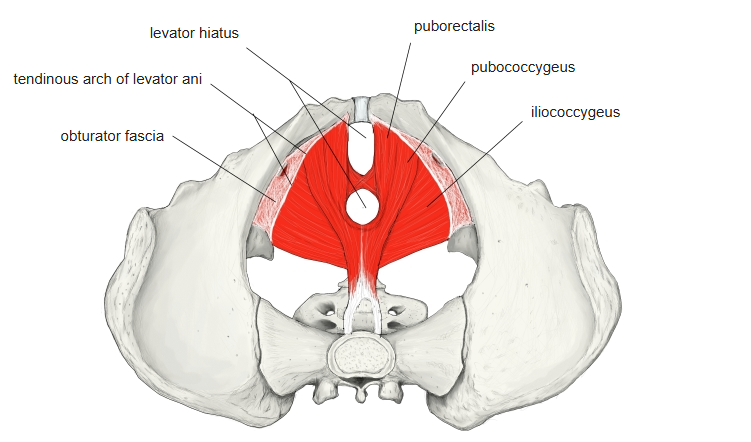
- One of the three parts of the levator ani (pelvic diaphragm, pelvic floor).
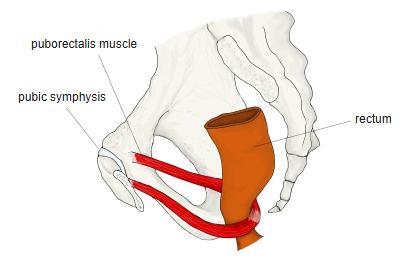
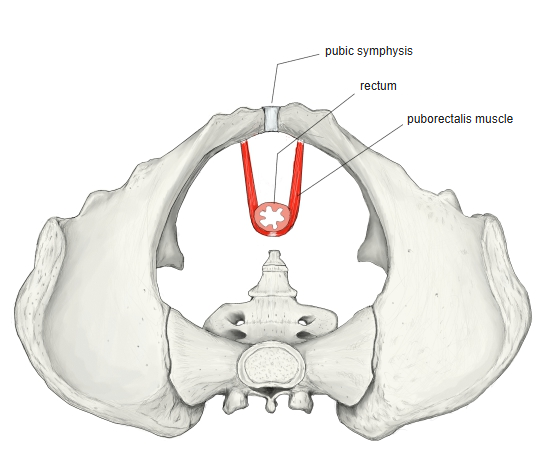
- A paired muscle whose two sides unite to form a U-shaped sling behind the rectum.
- Its sling around the lower end of the rectum helps to keep the bowel closed (faecal continence).
Illustrations
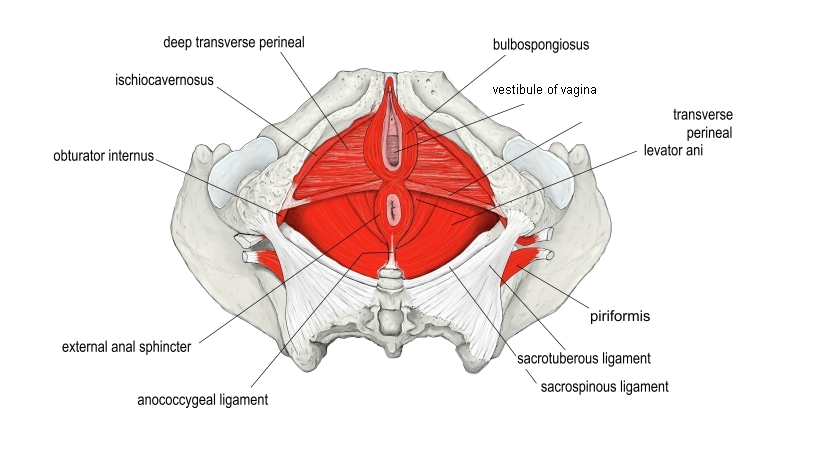
Origin / insertion
- Origin: back of the pubis on both sides of the lower part of the pubic symphysis, and the superior fascia of the urogenital diaphragm
- Runs backward on each side of the urethra (and the vagina in women) and the rectum.
- Insertion: no bony attachment: the fibres of the two sides meet behind the lower end of the rectum (anorectal junction), forming a U-shaped sling; its two limbs (levator crura) bound the levator hiatus
Action
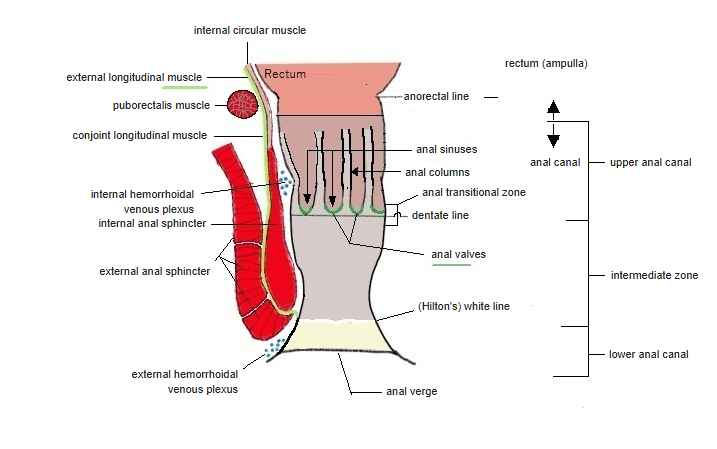
- Pulls the anorectal junction forward like a sling, keeping an acute angle between the rectum and anal canal (perineal flexure); this helps to maintain faecal continence
- Relaxes during defecation, straightening this angle
Innervation
- Levator ani: direct branches of the anterior ramus of S4 (nerve to levator ani) and branches of the pudendal nerve (S2–S4; its perineal or inferior rectal branch)
Blood supply
- Inferior gluteal artery
- Internal pudendal artery (with the pudendal nerve; e.g. inferior rectal artery)
- Inferior vesical artery (anterior part near the pubis)
Related terms
- Levator ani
- Pubococcygeus
- Iliococcygeus
- External anal sphincter
- Levator hiatus
- Anococcygeal raphe
- Pudendal nerve
References and sources
- Further reading: Puborectalis muscle, Wikipedia.
- Gray H. Anatomy of the Human Body, 20th ed. (1918), “6e. The Muscles and Fasciæ of the Pelvis”, Bartleby.com.