Latin: musculus genioglossus
Overview
- A fan-shaped extrinsic muscle that forms most of the body of the tongue.
- The main muscle for sticking out (protruding) the tongue.
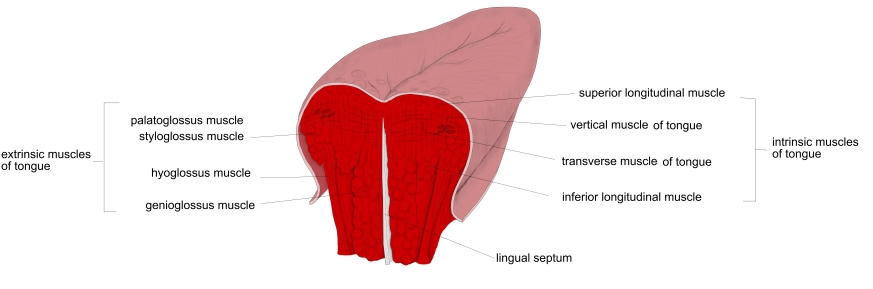
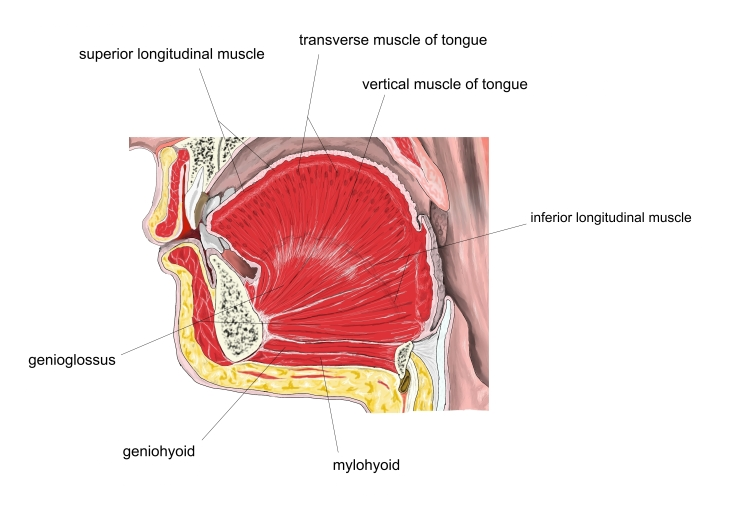
- The muscles of both sides lie close to the midline, separated by the median fibrous septum of the tongue, and fan out backward and upward.
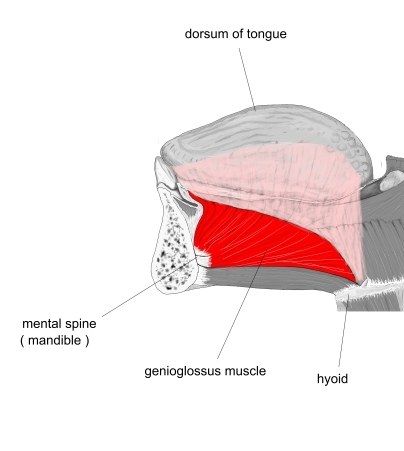
The red area in this figure is only approximate.
Position in the classification
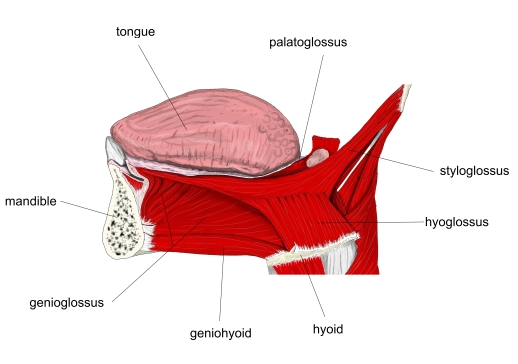
Head › Muscles of the tongue › Extrinsic muscles of the tongue
- Genioglossus
- Hyoglossus
- Styloglossus
- Chondroglossus
Illustrations
Origin / insertion
- Origin: superior mental spine on the inner surface of the mandibular symphysis (the geniohyoid arises from the inferior mental spine just below)
- Insertion: the whole length of the under surface of the tongue, from root to tip, blending with the intrinsic muscles (some fibres reach the epiglottis), and the upper part of the body of the hyoid bone
Action
- Depresses the tongue
- Its posterior fibres push the tongue forward (protrusion)
Innervation
- Hypoglossal nerve (cranial nerve XII; motor)
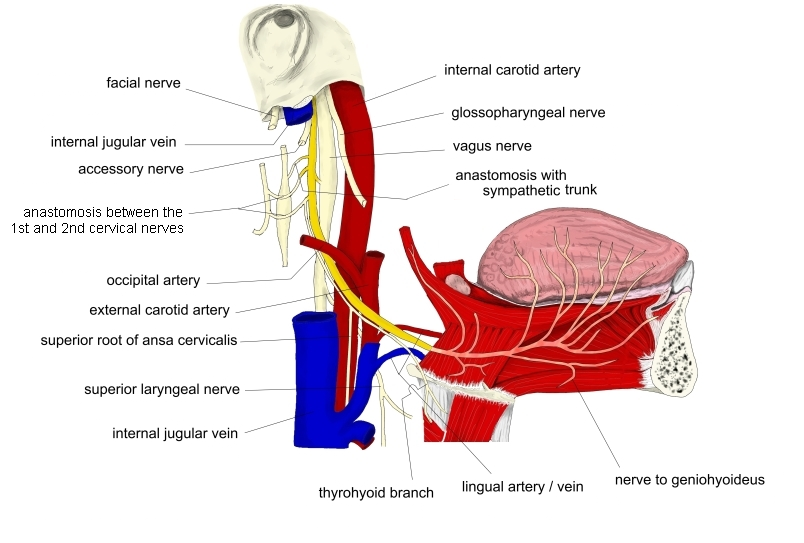
Blood supply
- Lingual artery (sublingual branch), from the external carotid artery
Compiled from standard anatomy references.
Related terms
- Extrinsic muscles of the tongue
- Hyoglossus
- Styloglossus
- Geniohyoid
- Superior mental spine
- Hypoglossal nerve
References and sources
- Further reading: Genioglossus, Wikipedia.