Latin: Vena facialis
Overview
- The main vein of the face, draining the forehead, eyelids, nose, lips, cheek and chin.
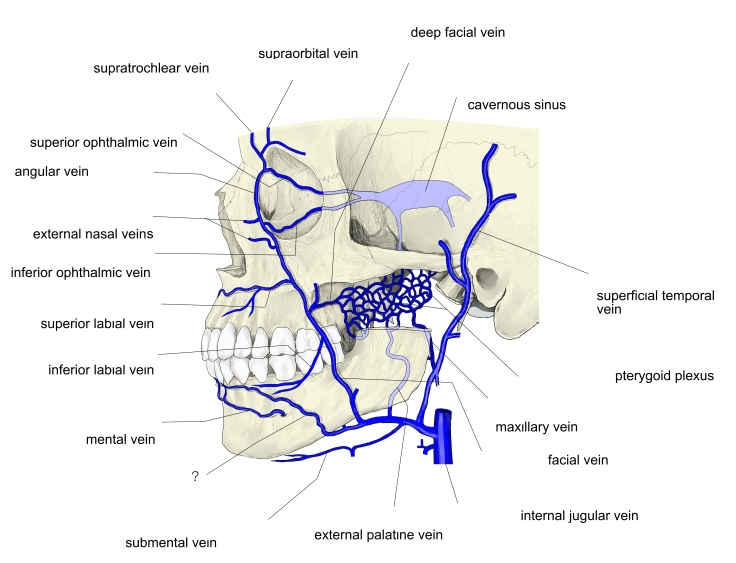
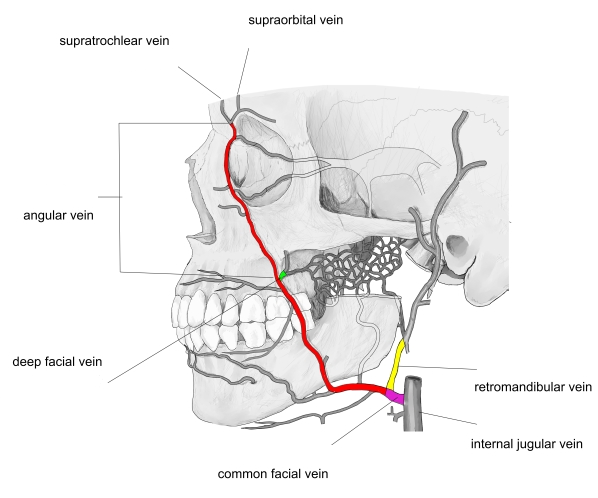
- Begins at the medial angle of the eye as the angular vein, formed by the supratrochlear and supraorbital veins.
- Runs obliquely down and back across the face, behind the facial artery and with a straighter course.
- Crosses the body of the mandible at the front edge of the masseter and ends in the internal jugular vein, usually after joining the anterior division of the retromandibular vein as the common facial vein.
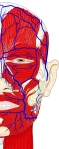
Veins of the face (superficial) 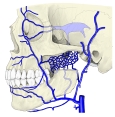
Veins of the face (side view) 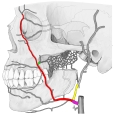
Course of the facial vein
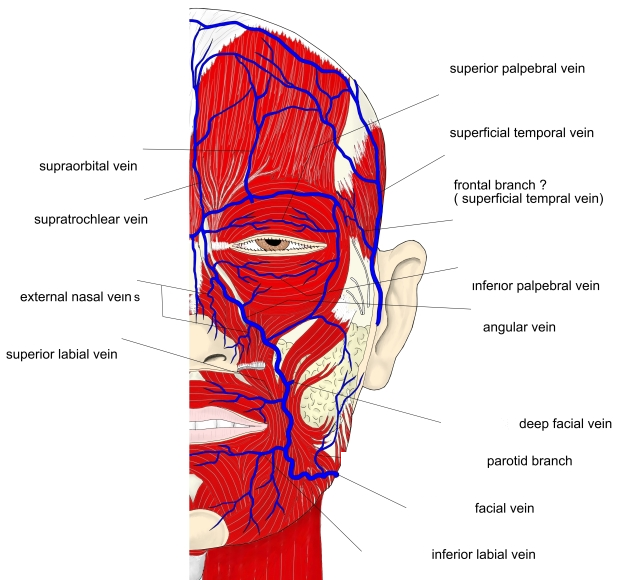
Tributaries
| Region | Tributaries |
|---|---|
| Forehead and eye | Supratrochlear and supraorbital veins (forming the angular vein), superior and inferior palpebral veins |
| Nose | External nasal veins |
| Lips and chin | Superior and inferior labial veins, submental vein |
| Deep connections | Deep facial vein (from the pterygoid plexus) |
| Others | Parotid branches, external palatine vein, submandibular and masseteric veins |
Tributaries of the jugular veins
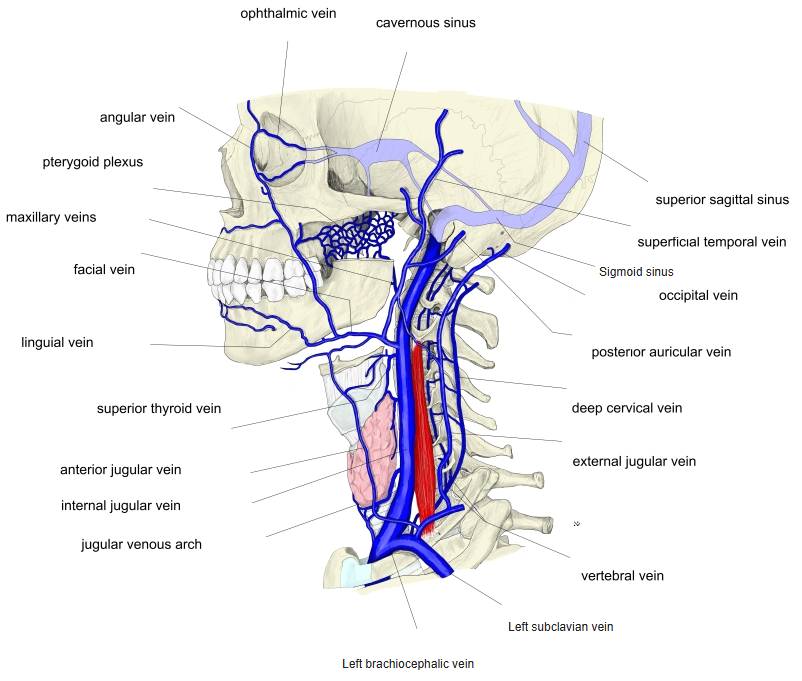
Connections
- Through the angular vein it communicates with the superior ophthalmic vein and so with the cavernous sinus.
- Through the deep facial vein it communicates with the pterygoid plexus.
Clinical notes
- The facial vein has few or no effective valves and connects with the cavernous sinus through the ophthalmic veins and the pterygoid plexus, so infection of the upper lip and nose (the "danger triangle" of the face) can spread into the skull.
References and sources
- Further reading: Facial vein, Wikipedia.