Latin: Arteria cerebri media
Overview
- The larger terminal branch of the internal carotid artery, continuing in its direction.
- Runs laterally in the lateral sulcus (Sylvian fissure) to the insula, then spreads over the lateral surface of the hemisphere.
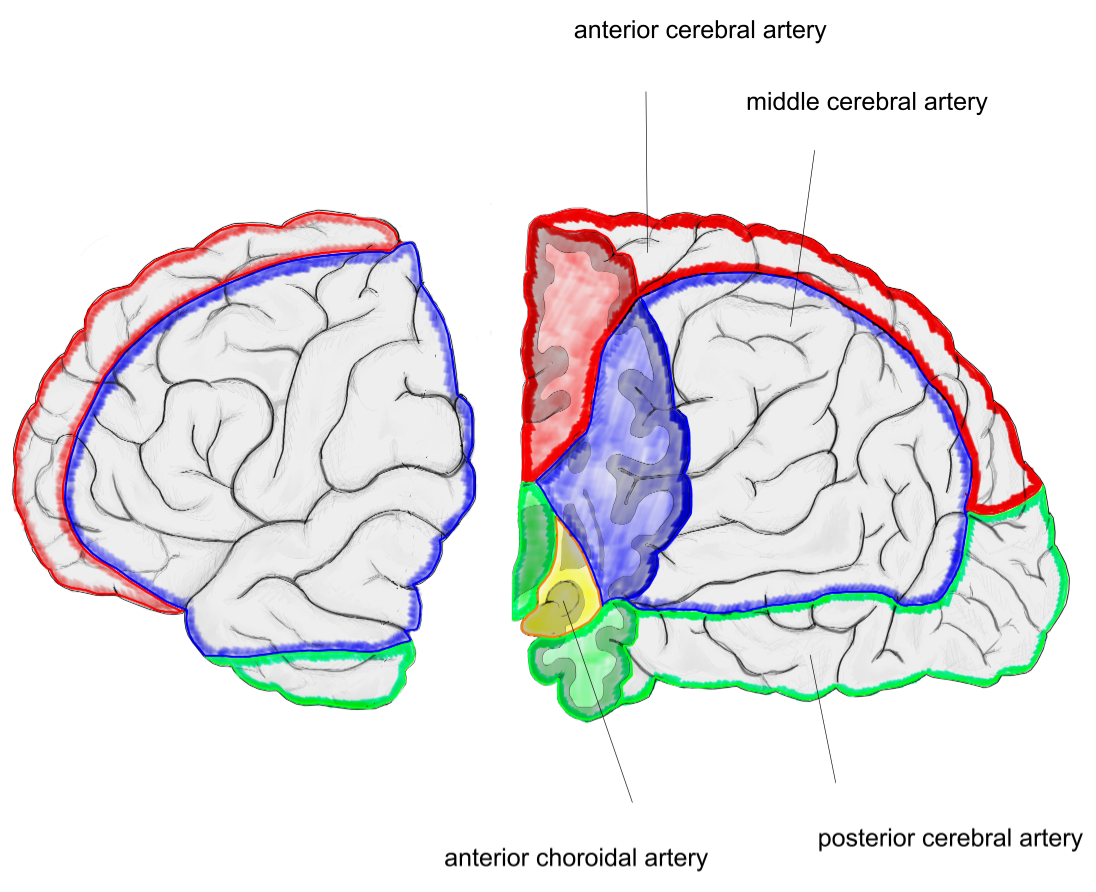
- Supplies most of the lateral surface of the frontal, parietal and temporal lobes, and (through its central branches) the basal ganglia and internal capsule.
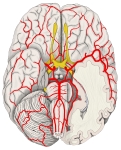
Arteries at the base of the brain 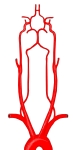
Arteries to the brain
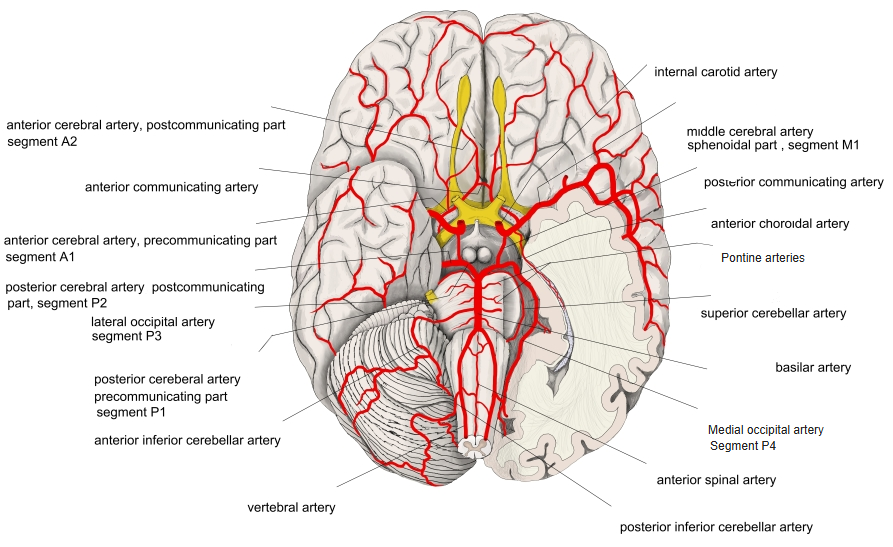
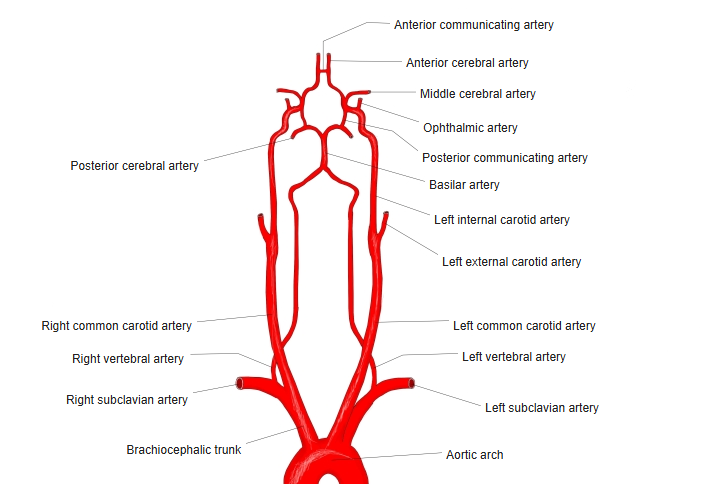
Branches
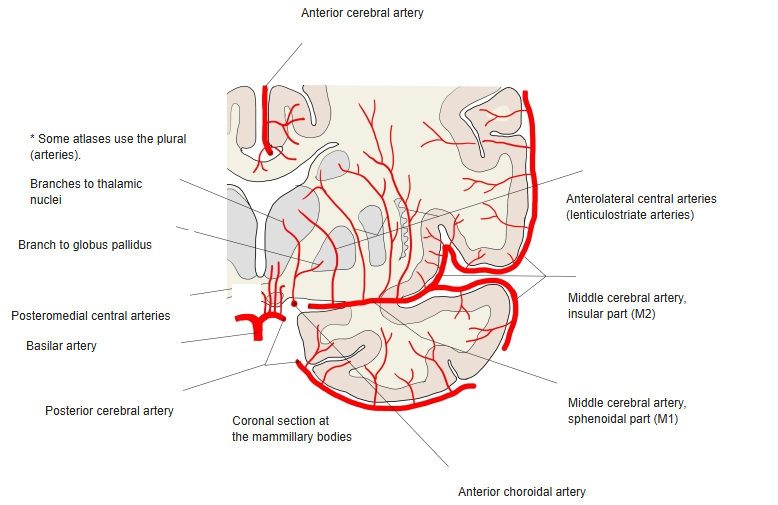
- Anterolateral central (lenticulostriate) arteries to the basal ganglia and internal capsule
- Frontal, parietal and temporal branches to the cortex
Illustrations
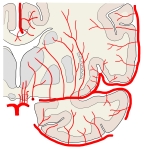
Central arteries of the brain 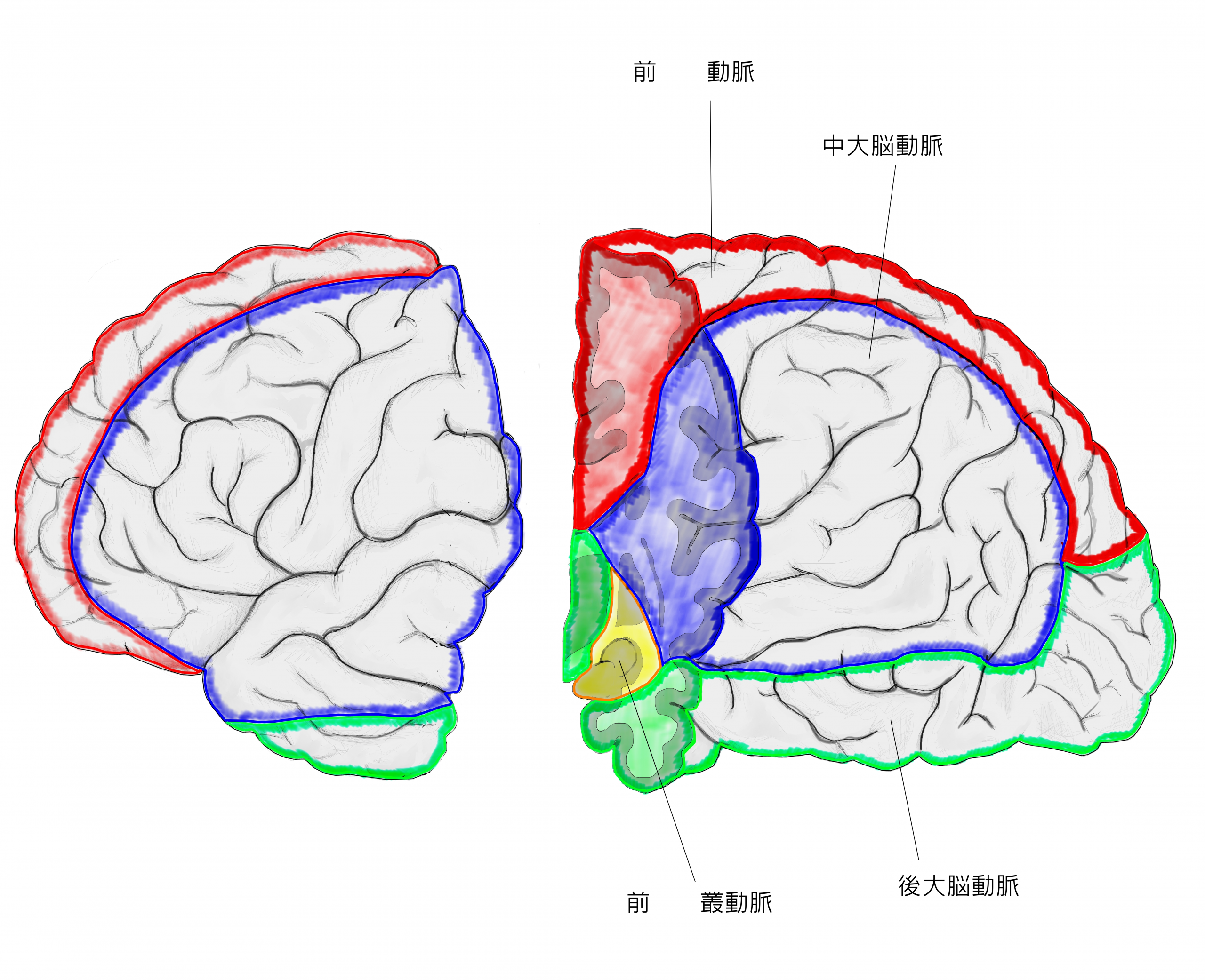
Areas supplied by the cerebral arteries
Clinical notes
- It is the artery most often blocked in strokes: typical signs are weakness and loss of sensation of the opposite face and arm, and loss of language (aphasia) when the dominant side is affected.
- Rupture of a lenticulostriate artery is a common cause of brain haemorrhage in high blood pressure.
References and sources
- Further reading: Middle cerebral artery, Wikipedia.