Latin: Arteria carotis interna
Overview
- One of the two terminal branches of the common carotid artery; the other is the external carotid artery.
- Supplies most of the brain (cerebral hemispheres) and the eye (through the ophthalmic artery).
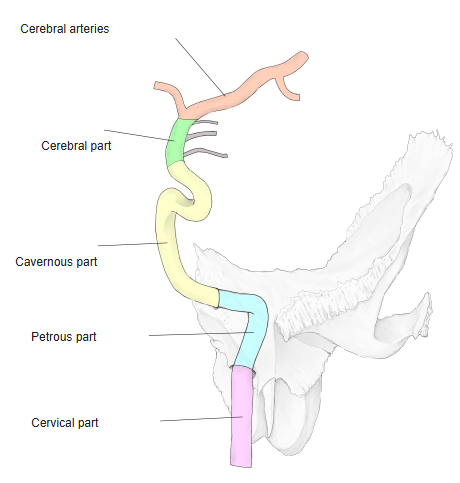
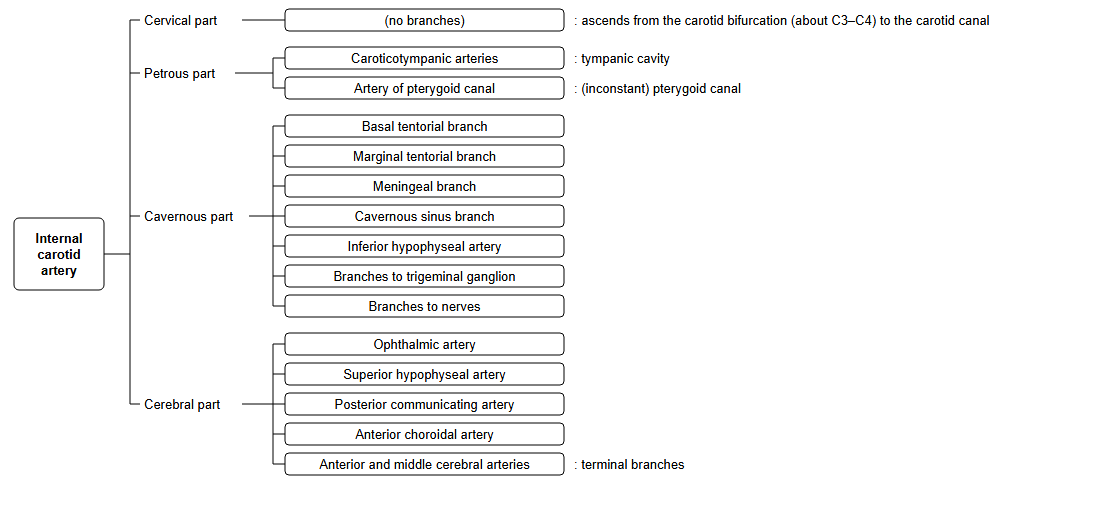
- Described in four parts: cervical, petrous, cavernous and cerebral. The cervical part has no branches.
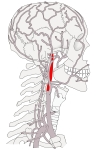
Internal carotid artery (side view) 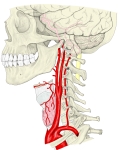
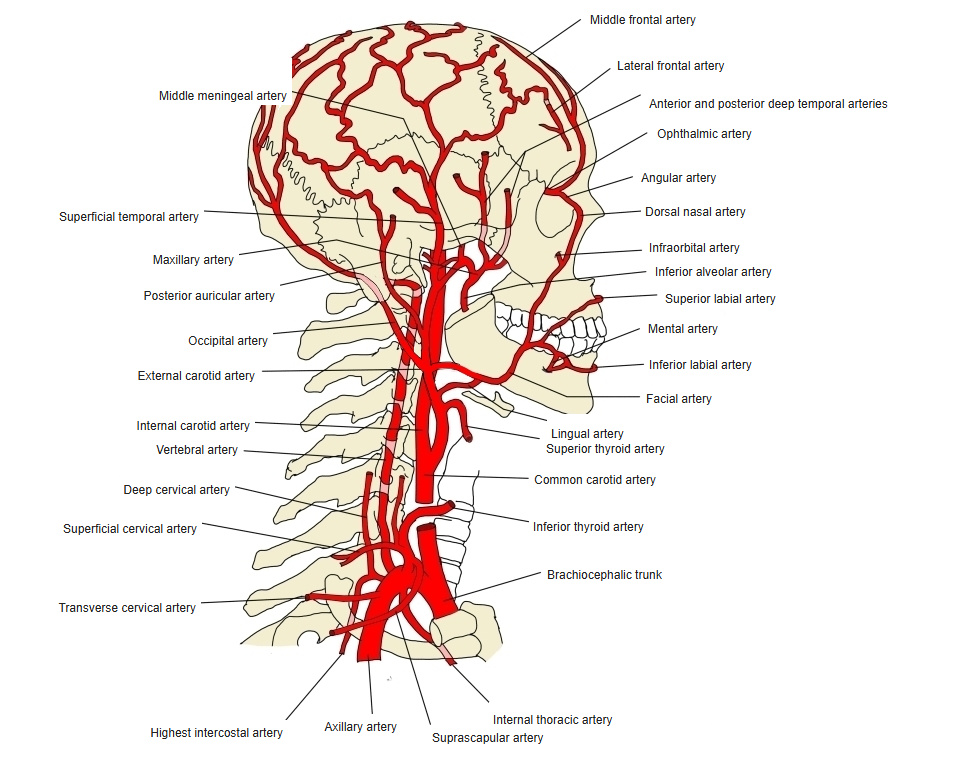
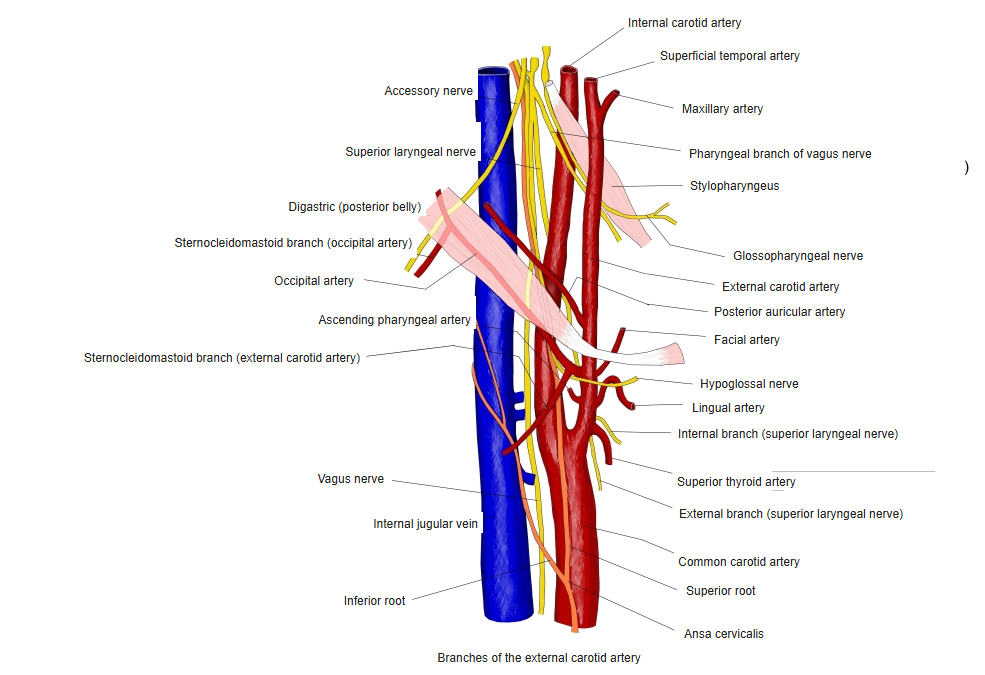
Common, external and internal carotid arteries 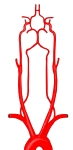
Carotid and vertebral arteries (front view)
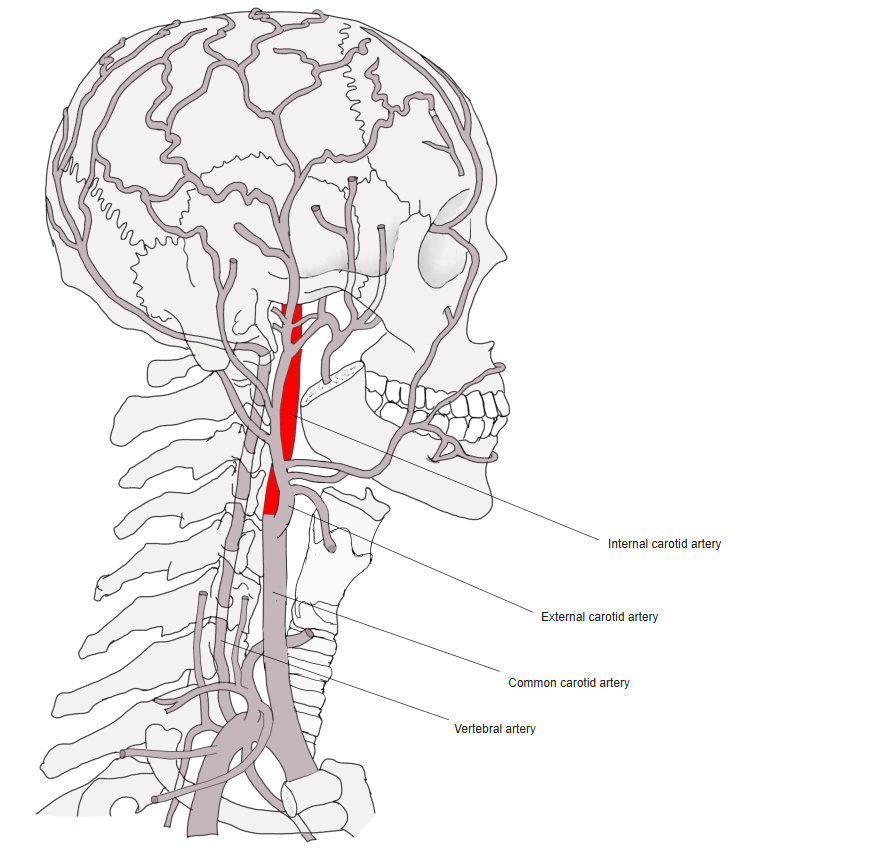
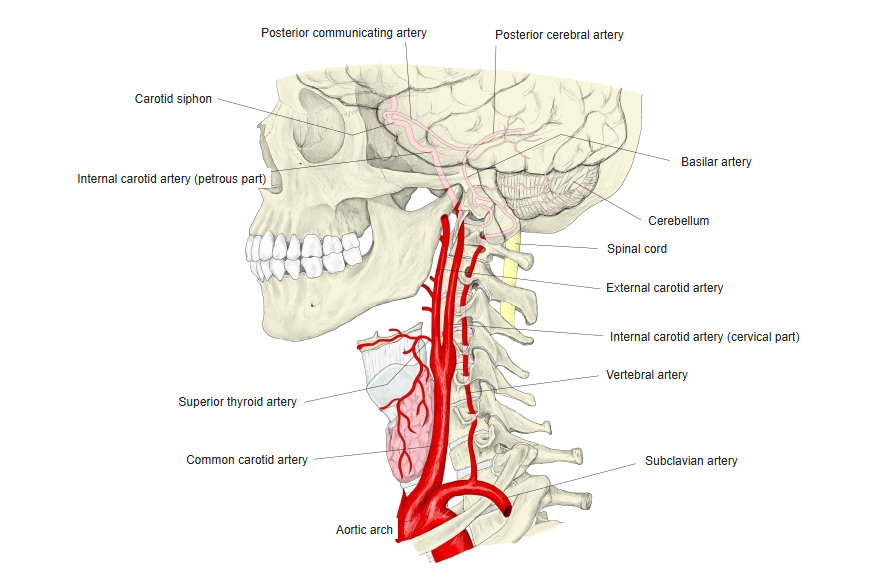
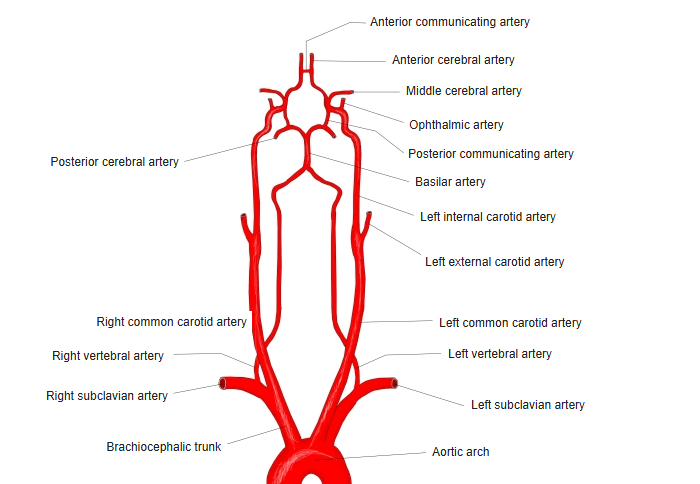
Course
- Cervical part: ascends from the carotid bifurcation to the base of the skull.
- Petrous part: runs in the carotid canal of the temporal bone.
- Cavernous part: passes through the cavernous sinus with an S-shaped bend (carotid siphon).
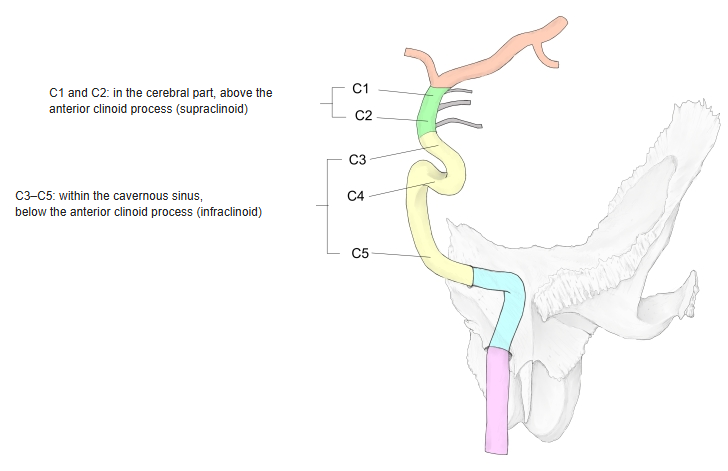
- Cerebral part: pierces the dura mater beside the anterior clinoid process and divides into the anterior and middle cerebral arteries.
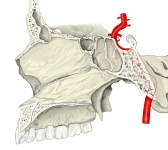
Parts of the internal carotid artery 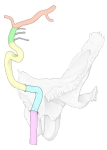
Parts of the internal carotid artery (colored) 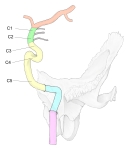
Segments C1–C5 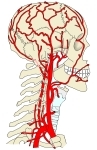
Arteries of the head and neck 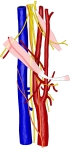
Carotid arteries and nearby nerves (front view)
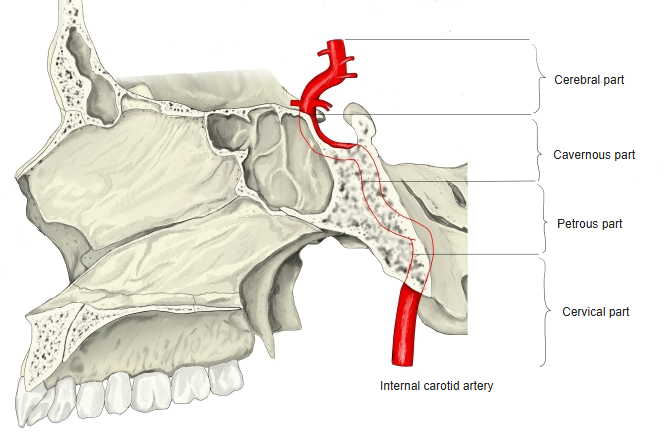
Branches
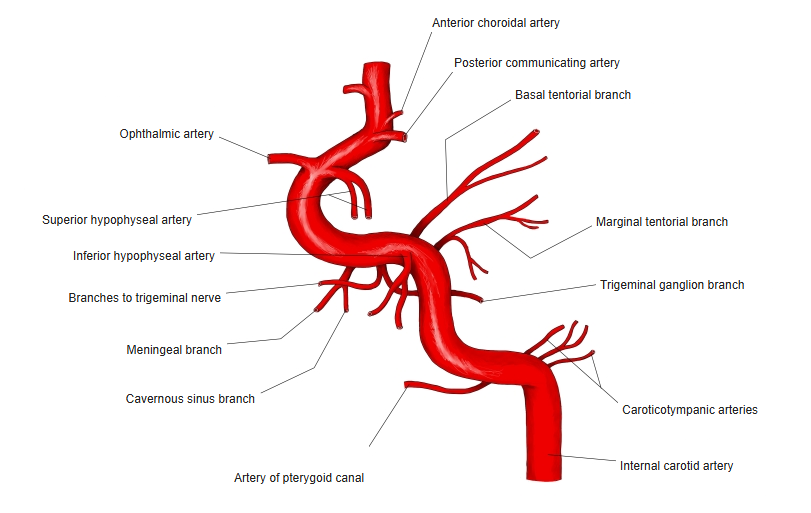
- Cavernous part: cavernous branches to the cavernous sinus, the trigeminal ganglion and the pituitary gland.
- Cerebral part: ophthalmic artery, posterior communicating artery, anterior choroidal artery, then the terminal anterior and middle cerebral arteries.
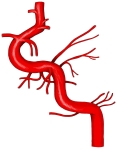
Branches of the internal carotid artery
Clinical notes
- Joins the cerebral arterial circle (circle of Willis) through the posterior communicating artery.
- An aneurysm in the cavernous part can press on the nerves to the eye muscles in the cavernous sinus.
References and sources
- Further reading: Internal carotid artery, Wikipedia.