Ampullary groove (Latin: sulcus ampullaris)
· The convex part on the opposite side of this groove (the side of the sensory epithelium, inside the ampulla) is the ampullary crest: the inward-bulging crest inside the ampulla matches the groove on the outside.
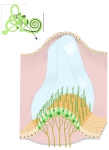 Membranous ampulla
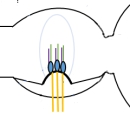 Membranous ampulla (schematic)
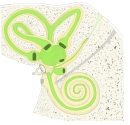 Bony and membranous semicircular canals
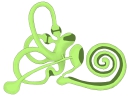 Left membranous labyrinth (medial view)
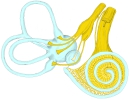 Membranous labyrinth and nerves
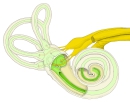 Labyrinth and nerves
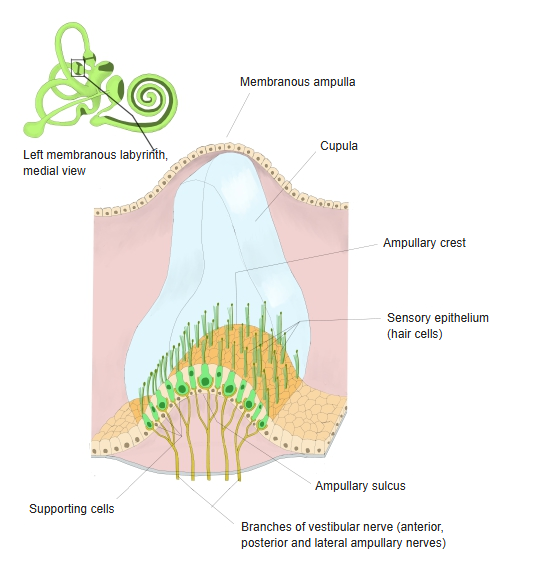
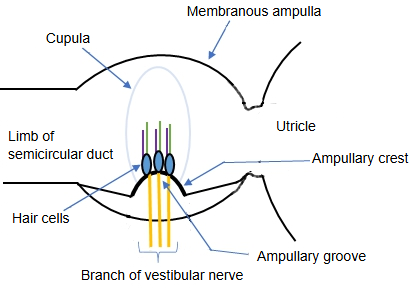
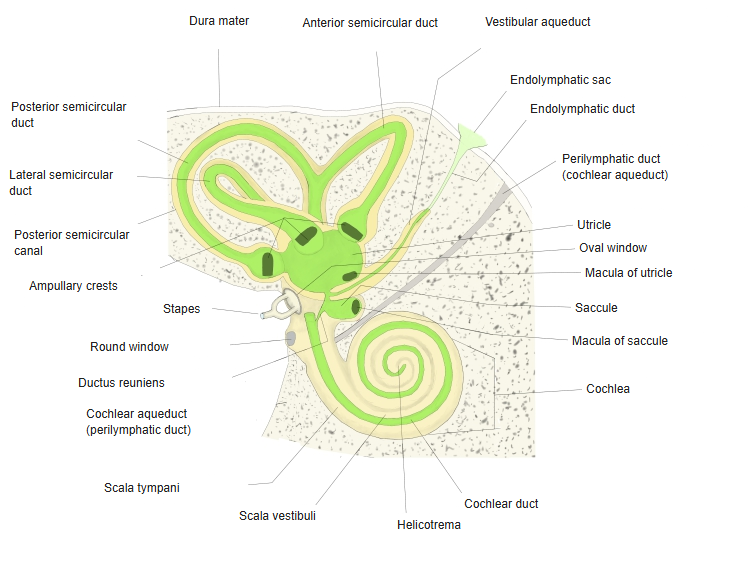
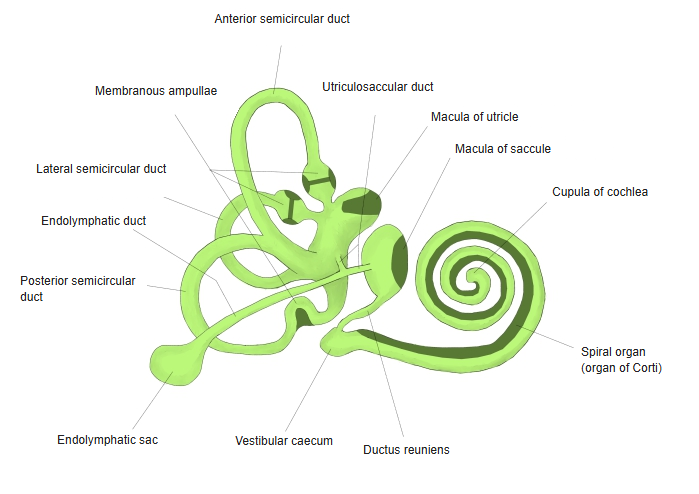
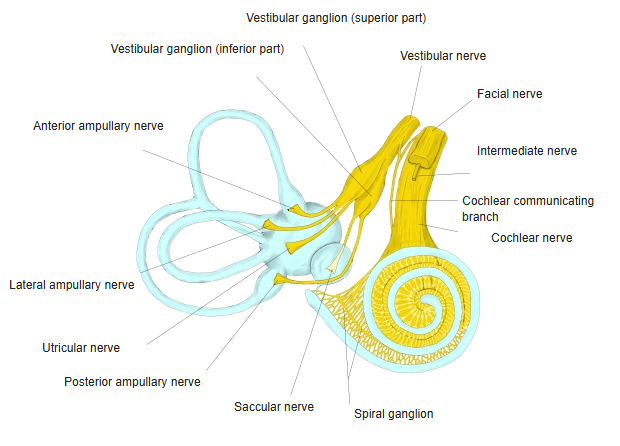
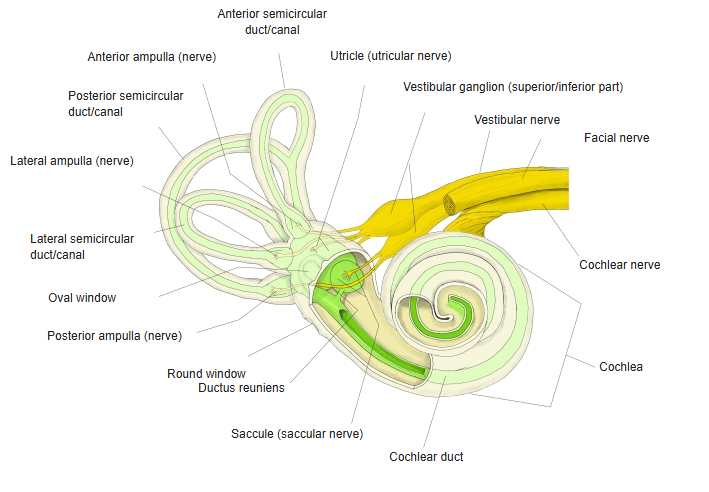
The ampullary groove is a transverse groove on the outer (convex) surface of each membranous ampulla, opposite the ampullary crest, so there is one groove on each of the three ampullae. The fibres of the ampullary nerve pass through it to reach the hair cells of the crest. The anterior and lateral ampullary nerves come from the superior part of the vestibular nerve; the posterior ampullary nerve comes from its inferior part.
Reference websites
[Wikipedia]
· Crista ampullaris, Wikipedia.
· Semicircular canals, Wikipedia.
[Websites with illustrations]
· The inner ear: bony labyrinth and membranous labyrinth (TeachMeAnatomy)
· Internal ear anatomy: cochlea, vestibule and canals (Kenhub)
Related terms
- Semicircular ducts
- Membranous labyrinth
- Vestibular nerve
- Anterior ampullary nerve
- Lateral ampullary nerve
- Posterior ampullary nerve
References and sources
- Further reading: Crista ampullaris, Wikipedia.
- Further reading: Semicircular canals, Wikipedia.
- Federative International Programme for Anatomical Terminology (FIPAT). Terminologia Anatomica, 2nd ed. (TA2), 2019.