Glycerol
Also called the glycerin
Overview
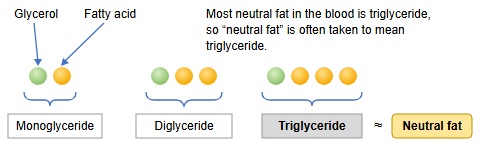
· In the body glycerol forms the backbone of neutral fat (triglyceride), of phospholipids and of glycolipids.
· When stored fat is used for energy, it is split into fatty acids and glycerol. The glycerol is carried to the liver, where it can be used to make glucose.
· Melting point: about 18 °C, but it easily stays liquid below this temperature (supercooling).
· Chemical formula: C3H8O3
Uses
Glycerol is used in many products. Treated with nitric and sulfuric acids, it becomes nitroglycerin (glyceryl trinitrate).
· Cosmetics: moisturisers, soaps
· Foods: for example jellies, frozen desserts and chewing gum
· Medicines: for example enemas, eye drops and solutions that lower the pressure inside the skull
Reference websites
[Wikipedia]
· Glycerol, Wikipedia.
Related terms
References and sources
- Further reading: Glycerol, Wikipedia.
- Federative International Programme for Anatomical Terminology (FIPAT). Terminologia Anatomica, 2nd ed. (TA2), 2019.