Interglobular dentin (Latin: dentinum interglobulare)
Also called the interglobular dentine or the interglobular spaces (of Czermak)
· Interglobular dentin is an area of poorly mineralized dentin left between the calcospherites (mineral globules) when these fail to fuse completely during dentin formation. It is also called interglobular spaces, or Czermak's spaces.
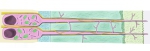 Structure of dentin
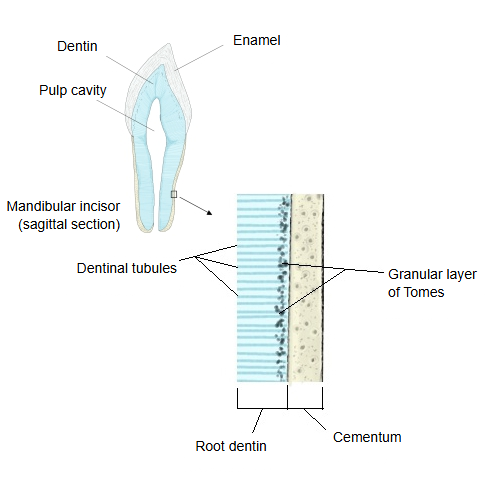
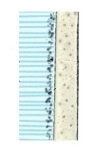 Granular layer of Tomes
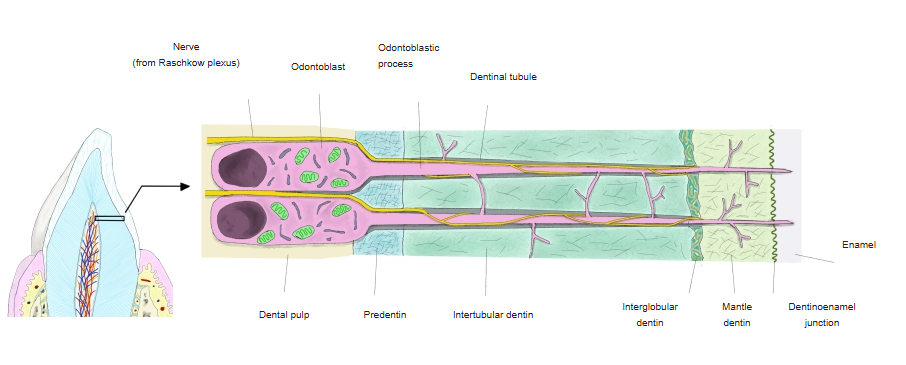
· It is most common in the dentin of the crown near the dentinoenamel junction, just inside the mantle dentin, where it lies in bands along the growth lines of the dentin.
· Dentinal tubules pass through it without interruption, but no peritubular dentin forms around the tubules there.
· In dried ground sections the unmineralized matrix shrinks and fills with air, so the areas look dark in transmitted light.
· It increases and enlarges in disorders of mineralization, such as vitamin D deficiency (rickets), hypophosphataemic rickets and dentinogenesis imperfecta.
· In the root dentin, the surface layer next to the cementum shows a band of tiny dark, granular spots, the granular layer of Tomes (figure above, right). It is a similar but separate finding.
More details
· For the structure of dentin as a whole, see the teeth page and "Dentinal tubules".
Reference websites
[Wikipedia]
· Dentin, Wikipedia.
[Websites with illustrations]
· Dentin (book chapter) (Jaypee Digital)
· Dentin (lecture) (Muhadharaty)
· Gray's Anatomy, figure 1005: vertical section of a tooth (Wikimedia Commons)

Related terms
References and sources
- Further reading: Dentin, Wikipedia.
- Federative International Programme for Anatomical Terminology (FIPAT). Terminologia Anatomica, 2nd ed. (TA2), 2019.